For your information
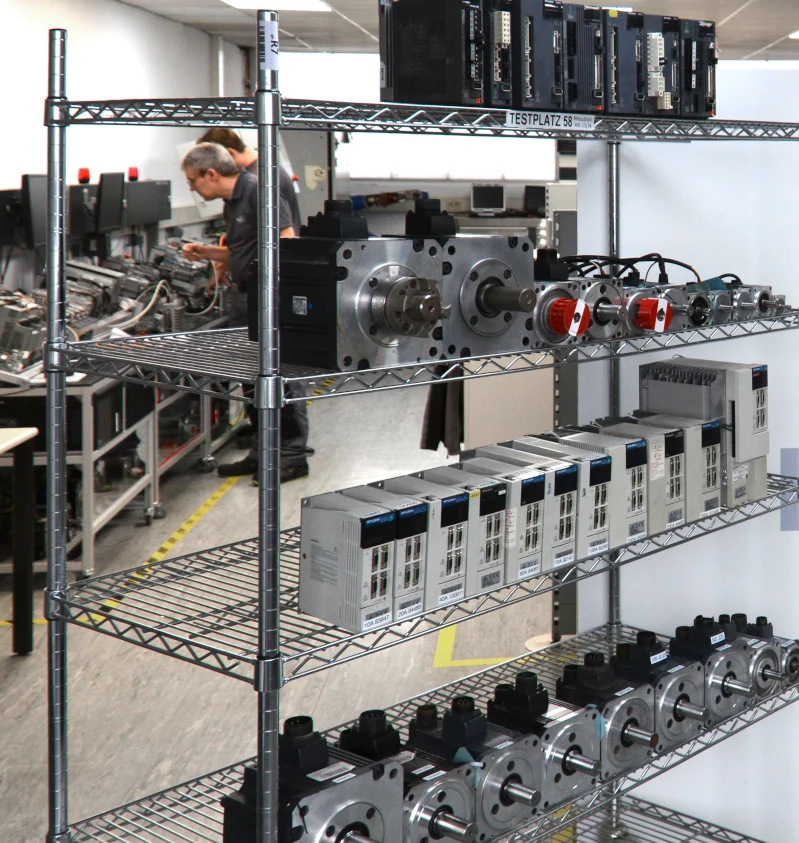
- We offer for this displayed device sale, exchange and repair services.
- Prices for Servo-/Spindle Drives Power Supplies are standard prices for standard repair
- Devices for sell or exchange, was preventively overhauled in our workshop.
Learn more about...
Detailed information about Yaskawa CACR Servopacks
We offer serial repairs for this product series
- Repair of many electronic assemblies according to standardized repair procedures with documentation.
- A larger repair capacity is possible for the same or similar orders
- Target group: machine manufacturers, service companies and distributors
Access to years of experience, specialists and equipment.
Find out more about our series repairs
Overview
The Yaskawa CACR-SR03SZ1SS is a compact AC servo amplifier of the proven SR series and was developed for small axis applications in the power range of approx. 300 W. The SR Servopacks have always been considered robust, durable, and service-friendly amplifiers for older machines, including machine tools, handling units, and automation systems.
Overview
- Device category: AC Servo Amplifier (Speed Control Type)
- Series/Class: CACR-SR (older Yaskawa generation)
- Design: compact cabinet installation, robust power stage, analog control
Model Designation
- CACR = Yaskawa AC Servo Drive / Servopack
- SR = SR Series (predecessor series of the Sigma Drives)
- 03 = Power class approx. 0.3 kW (300 W motor)
- S = Control type: Speed Control Type (analog ±10 V speed reference)
- Z = Special function or software variant (special option within the SR series)
- 1 = Supply 200 V class (single/three-phase 200–230 V AC)
- SS = Special OEM or custom version, customized parameterization / deviating I/O logic possible
Technical Data
| Feature | Value |
|---|
| Rated power | approx. 300 W |
| Supply | AC 200–230 V, 50/60 Hz |
| Input current | approx. 2.6–3.0 A (load dependent) |
| Output | 3-phase AC servo drive output (U/V/W) |
| Feedback | Incremental encoder / tacho feedback (motor dependent) |
| Control | Analog speed control (±10 V) |
| Protection functions | Overcurrent, overvoltage, undervoltage, overload, overtemperature |
| Cooling | Natural convection / cabinet ventilation |
| Weight/Dimensions | n. a. |
Connections & Interfaces
- R/S/T: Mains input 200–230 V AC
- U/V/W: Motor outputs to the corresponding Yaskawa servo motor
- B1/B2 (RB): Connection for braking/regeneration resistor (depending on version)
- PE: Ground connection
- CN1 / Control terminals:
- Analog speed reference ±10 V
- Servo-ON / Enable
- Alarm / Ready signal
- Monitor signals (Speed Monitor, Torque Monitor)
- Encoder/Tacho feedback: Feedback line from the motor
- 7-Segment LED: Error display 1–8
Control Board / Modules
- Control Board: Controller, analog signal processing, protection logic
- Power Stage: Rectifier, DC link, transistor stage
- Regeneration Stage: Braking chopper/transistor, resistor monitoring
- Sensor Technology & Supply: Auxiliary voltage generation, temperature monitoring on the heat sink
Alarms & Troubleshooting
(corresponds to the SR series, identical to the table in the adopted SR manual)
Alarms & Troubleshooting
| Code | Description | Typical Finding | Check | Remedy |
|---|
| 1 | Over-current | Short circuit motor/power stage, defective transistors, incorrect wiring | Check U/V/W and motor, insulation measurement | Repair power section / check motor |
| 2 | Circuit protector tripped | Mains protection device triggered | Check MCCB/fuse | Eliminate cause, switch on properly |
| 3 | Regenerative trouble | Braking resistor missing/interrupted, chopper defective | Check RB terminals, measure resistance value | Connect resistor correctly / repair chopper |
| 4 | Over-voltage | DC link overloaded (mains too high, strong braking) | Check mains voltage / mechanical load | Stabilize mains, adjust braking ramps |
| 5 | Overspeed | Too high reference voltage, encoder error | Check setpoint ±10 V, check encoder cable | Adjust reference signal, check encoder |
| 6 | Voltage drop | Undervoltage in the main circuit | Measure mains voltage under load | Stabilize supply, check supply lines |
| 7 | Overload | Continuous overload / too high current consumption | Check load profile | Reduce load, check axis mechanics |
| 8 | Heat sink overheat | Heat sink overheated, cabinet too warm | Check temperature, airflow, contamination | Improve cooling, perform cleaning |
Typical Applications
- Feed and positioning axes of small machine tools
- Handling and transfer axes in older industrial cells
- Woodworking machines, packaging machines, assembly systems
- Retrofit areas where 300 W SR motors continue to be used
Service Notes
- Regular cleaning of the heat sink and cabinet air paths
- Check connectors and terminals for tight fit
- Measure motor insulation values separately from the amplifier
- Periodically check braking resistor
- Back up parameters, especially for OEM special versions like 'SS'
Repair Description
- Input check: Visual inspection, measurement of motor and mains side, control of the feedback line.
- Disassembly & Cleaning: Open device, remove dust and oil, expose heat sink.
- Analysis: Check power stage (transistors), rectifier, DC link, control board, and regeneration path.
- Repair: Replacement of damaged components, rework of critical solder joints, checking and replacement of worn capacitors.
- Testing & Load Test: Function test with reference motor, verification of alarm functions, and measurement of temperature development.
- Long-term Test & Conclusion: Continuous operation under load, creation of a test report, and handover to the customer.
We Verify Your Drives and Electronic Components for Authenticity
Authenticity Check for Drives & Electronic Components: Confidence Before You Invest
Prevent failures caused by hidden counterfeits.
With our professional authenticity verification, you ensure
that your drives and system components truly meet original manufacturer quality before being installed in critical processes.
Why Authenticity Check Is Essential Today
The market for industrial drives, motors, and control components is globally interconnected. Components are traded through various channels, new, used, refurbished, or from warehouse stock.
As shown in our article Solutions Against Counterfeit Drive Components, products with unclear origin or altered substance repeatedly enter industrial supply chains.
For buyers, it is often not clearly recognizable:
- Whether it is an original product from the manufacturer
- Whether the device has been opened or technically modified
- Whether serial numbers and nameplates are authentic
- Whether all components correspond to the original condition
Especially in production-critical systems, unverified components can lead to downtime or consequential damage.
Professional authenticity verification provides clarity before the component is installed or resold.
What Exactly Is Checked During Authenticity Check?

Inspection of Nameplate and Serial Number
We compare serial numbers, production markings, and device designations with our technical reference data and manufacturer standards, checking them for plausibility and irregularities.
Visual and Mechanical Inspection
Our technicians professionally open the device and examine housing, screws, seals, connectors, and internal assemblies for signs of manipulation, replacement traces, or deviations from the original condition.
Electrical Measurements and Functional Testing
We test power and control units on our test benches under realistic conditions and verify whether the technical parameters comply with manufacturer specifications.
Software and Parameter Analysis
By reading firmware versions, parameters, and internal device data, we identify modifications, non-original configurations, or inconsistent software versions.
Comprehensive Technical Evaluation
Based on all inspections, we prepare a well-founded overall assessment, transparently document the device condition, and provide you with a clear recommendation for further use, repair, or replacement.
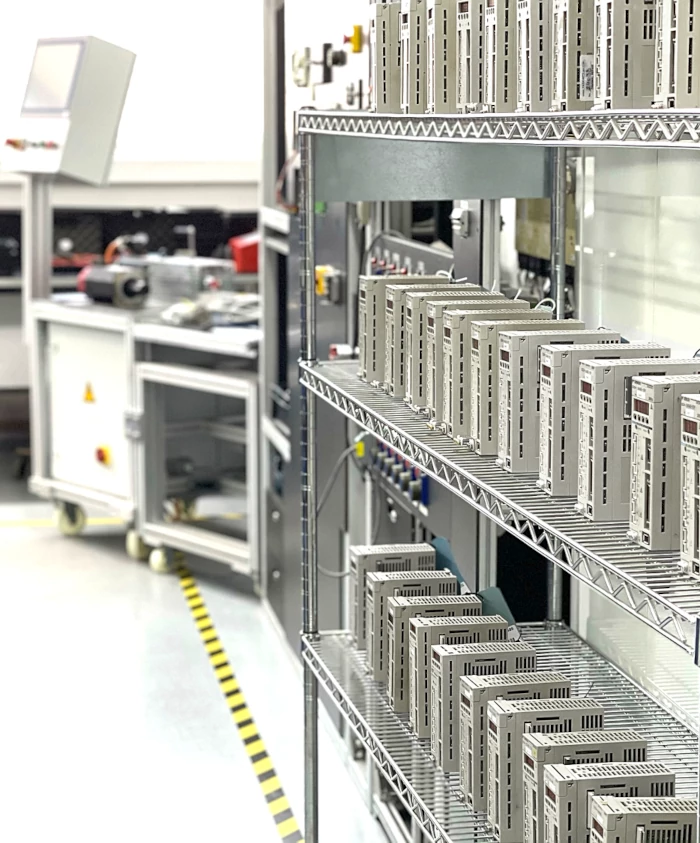
Who Our Authenticity Check Is the Right Choice For
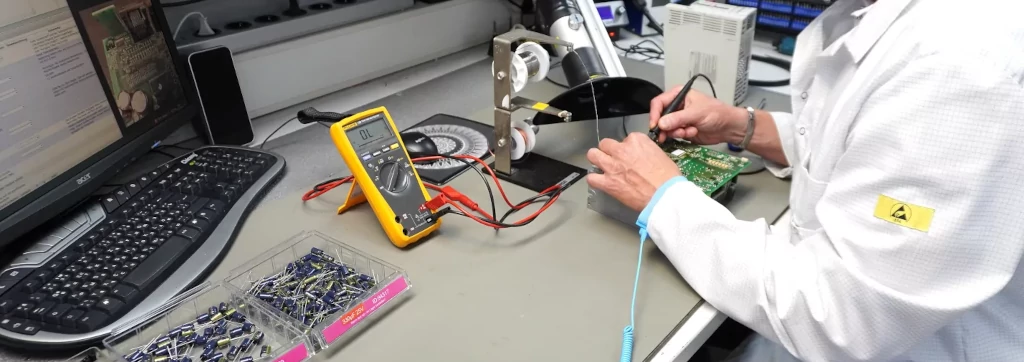
Maintenance Personnel and Technicians
Safety before installation: verification of drives and motors to prevent unplanned downtime.
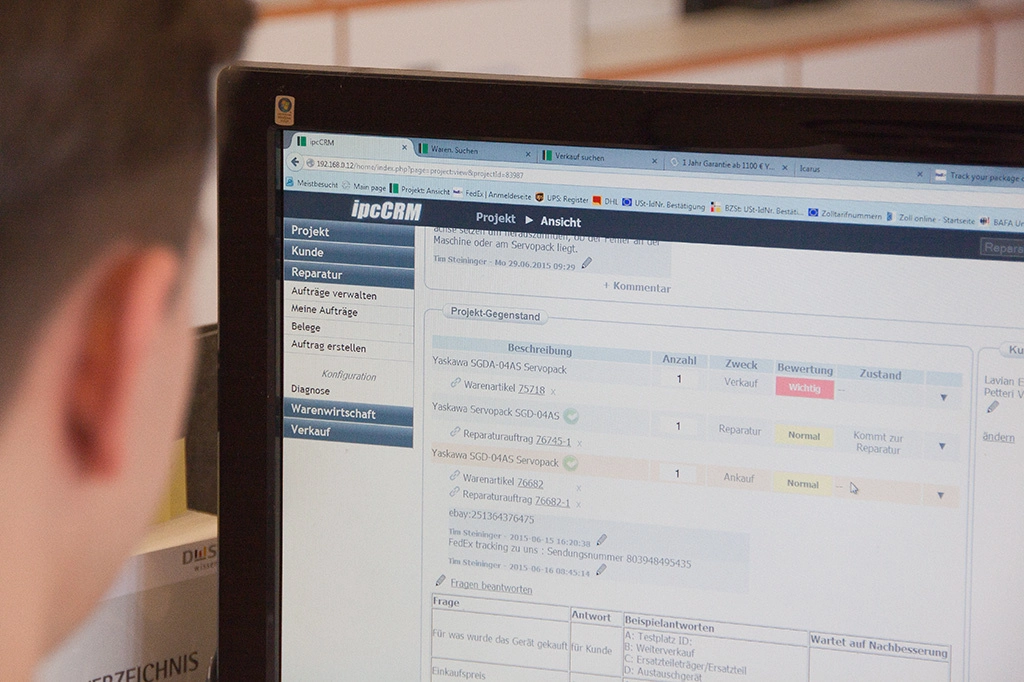
Purchasing and Procurement
Protection against incorrect purchases through technical inspection of serial numbers, condition, and authenticity.
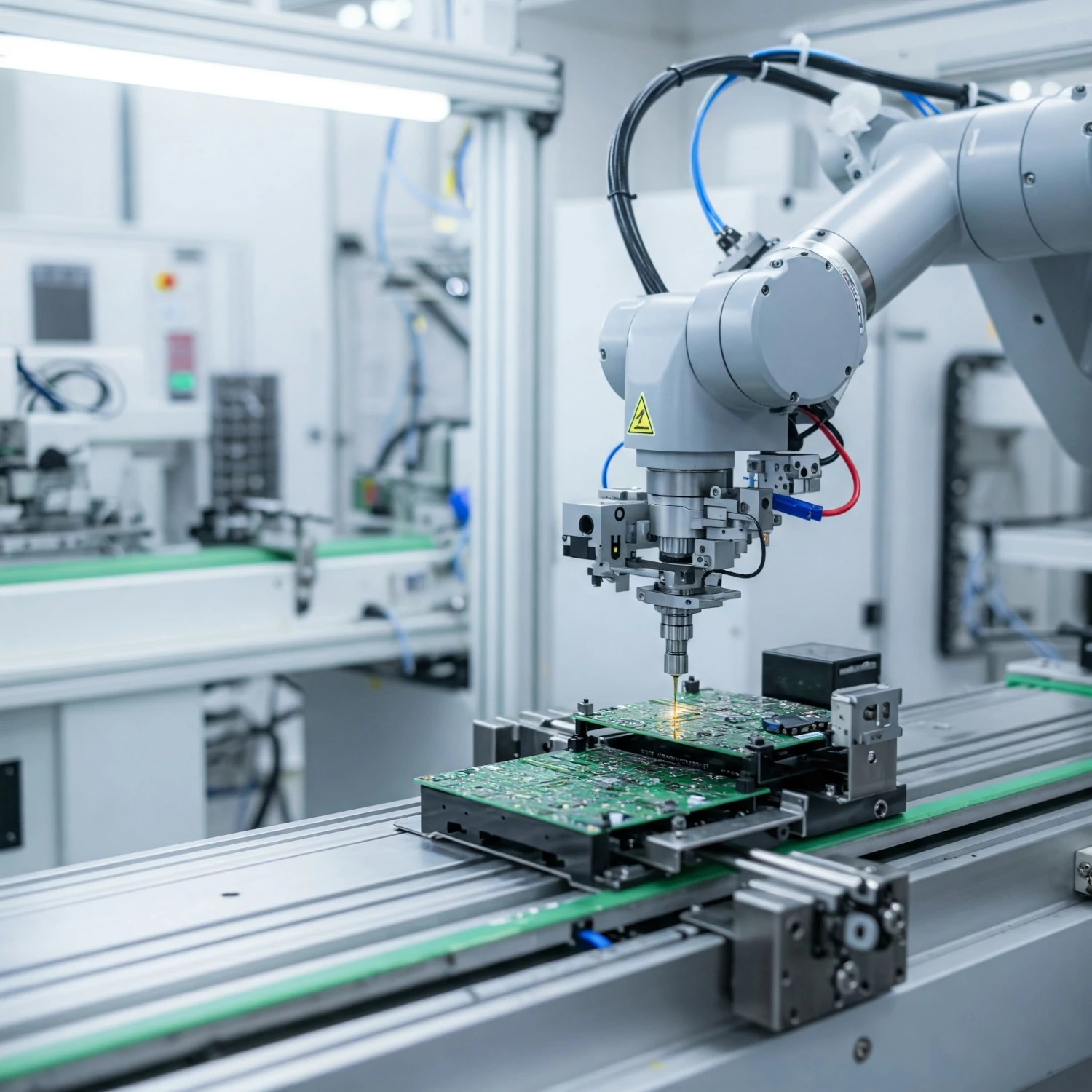
Quality Management
Documented test results for internal quality assurance and audit purposes.
Machine and Plant Manufacturers
Reliable verification of components to safeguard customer projects and contractual commitments.
Distributors and Resellers
Transparent evaluation of device condition to enable trustworthy resale.
Learn More About Manipulation and Counterfeit Electronic Components in Our Blogs
Safety for your CNC and drive technology:
Counterfeit or tampered drives are a growing risk in the industrial supply chain. Even servo motors or drives declared as ‘new’ may contain internally worn components, replaced assemblies or tampered ty...
Initial situation and fault description.
The Mitsubishi AC Servo Motor HG-KR43J was sent to us with a recurring and reproducible fault condition. During operation in combination with a MR-J4-40B Mitsubishi Servo Drive Unit, the following alarm occu...
A customer purchased what he thought were genuine XtraDrive XD-01-MSD0 drives from an Asian seller. The price was high, the trust was strong, and the units looked authentic.
However, the drives were never tested upon arrival. They remained in stora...
Why we are telling this story?
We regularly purchase servo drives as replacements for our industrial customers fast, reliable, documented. At the end of August 2025, a customer urgently needed a Yaskawa SGMSH‑30DCA6F‑OY. What initially looked l...