25.10.2026 by Viktor Siebert
Yaskawa SGMGH-13DCA-YG15: Repair after liquid ingress and encoder failure
Yaskawa SGMGH-13DCA-YG15: liquid ingress, poor insulation and encoder corrosion
This Yaskawa AC servo motor arrived at industrypart with poor insulation readings. The customer also reported repeated machine crashes. Our investigation identified liquid ingress through defective seals, extremely poor insulation readings and an encoder affected by corrosion. We completely overhauled the motor, then tested and adjusted it.
Identification and technical data from the nameplate
| Parameter | Documented value |
|---|
| Manufacturer | Yaskawa Electric |
| Model | SGMGH-13DCA-YG15 |
| Device type | AC Servo Motor |
| Rated output | 1,300 W / 1.3 kW |
| Rated torque | 8.34 N·m |
| Rated speed | 1,500 rpm |
| Rated voltage | 400 V |
| Rated current | 8.3 A |
| Duty / insulation class | CONT. / F |
| Serial number | B0157D232810006 |
| O/N | 5G0244 002 -006 |
| DATE | 1507 |
| Origin | Made in Japan |
| Original encoder shown in the photo | UTSIH-B17CK, INCR. ENCODER |
These ratings describe the operating point stated on the plate. The 1,500 rpm figure is not a maximum-speed approval. Insulation class F is a thermal classification, not a measurement of the motor’s present insulation condition. The supplied repair information does not specify the designation of the replacement encoder.
Role in the drive system and replacement compatibility
The motor converts the electrical output controlled by the servo amplifier into shaft torque. The encoder supplies motion feedback used by the drive system to process position and speed. The higher-level controller specifies the requested movement. Power and feedback connections therefore serve different functions, but moisture can affect both at the same time.
Replacement and repair must take account of the full SGMGH-13DCA-YG15 variant. Equal power or a similar connector does not establish compatibility. Shaft and flange dimensions, pin assignments, encoder interface, motor data and machine-builder approvals must match. The machine and installed servo amplifier were not identified for this case, so no particular drive pairing is asserted here.
Separating the customer report from workshop findings
| Area | Observation | Interpretation |
|---|
| Customer report | Poor insulation and repeated machine crashes. | Reported operating fault; individual motion events were not reconstructed. |
| Sealing points | Defective seals allowed liquid into the motor. | Ingress route confirmed by the investigation. |
| Electrical condition | Extremely poor insulation readings. | No numerical readings or test voltage supplied for this report. |
| Feedback | Corrosion prevented reliable encoder counting. | Confirmed feedback fault. |
| External condition | Deteriorated surfaces and connector corrosion visible. | Photos document external findings, not internal measurements. |
Why liquid can cause several faults at once
Moisture and conductive residues can create unwanted current paths between conductors and the housing, reducing insulation resistance. This finding concerns electrical separation. On its own, it does not identify whether the affected area is the winding, a connection or an attached cable. Reliable diagnosis requires these areas to be considered separately.
Corroded contacts or encoder damage can distort or interrupt motion feedback. The controller compares commanded and actual movement. If actual motion is not captured reliably, dependable position control is compromised. This is consistent with the encoder finding, but does not prove the exact cause of every customer-reported crash. That would also require machine logs, commands, feedback records and examination of the remaining axis mechanics.
Components and work performed
| Component | Function and action |
|---|
| Ball bearings | Guide the shaft mechanically; replaced. |
| Seals | Protect sealing points; replaced. |
| Connectors | Electrical connections for motor and feedback; replaced. |
| Encoder | Motion feedback; replaced, followed by motor adjustment. |
| Housing and surfaces | Thoroughly cleaned and repainted. |
| Complete motor | Tested and adjusted after overhaul. |
The supplied information does not document rewinding, brake replacement or specific test loads, and none is claimed here. New seals address the identified deterioration at the motor. The installation must also be assessed to prevent continued exposure of vulnerable areas to liquid.
Diagnostic guidance for maintenance
Diagnosis depends on separating the power circuit, feedback and mechanics. An insulation fault and a counting fault require different investigations. A qualified electrical specialist should assess motor and cable separately under the equipment-specific procedure. Insulation testing must not be applied indiscriminately through connected encoder or amplifier electronics. Record test conditions and results so that later comparisons remain meaningful.
For feedback problems, assess the connectors on both sides, cable condition, supply and actual signal transmission. Following reported machine crashes, also consider mechanical damage, coupling condition, referencing and machine-level recommissioning. A repaired motor does not replace those checks. These are general diagnostic considerations, not additional workshop operations claimed for this case.
Alarm reference: selected Sigma-II SGDH amplifier codes
No specific alarm code was reported. The source-checked selection below applies only to the SGDH scope of the Sigma-II manual cited below. It is not a list of alarms observed in this case or an approval for an unidentified or machine-specific drive. Encoder-related indications depend on the applicable feedback system. Check the amplifier, software version and machine manual before using these codes.
| Code | Meaning in brief |
|---|
| A.10 | Overcurrent or heatsink overtemperature |
| A.51 | Overspeed |
| A.71 / A.72 | High / lower-load overload |
| A.C1 | Uncontrolled motor motion detected |
| A.C9 | Encoder communication failure |
| A.CA | Invalid encoder parameters |
| A.Cb | Incorrect encoder reply |
| A.d0 | Position-error limit exceeded |
Overcurrent, position deviation and feedback faults are different diagnostic clues. A code identifies a monitored abnormal condition, not automatically the component to replace. None of these codes can be assigned to this motor without the actual alarm history.
Testing, adjustment and prevention
After replacement of bearings, seals, connectors and encoder, together with cleaning and repainting, the motor was tested and adjusted. The original recording shows the subsequent test run. It documents part of the operation, but not numerical insulation results or a specified load or endurance test.
Inspect sealing points, connectors and cable routing regularly for moisture, deposits, damage and mechanical strain. Identify the actual liquid path: a new seal has limited benefit if the installation continues to flood the connection area. The manufacturer manual recommends protection from oil and water mist and appropriate shaft sealing. Check cleaning methods and installation orientation against the machine requirements.
Sources and scope
Unit-specific data: supplied nameplate, encoder photograph and repair information. General manufacturer reference: Yaskawa Sigma II Servo System User’s Manual, YEA-SIA-S800-32.2, Rev. K-1, section 2.1.8, page 2-6, and alarm table 9.2.3, pages 9-40 and 9-41. Family-level information does not establish variant approval for suffix YG15.
Test video after overhaul
Before and after repair photographs
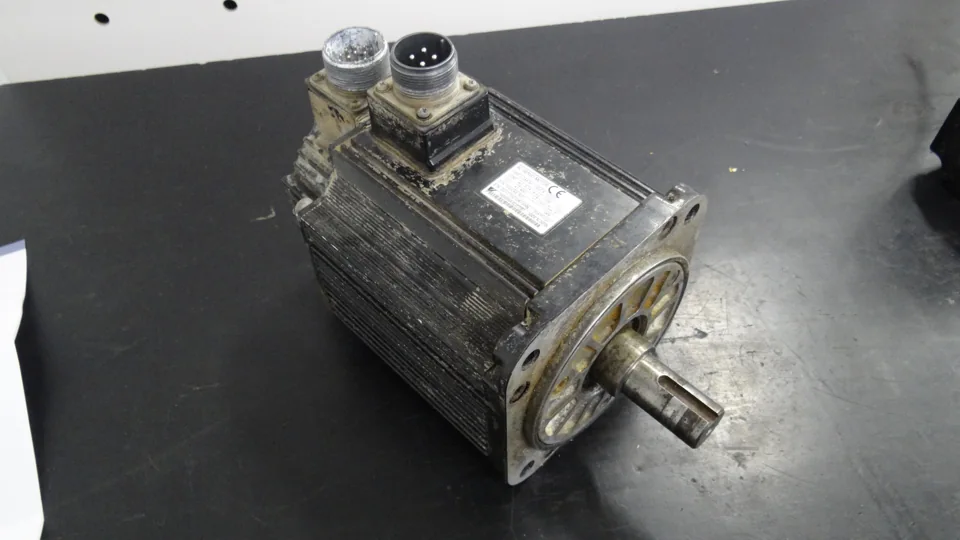 Yaskawa SGMGH-13DCA-YG15: Before repair: complete motor
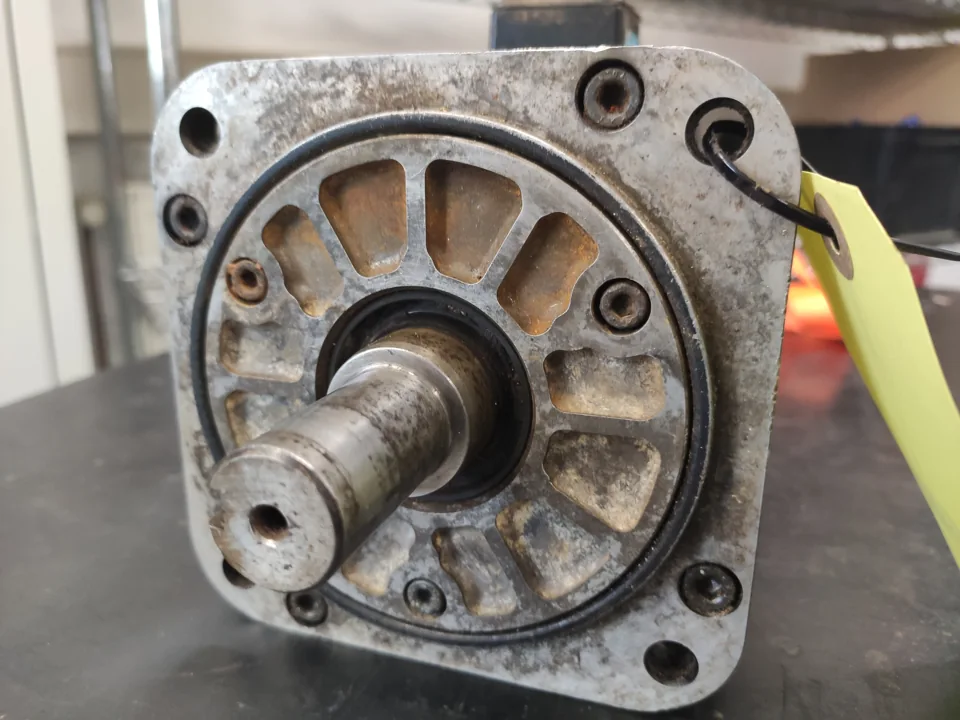 Yaskawa SGMGH-13DCA-YG15: Before repair: shaft and flange
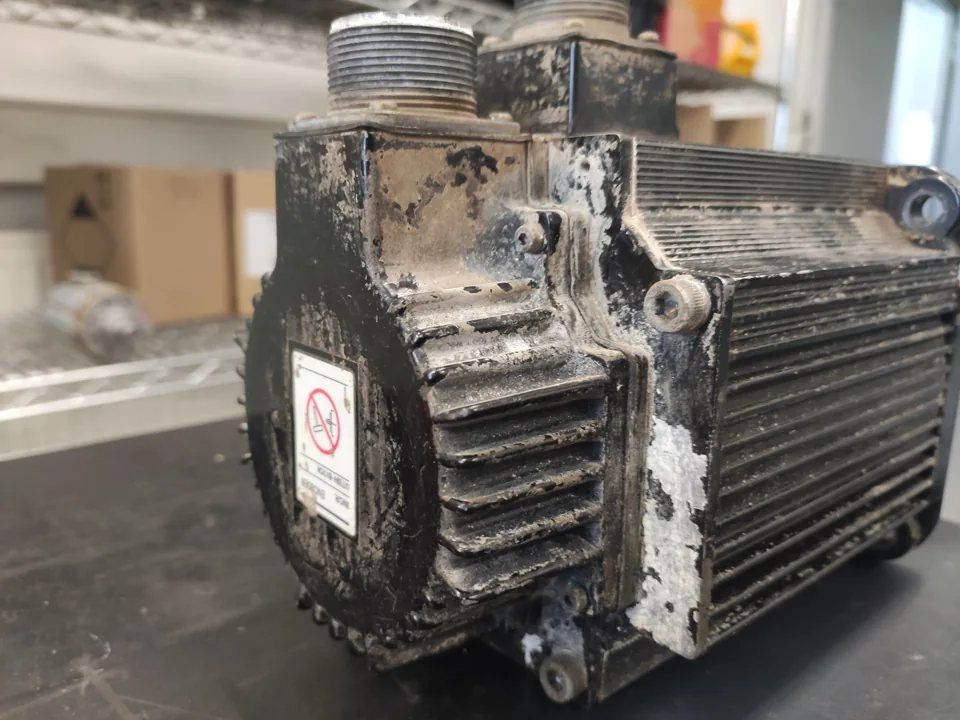 Yaskawa SGMGH-13DCA-YG15: Before repair: rear view
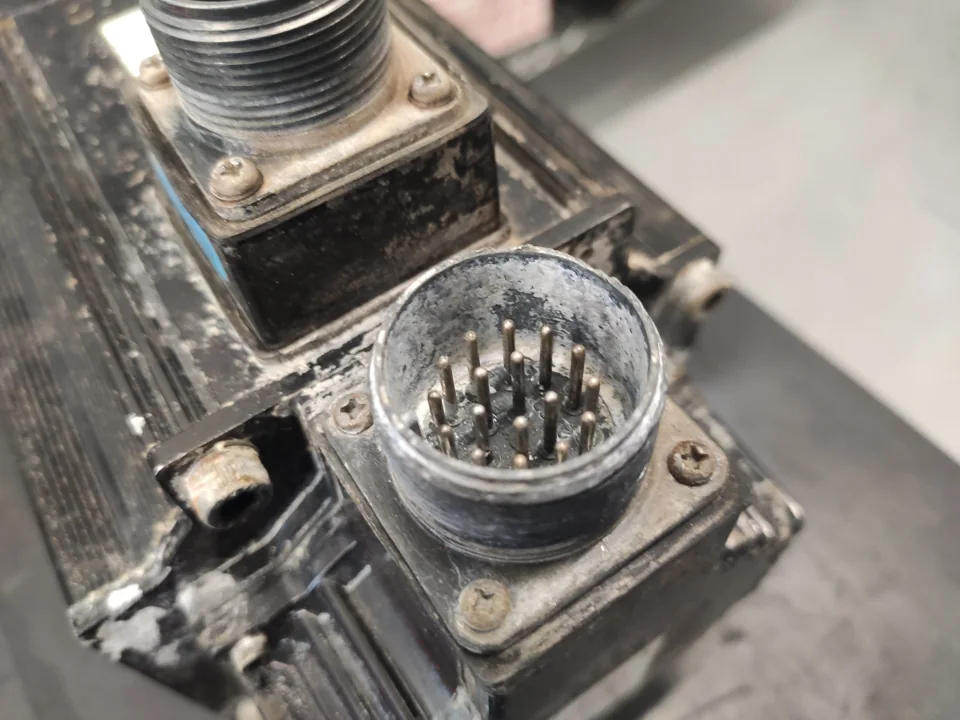 Yaskawa SGMGH-13DCA-YG15: Before repair: corroded connector
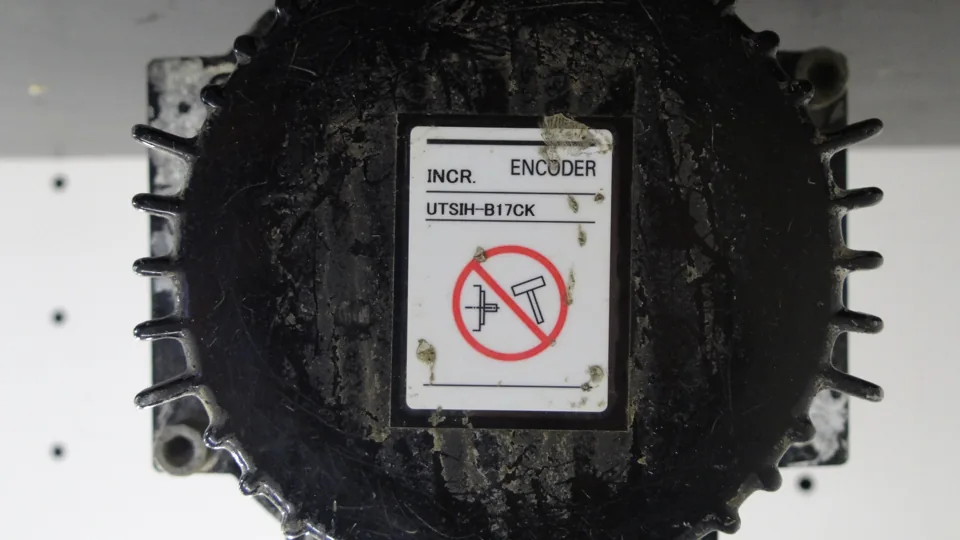 Yaskawa SGMGH-13DCA-YG15: Original UTSIH-B17CK encoder
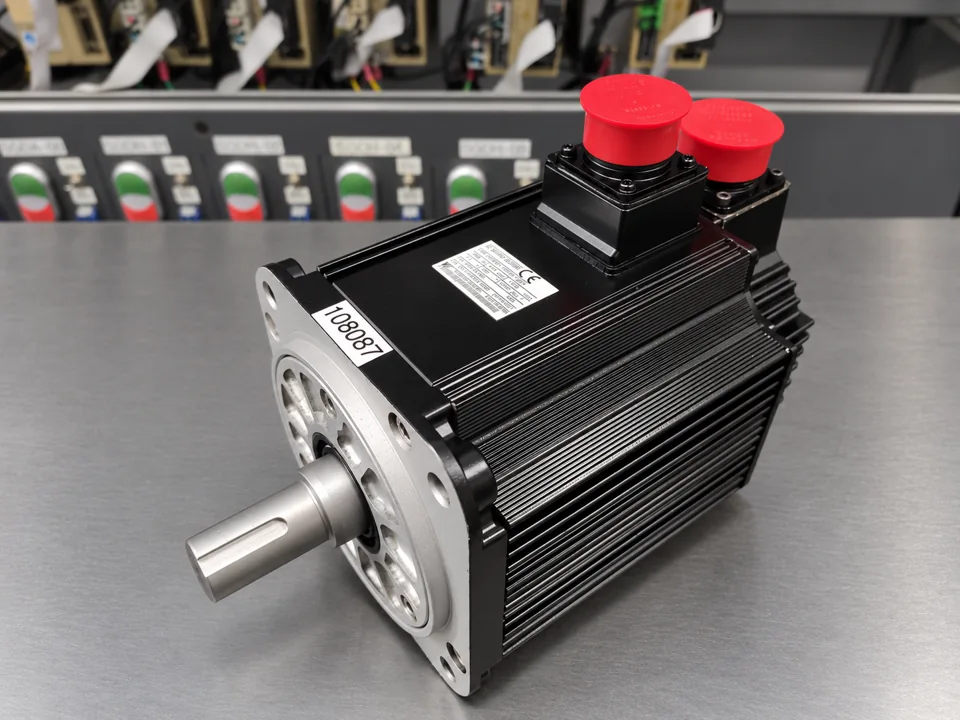 Yaskawa SGMGH-13DCA-YG15: After repair: main view
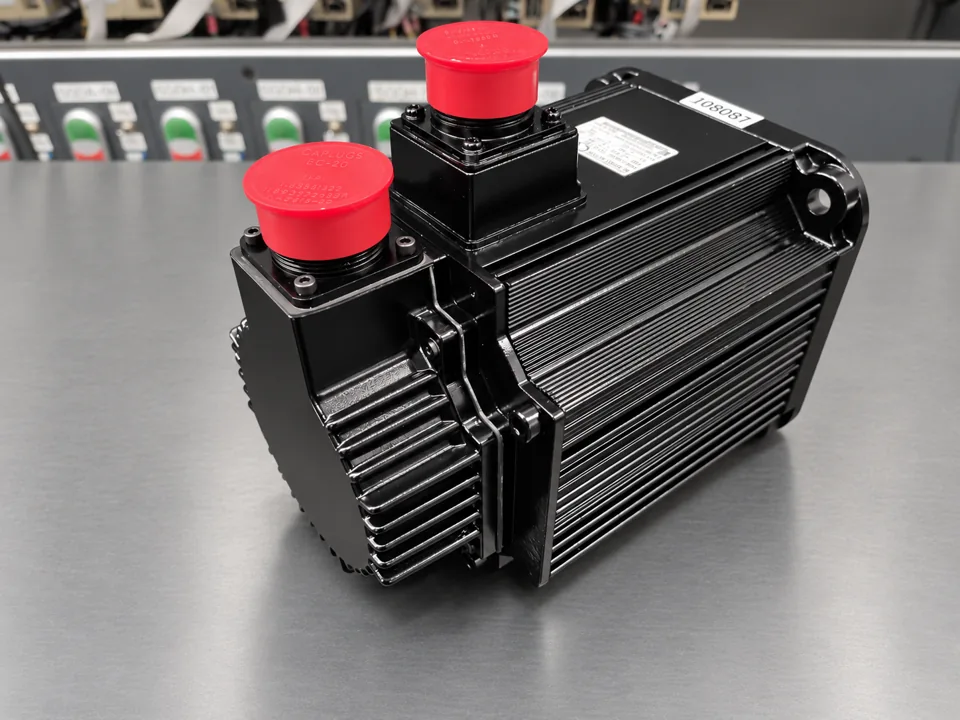 Yaskawa SGMGH-13DCA-YG15: After repair: rear view
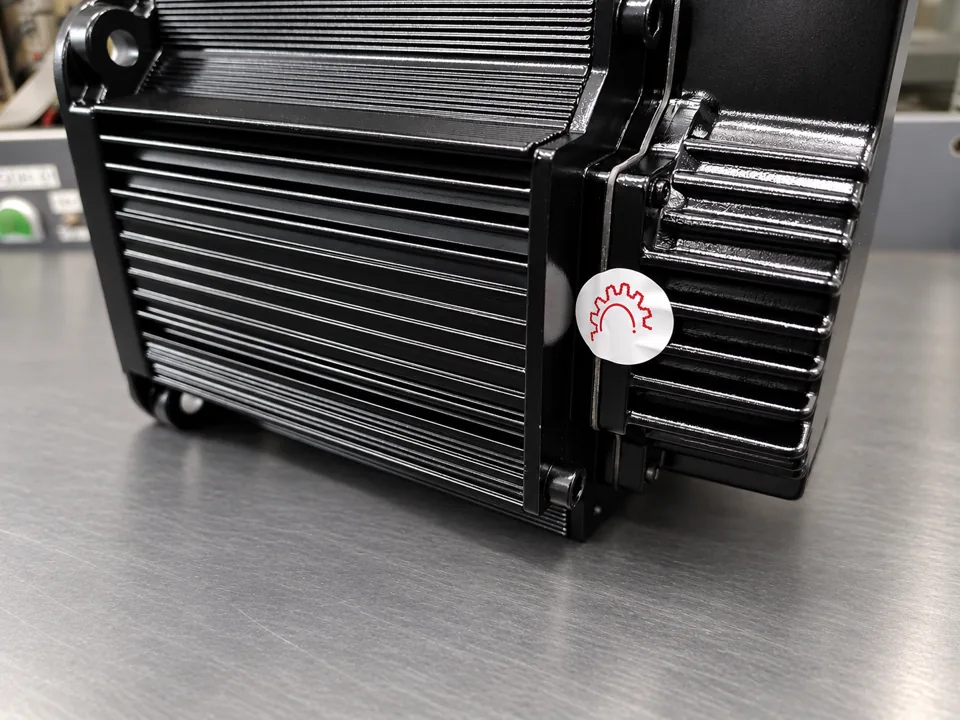 Yaskawa SGMGH-13DCA-YG15: After repair: housing detail
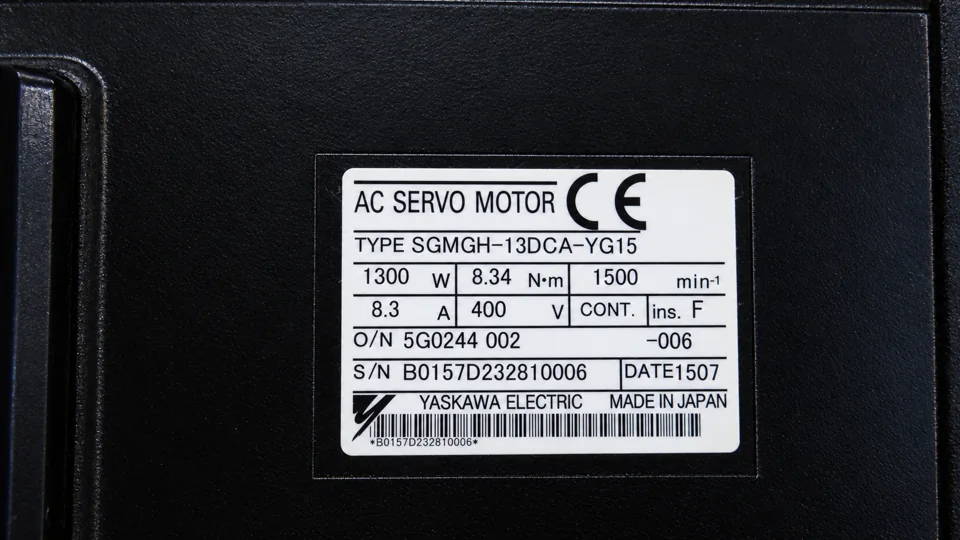 Yaskawa SGMGH-13DCA-YG15: Nameplate
Request a repair assessment
Send the complete motor designation, a nameplate photograph, amplifier model and a description of the fault. Existing measurement records, alarm displays and details of liquid exposure are helpful. industrypart supports you with diagnosis, repair and preventive overhaul of industrial motors and drive electronics.
Yaskawa SGMGH-13DCA-YG15 AC Servo Motor
For more information about our Yaskawa motor and drive repairs, visit our Yaskawa repair service.