19.10.2026 by Viktor Siebert
Yaskawa SGMAV-08ADA61 servo motor: coolant-damaged encoder and overhaul
Corrective motion starts after a few minutes
The Yaskawa SGMAV-08ADA61 AC Servo Motor arrived at industrypart with a delayed fault. The customer reported that the motor initially ran, then began making corrective movements after a few minutes before entering a fault state. The ball bearings also showed audible wear. Our inspection found coolant inside the motor. It had entered through a defective seal and damaged the encoder beyond repair.
Assessing coolant ingress and bearing condition together
The findings affected both feedback and the mechanical condition of the motor. Unreliable encoder information can disturb control. Worn ball bearings are a separate mechanical defect. We therefore carried out a complete motor overhaul. Replacing the encoder alone would not have remedied the failed sealing or worn bearings.
New encoder and complete overhaul
We replaced the damaged Yaskawa encoder with a new unit and programmed it for the motor in our workshop. The motor was cleaned, its ball bearings and seals were renewed, and the housing was repainted.
Extended bench testing
After the overhaul, the motor underwent a longer bench test. The customer expressly confirmed the Yaskawa SGDV-2R8A11A servo drive used for this work. The supplied video shows an approximately 45.7-second excerpt including the motor, test environment and shaft movement. The exact total test duration, load and measured positioning accuracy were not provided. The technical section explains the drive rating and the limits of transferring this setup to rated-load operation.
Technical specifications and model identification
| Item | Data and scope |
|---|
| Motor | Yaskawa SGMAV-08ADA61, Sigma-V, AC servo motor |
| Rated output | 750 W |
| Voltage / phases | 200 V / 3 |
| Rated current | 5.3 A |
| Rated torque | 2.39 Nm |
| Rated speed | 3,000 min⁻¹ |
| Peak torque | 7.16 Nm (manufacturer catalog) |
| Maximum speed | 6,000 min⁻¹ (manufacturer catalog) |
| Enclosure | IP65, excluding shaft (manufacturer catalog) |
| Insulation class | B |
| Feedback designation | D: 20-bit incremental serial encoder |
| Shaft / options | 6: keyed straight shaft with tapped end; 1: no optional brake or oil seal according to model code |
| Reported test drive | Yaskawa SGDV-2R8A11A, MECHATROLINK-II |
| Drive continuous output | 2.8 Arms, 200-V class |
The output, voltage, current, torque, rated speed and insulation class above are read from the supplied nameplate. The D feedback code identifies an incremental version. A separate encoder part number has not been supplied. Twenty-bit resolution describes measurement granularity, not verified machine positioning accuracy. The model option code does not mean that the motor has no sealing elements: seals were renewed during this repair.
Application and limits of interchangeability
An SGMAV servo motor converts controlled current into torque for a machine axis. The controller supplies motion commands; the SERVOPACK powers the motor and evaluates feedback. No specific machine model is documented for this repair. Replacement selection must include the full motor suffix, voltage class, feedback version, shaft geometry, mounting, brake options, cables and parameters. Matching connectors alone do not establish compatibility.
The workshop confirms that an SGDV-2R8A11A was used. Its continuous output is 2.8 Arms, whereas the motor nameplate states 5.3 A. Manufacturer selection tables normally assign the 750 W SGMAV-08A to the SGDV-5R5A class. This report records the actual workshop setup; it does not recommend the smaller drive as a rated-load replacement. No rated-load validation follows from the test video.
How power, feedback and control interact
The drive converts its DC-link energy into controlled three-phase motor currents. The stator field acts on the rotor, and the shaft transmits torque to the machine. The encoder sends position information back to the drive. Speed information is derived from changes in feedback over time. Depending on the operating mode, position, speed and current loops compare commands with measured values and adjust the output.
The encoder itself does not command corrective motion. If its information becomes unreliable, the controller may react to an apparent error or a monitoring function may stop the axis. Worn bearings can separately cause friction, vibration or clearance. A delayed fault can also involve temperature, vibration, cable movement or changing load. The delay alone does not identify a specific defective component. In this case, coolant ingress and an irreparable encoder were established by the workshop.
Components and diagnostic relevance
| Component | Function | Case finding / diagnostic value |
|---|
| Stator and rotor | Electromagnetic torque production | No winding replacement reported |
| Encoder | Shaft position feedback | Coolant damage; replaced and programmed for the motor |
| Ball bearings | Shaft support | Audible wear; renewed |
| Seals | Limit fluid and contaminant ingress | Defective seal identified as ingress route; seals renewed |
| Motor and feedback cables | Power and measurement signal paths | Inspect separately in fault isolation; no cable replacement claimed |
| SGDV SERVOPACK | Power conversion, control and monitoring | SGDV-2R8A11A used for workshop test |
Selected relevant Sigma-V alarms
No numerical alarm was provided for this repair. The following codes are manufacturer references from the MECHATROLINK-II rotational motor manual SIEP S800000 46J. They are not a fault history of this motor. A code directs diagnosis; it does not prove coolant ingress or automatically justify replacing an encoder.
| Code | Manufacturer name | Meaning and diagnostic context | Manual page |
|---|
| A.840 | Encoder Data Error | The encoder reports invalid data. Distinguish an internal encoder fault from interference; include cable routing and grounding. | 9-14 |
| A.C90 | Encoder Communications Error | Communication between encoder and SERVOPACK is unavailable. Check connectors, broken or shorted wiring, moisture, interference and the drive. | 9-16 |
| A.C91 | Encoder Communications Position Data Error | Position data calculation error. Cable damage, proximity to power cables and changing ground potential can contribute. | 9-17 |
| A.C92 | Encoder Communications Timer Error | Encoder communication timing error. Distinguish interference and vibration from encoder or SERVOPACK faults. | 9-17 |
| A.CA0 | Encoder Parameter Error | Invalid encoder parameters. Check encoder and drive against the correct configuration; this does not establish a simple tuning problem. | 9-17 |
| A.Cb0 | Encoder Echoback Error | Returned communication content is incorrect. Inspect wiring, contacts, cable specification, interference and vibration. | 9-18 |
| A.d00 | Position Error Overflow | Position error exceeds Pn520 with the servo enabled. Check wiring, commanded motion and parameters; assess mechanical resistance together with feedback. | 9-19 |
| A.520 | Vibration Alarm | Abnormal motor speed vibration detected. Assess tuning, load coupling and mechanical condition before changing parameters. | 9-3 |
| A.710 | Overload: High Load | High torque overload over seconds to tens of seconds. Check binding, load, acceleration, motor wiring and sizing. | 9-3 |
| A.720 | Overload: Low Load | Sustained operation above rated torque. Assess average load, bearing friction and the motion duty cycle. | 9-3 |
| A.C10 | Servo Overrun Detected | Uncontrolled motor motion detected. Professionally check U/V/W phase order, encoder and SERVOPACK. | 9-16 |
| A.E60 | MECHATROLINK Communications Error | Receive error on the controller-to-drive network. Check network cable, termination and interference. This is a different signal path from the motor encoder cable. | 9-20 |
Absolute-encoder backup, battery and multiturn alarms are deliberately excluded from this selection because the motor designation specifies incremental feedback. External load encoder alarms are also distinct from the built-in motor encoder. A.910 is an overload warning, not the same event as the A.710 or A.720 shutdown alarms. The exact installed drive version and machine documentation determine applicability.
Fault isolation for delayed corrective motion
| Observation | Useful professional check |
|---|
| Only after several minutes | Record time, temperature, operating mode and load; compare cold and warm operation. |
| Unstable feedback or communication fault | Inspect encoder connectors, cable, grounding and motor feedback independently of the motion network. |
| Audible bearings / increased torque demand | Assess bearings, coupling, alignment and mechanical resistance; do not compensate for damage by tuning. |
| Fluid or deposits at seals | Identify the entry route and assess affected assemblies; changing only the encoder leaves the ingress cause unresolved. |
| Fault persists after a substitution | Verify the substitute, configuration and test conditions before interpreting the result. |
These are general diagnostic approaches, not additional work claimed for this repair. Compare commanded and actual motion, following error and torque or load monitors where supported. Parameter limits must not simply be raised to hide a fault. Encoder replacement requires the correct feedback variant, mechanical alignment and motor-specific configuration. A workshop bench test does not replace machine reference checks and commissioning after installation.
Preventing a repeat coolant failure
During planned maintenance, inspect seals, cable entries, plugs and protective covers for damage and deposits. Direct coolant jets away from vulnerable points and avoid cleaning methods that force fluid into gaps. Confirm that replacement seal materials and geometry suit the actual medium and installation. A general enclosure rating does not guarantee resistance to every coolant, pressure jet or aged seal. Record changes in bearing noise, vibration and fault frequency early so that maintenance can be planned.
Sources and scope
Case facts: customer and workshop report, supplied photographs, original motor nameplate and 45.7-second test recording. Test drive SGDV-2R8A11A expressly confirmed by the customer. Manufacturer reference: Yaskawa, AC Servo Drives Sigma-V, Design and Maintenance, Rotational Motor, MECHATROLINK-II Communications Reference, SIEP S800000 46J, rating page 1-3, alarm overview 9-3 to 9-5, troubleshooting 9-14 and 9-16 to 9-20, warning section 9.2. Yaskawa Sigma-V manual. Yaskawa SGMAV manufacturer catalog. Drive-to-motor selection also checked against Omron, Sigma-5 rotary servo motors, I74E-EN-03, selection table. Sigma-5 selection table.
Test video
Repair photographs
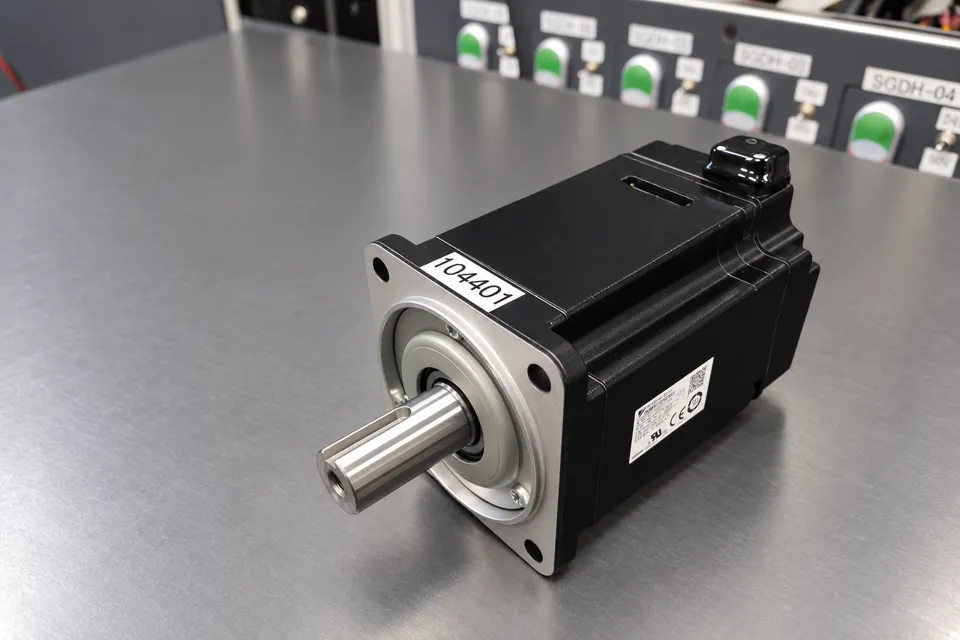 After repair: flange and shaft
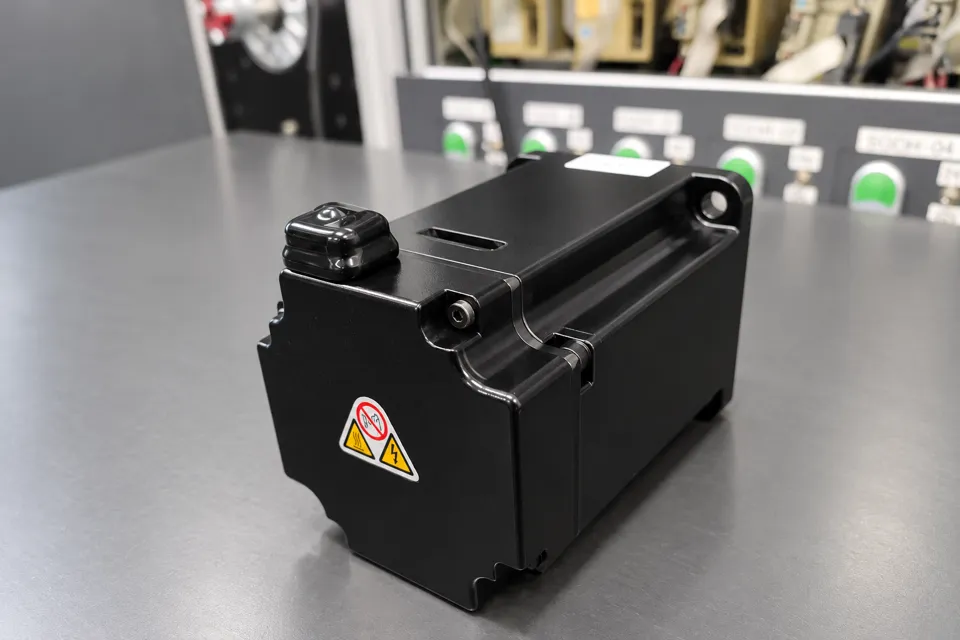 After repair: rear view
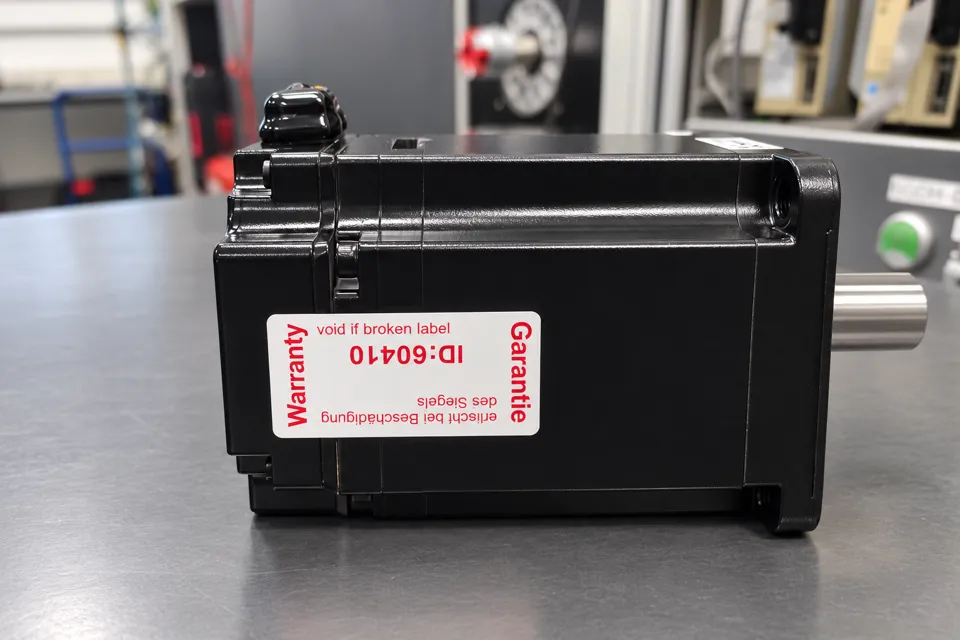 After repair: side view
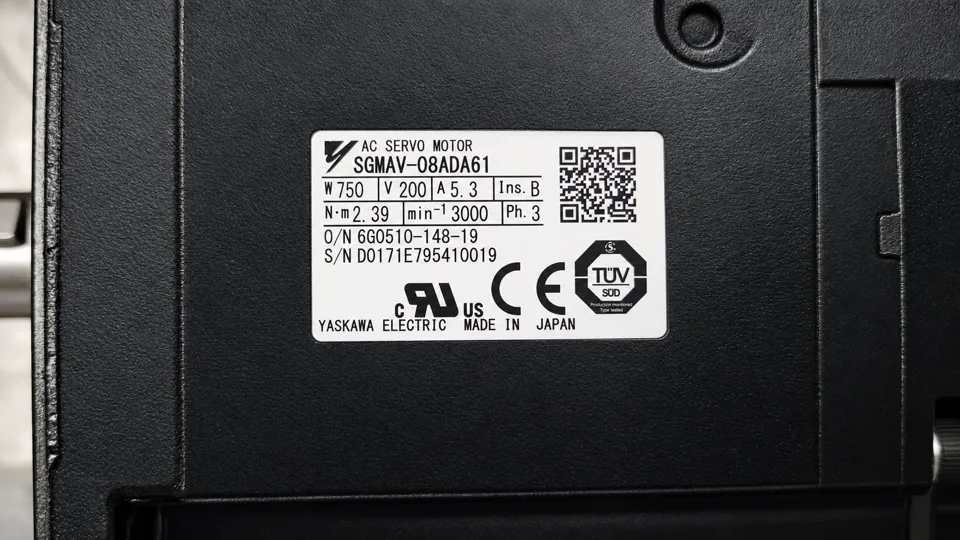 Servo motor nameplate
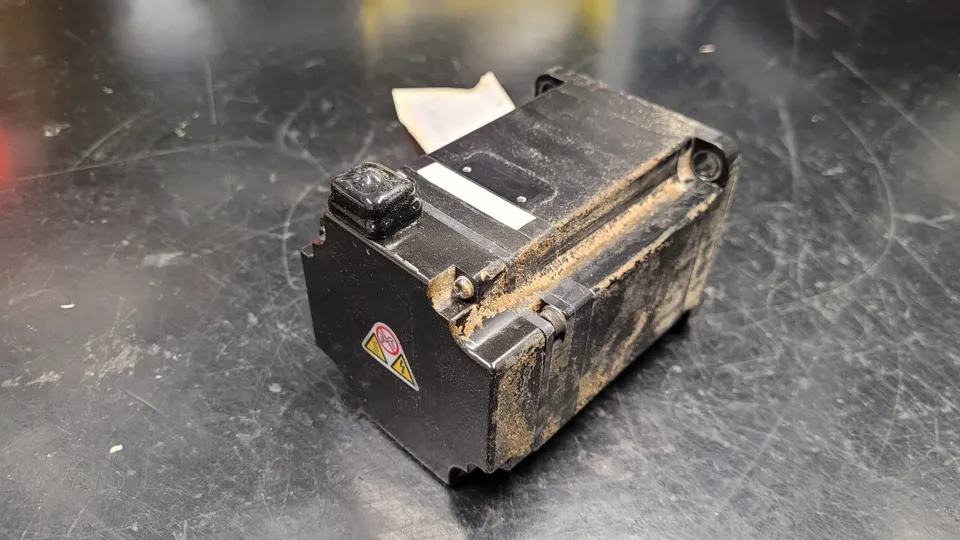 Before repair: rear and housing
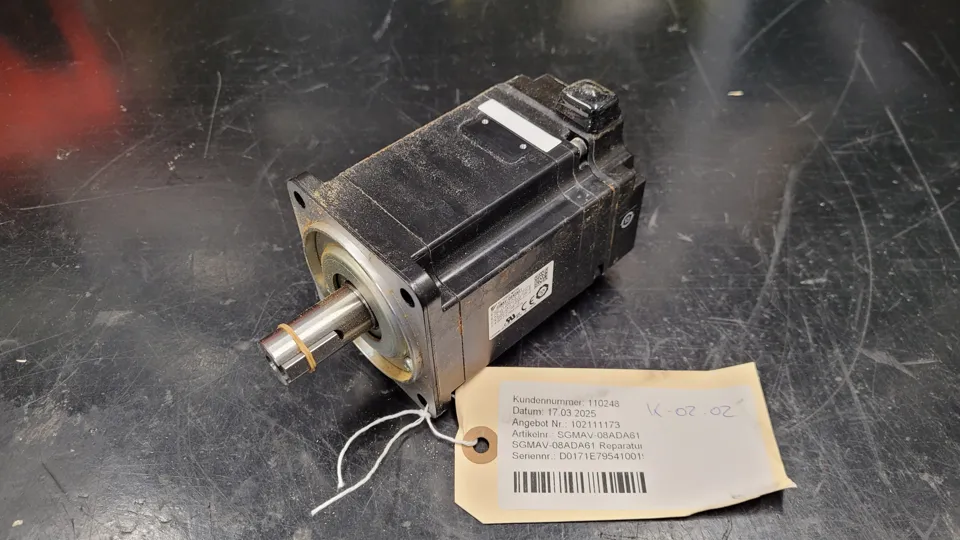 Before repair: flange and shaft
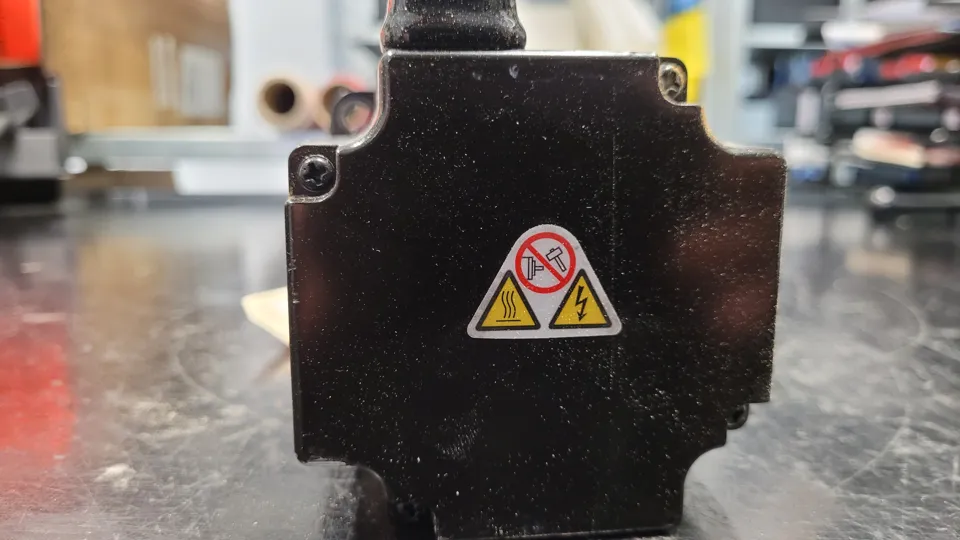 Before repair: encoder housing
Price, lead time and repair enquiry
For an individual repair assessment, please send the complete motor identification, nameplate photographs, exact alarm code and a description of when the fault occurs. Pricing and lead time depend on the findings and parts required. Details of our repair service are available in the Yaskawa service section.