20.10.2026 by Viktor Siebert
Yaskawa SGDV-1R9DE1A020000 Servopack: A.100 and A.410 following cable damage
A.100 and A.410 following damage to the motor cable
The Yaskawa Servopack SGDV-1R9DE1A020000 arrived at industrypart with customer reports of A100 and A410. According to the customer, the faults had occurred in connection with damaged sheathing on the motor cable. Workshop inspection also identified damage in the power section. We repaired the unit, carried out a preventive overhaul, cleaned it and then tested it.
This case shows why a cable problem should also prompt examination of the connected drive electronics. However, the two alarm indications alone do not establish which component has failed or the sequence in which the faults developed.
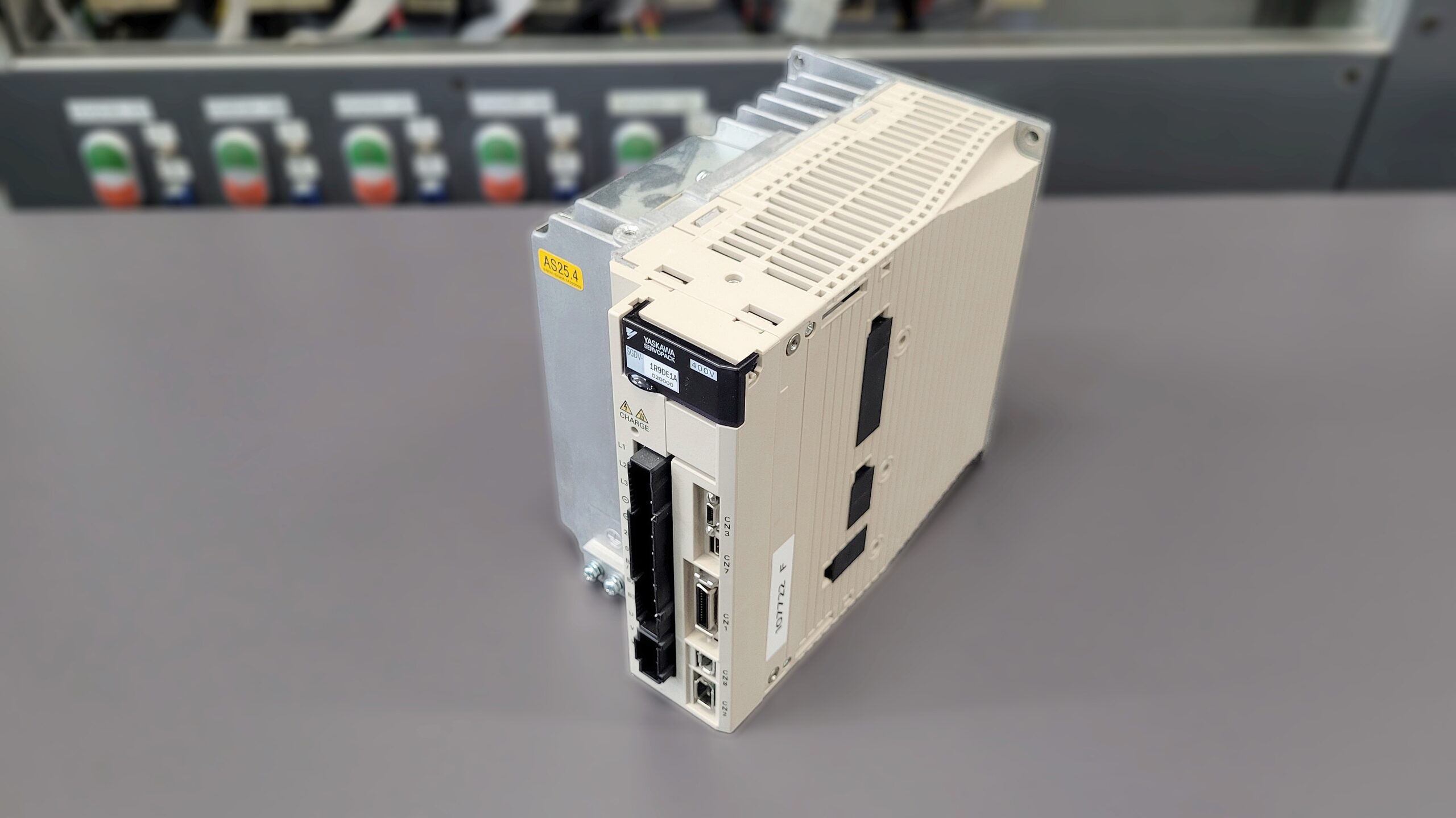 Overview after repair
How the servo amplifier works
In simplified terms, energy flows from the main supply through rectification and the DC link to the power stage and then to the motor. The control system processes commands and feedback. Current sensing supports monitoring and regulation of motor currents. Cooling, protective circuitry and the electronics supply form part of this complete system.
A motor-cable problem can stress the output circuit. An additional internal drive fault can affect energy supply or monitoring. The external fault location and the internal repair findings should therefore be documented separately. Damaged outer sheathing is an important indication, but does not by itself demonstrate a measured short circuit between individual conductors.
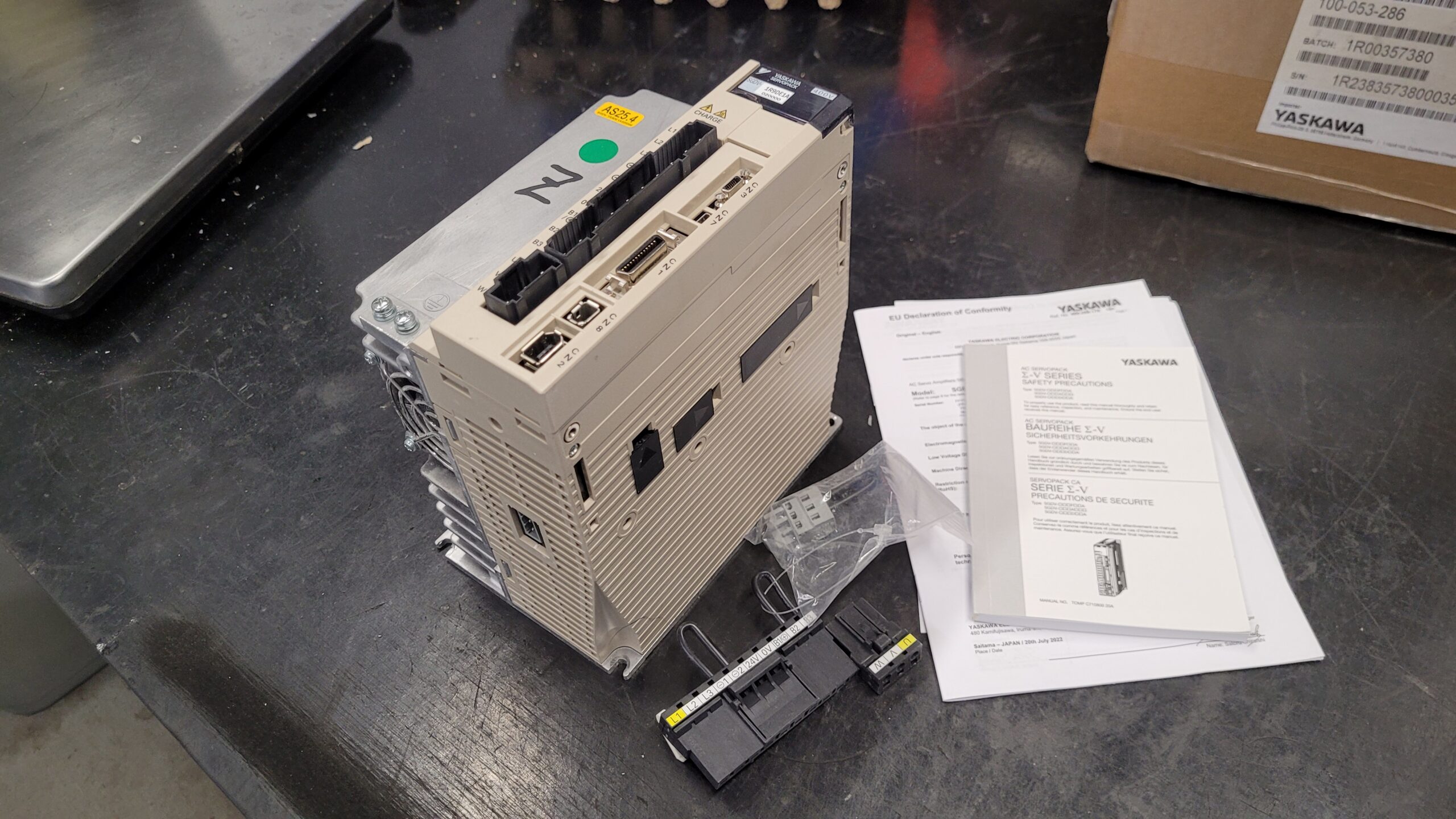 Before repair – view 1
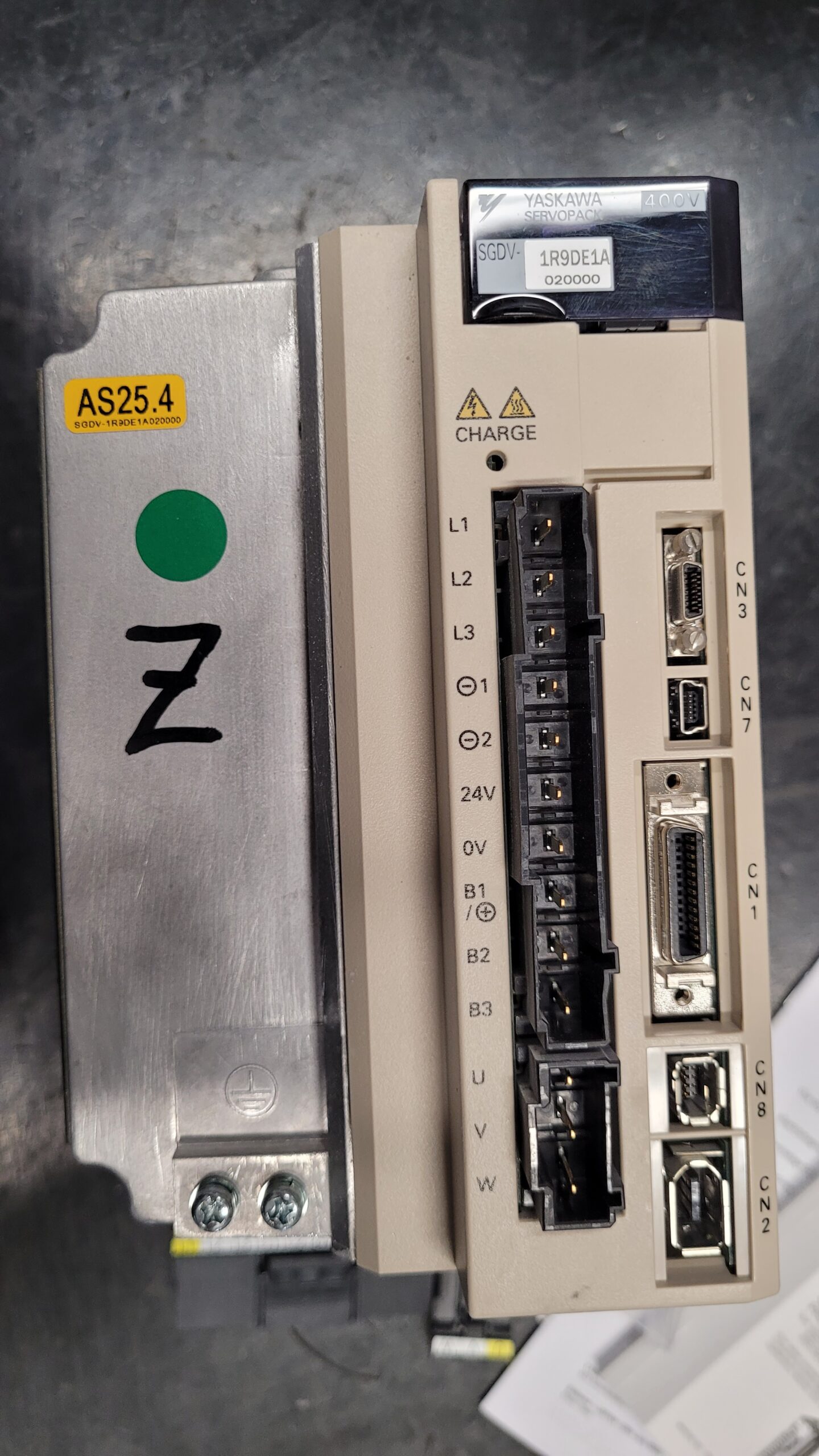 Before repair – view 2
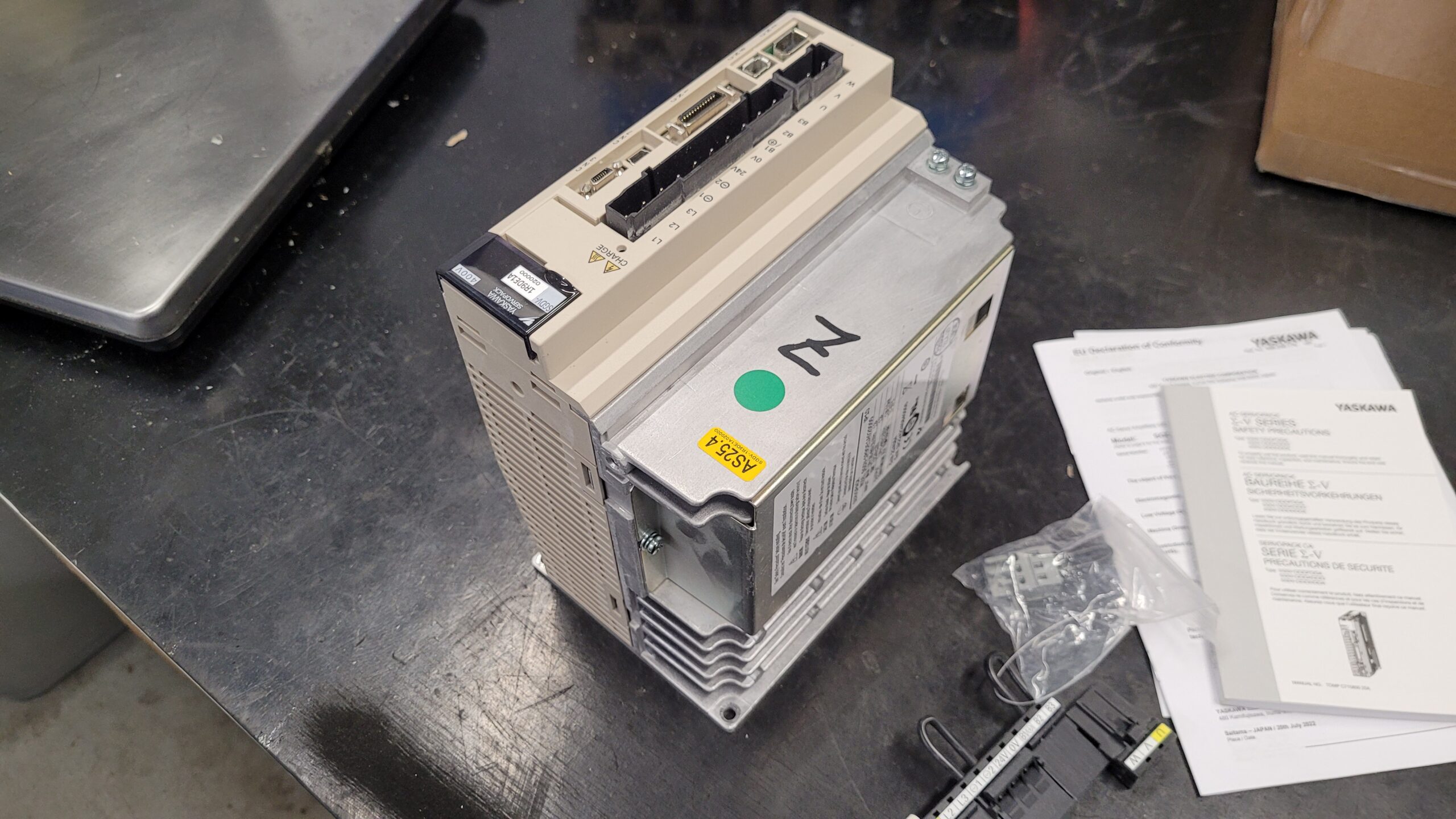 Before repair – view 3
Repair, overhaul and testing
We repaired the power section and addressed the affected protective and monitoring circuits. The preventive overhaul included replacement of capacitors, current-sensing components, the fan and relay. The Servopack was then reassembled and tested. No specific measured values, load levels or test duration are stated for this case.
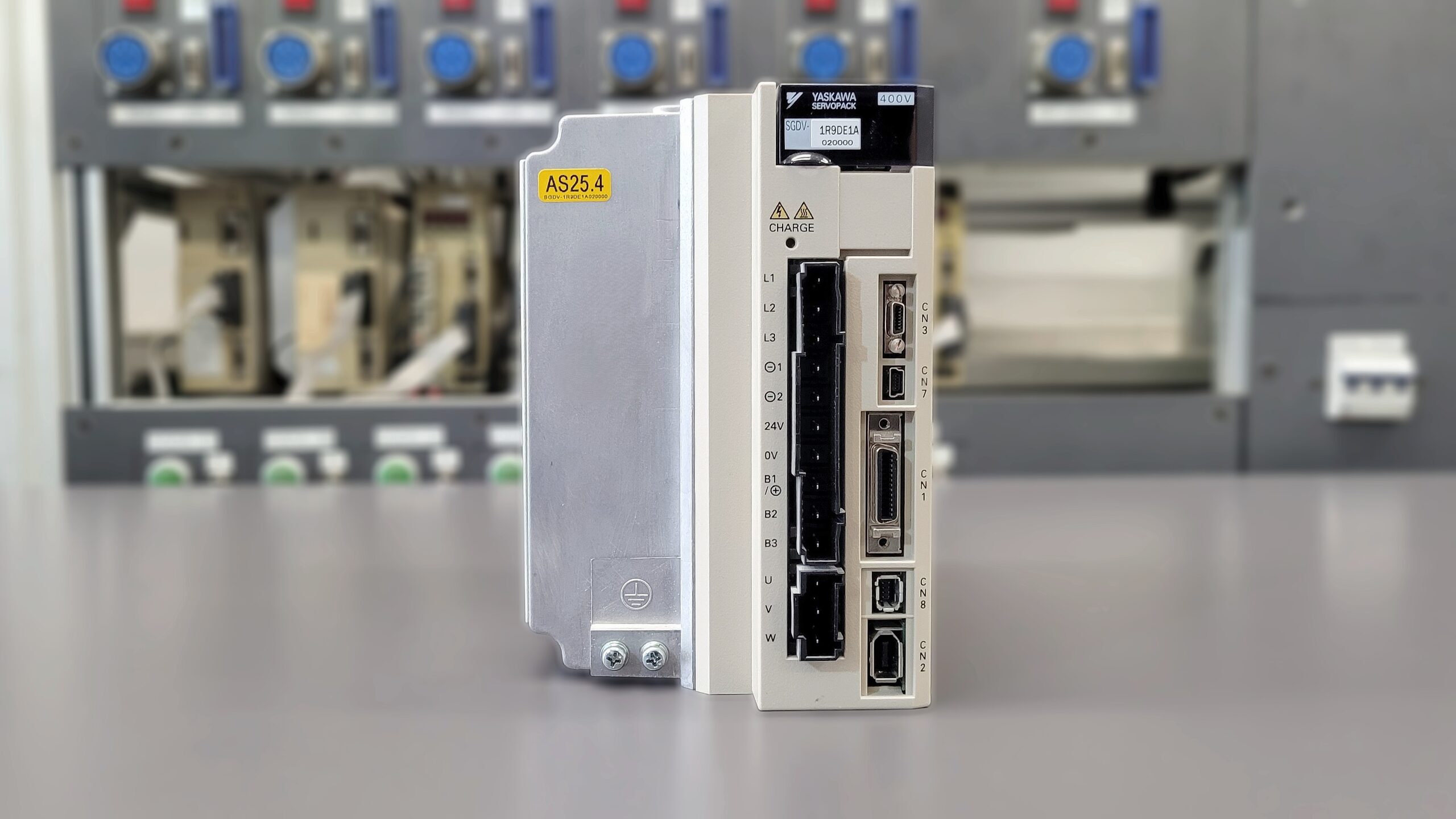 After repair – view 1
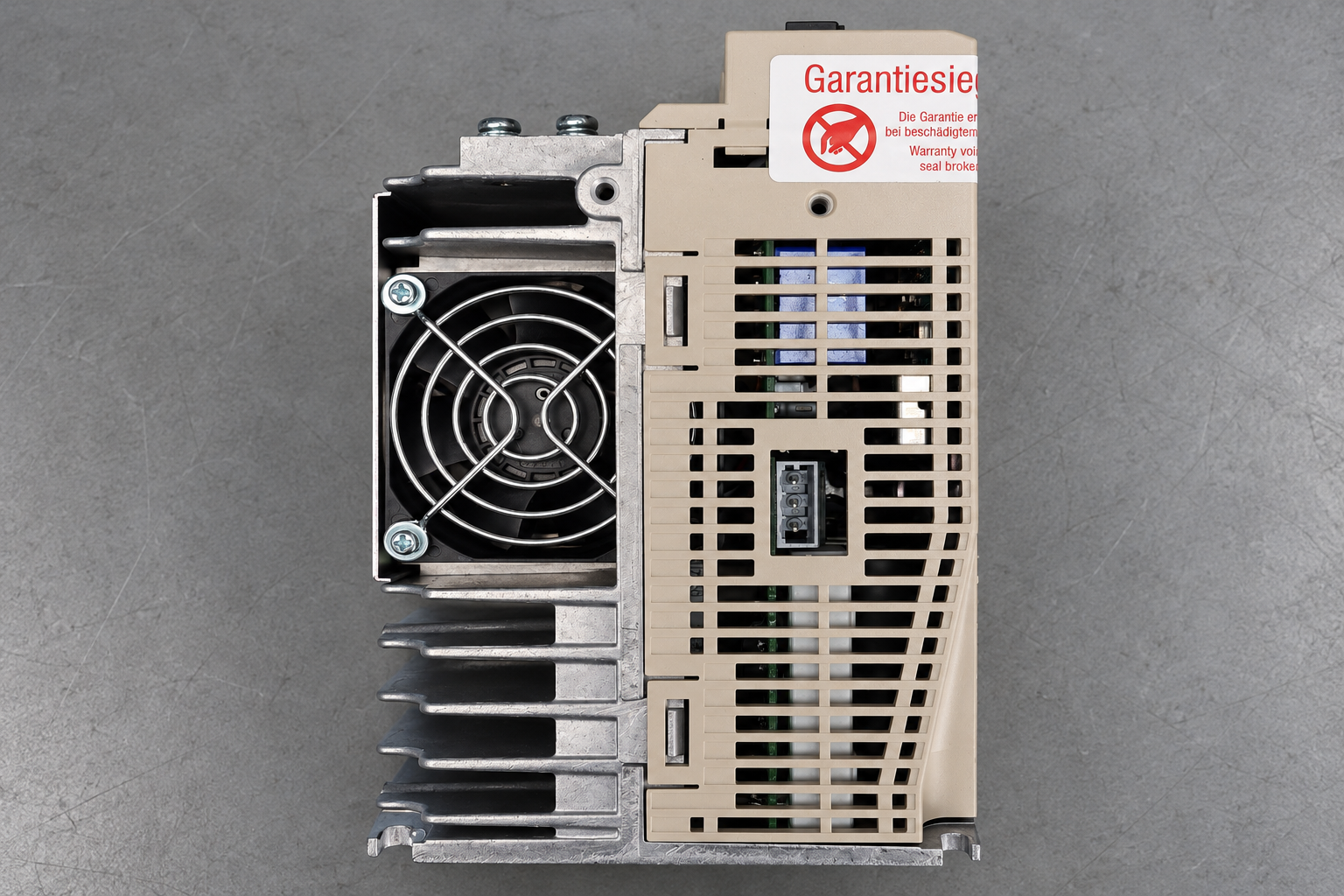 After repair – view 4
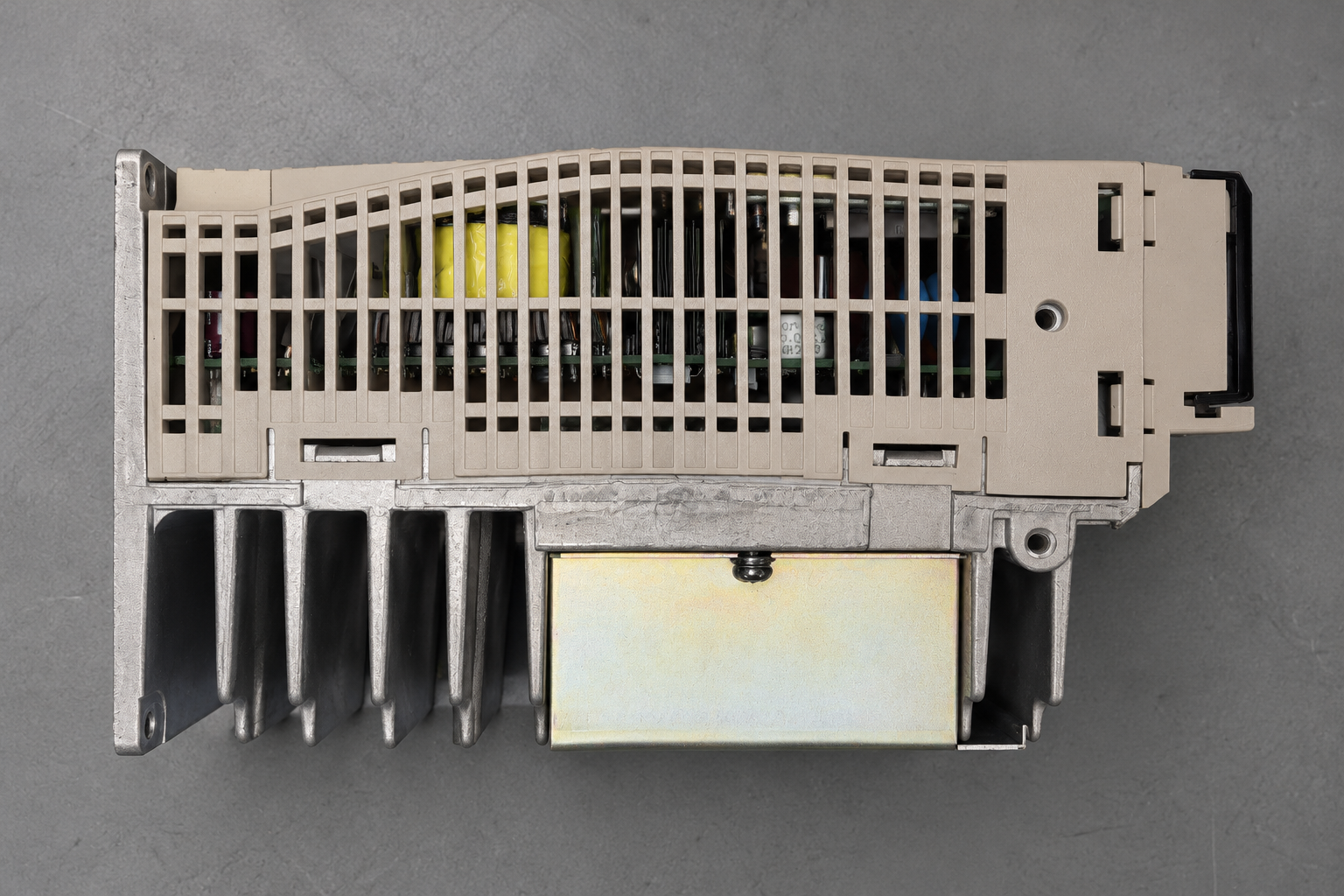 After repair – view 5
Why preventive overhaul is part of the work
The workshop work was not limited to the immediately damaged components. Cooling and other components in the power section were also addressed. The fan, relay and capacitors were replaced. The transistor module was inspected and found to be in order according to the workshop findings. This distinction matters: a displayed alarm and an actually defective component are not the same thing.
Nevertheless, the external issue and the repair inside the unit are connected. Before the Servopack is used in the machine again, the damaged motor cable must be professionally repaired or replaced and checked. Repaired electronics do not eliminate a fault that remains in the cable.
Useful checks before reinstallation
For maintenance staff, the first useful question is when the fault occurred: on power-up, at servo enable, during movement or after warming up? The position of a moving motor cable can also help locate an intermittent fault. Record the alarm history together with the machine’s own fault message.
The damaged motor cable must be professionally repaired or replaced and checked before recommissioning. Qualified personnel should also consider connectors, strain relief, bending radii and possible abrasion points. Distinguish the motor, cable and drive during diagnosis. Insulation testing must follow the manufacturer’s instructions, with electronic components correctly disconnected.
For A.410, the supply, connections and switching devices are also relevant. Assessment should account for the operating condition when the fault occurs. A normal voltage reading at standstill does not exclude a brief dip during operation. These are general diagnostic recommendations, not additional work claimed to have been performed at the customer’s site.
Prevention in the machine environment
Regular visual inspection of motor cables helps identify abrasion and damaged sheathing early. Suitable cable types, bending radii and strain relief are particularly important for moving cables. Clear airflow paths, clean cooling surfaces and functioning fans support heat dissipation. Record recurring alarms together with the operating state and time rather than simply resetting them repeatedly.
Price, Lead Time and Further Information
Please contact us for the price and lead time for repair of the Yaskawa Servopack SGDV-1R9DE1A020000. Include the complete model designation and the displayed alarms.
Further information about our repairs of Yaskawa servo and spindle drives is available here: Yaskawa repair services at industrypart. Our team can assist with technical assessment, repair and testing.
Identification and technical overview
| Item | Information |
|---|
| Manufacturer / series | Yaskawa / Sigma-V |
| Complete model | SGDV-1R9DE1A020000 |
| Device type | Servo amplifier, command option attachable type |
| Voltage class | 400 V class |
| Main supply according to nameplate | Three-phase 380–480 V AC, 50/60 Hz |
| Control supply according to nameplate | 24 V DC |
| Output according to nameplate | Three-phase 0–480 V, 0–300 Hz; 0.5 kW |
| Reported alarms | A100 and A410; written A.100 and A.410 in the manufacturer’s manual |
The basic SGDV-1R9DE1A version is covered by Yaskawa’s manual for the Command Option Attachable Type. The actual communications option, parameter set and connected motor must be checked against the individual installation. The product family alone does not identify a particular fieldbus or establish interchangeability with another SGDV version. A repair or replacement enquiry should therefore include the complete model designation, including 020000.
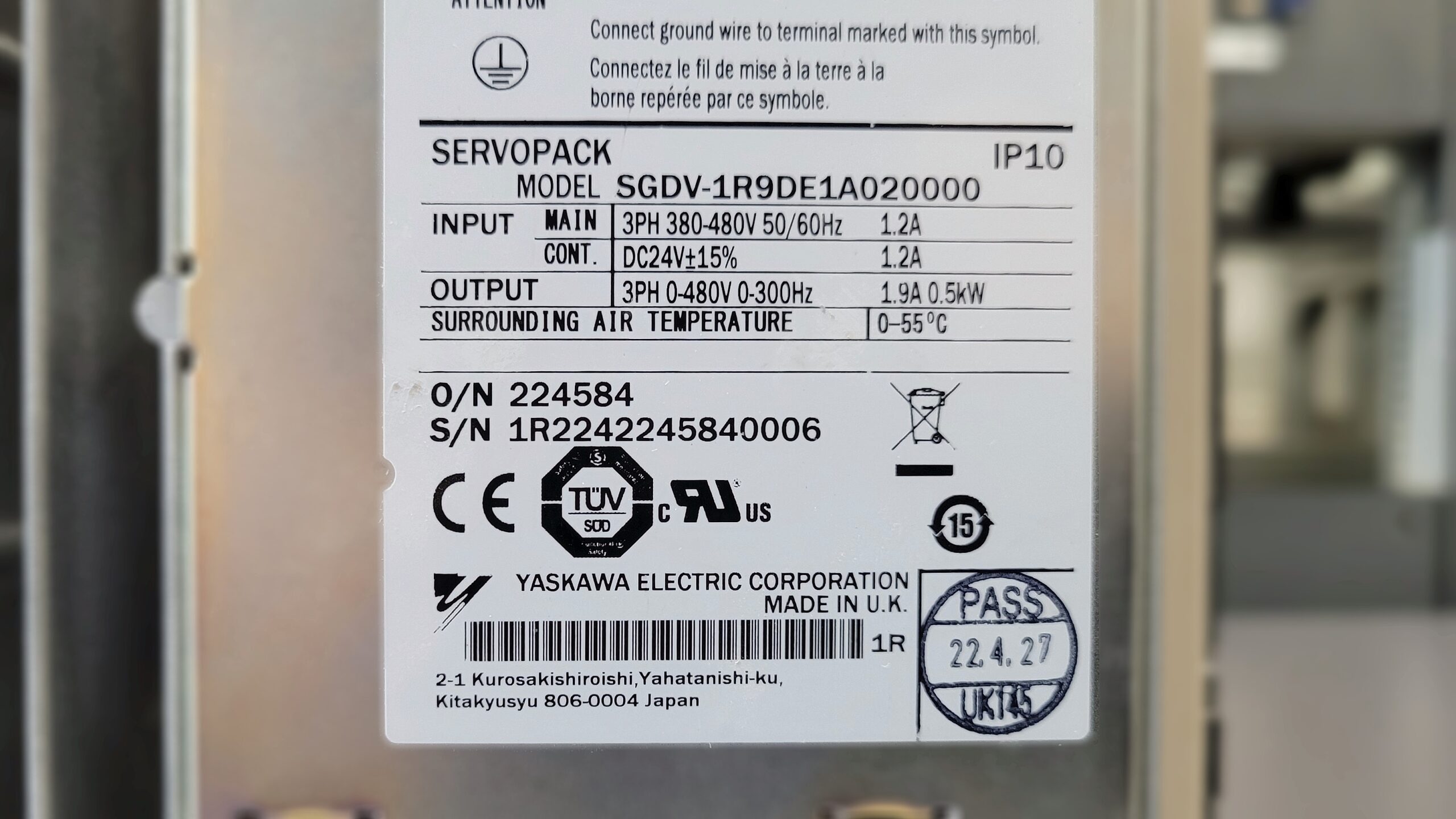 Nameplate
Customer report and workshop findings
| Area | Findings for this case |
|---|
| Motor cable | Damaged sheathing according to the customer; alarms A100 and A410. |
| Power section and protective circuitry | Defective components and evidence of arcing were addressed during repair. |
| Transistor module | Inspected and found to be in order according to the workshop findings. |
| Preventive overhaul | Replacement included capacitors, current-sensing components, the fan and relay. |
| Completion | Unit cleaned, reassembled and tested. |
The repair covered both the identified electronic damage and preventive overhaul. The inspected transistor module was in order. An overcurrent alarm therefore does not automatically mean the power transistor module needs replacement. The actual condition of the unit determines the required repair.
Interpreting the two reported alarms
| Alarm | Manufacturer’s meaning | Practical interpretation |
|---|
| A.100 | Overcurrent or overheated heat sink | Distinguish cable, motor, drive and cooling as possible areas. |
| A.410 | Undervoltage in the main circuit | Distinguish supply dips, interruptions and an internal unit fault. |
Source for the alarm meanings: Yaskawa SIEP S800000 60, section 9.1. A.100 is discussed on page 9-10, A.410 on page 9-14. Both codes describe a detected condition rather than identifying a specific failed component. No time-resolved alarm sequence is documented for this case, so A.410 is not presented as a proven direct consequence of A.100.
Selection of other relevant alarms
The following selection is a general series reference. These additional alarms were not reported for this repair case. Check the specific version and manufacturer’s documentation before applying it.
| Code | Meaning | Diagnostic focus |
|---|
| A.050 | Combination mismatch | Motor and amplifier matching |
| A.300 | Regeneration error | Regenerative or braking circuit |
| A.320 | Regenerative overload | Braking energy and duty cycle |
| A.330 | Main supply wiring error | Supply type and connections |
| A.400 | Overvoltage | Main circuit |
| A.450 | Main-circuit capacitor overvoltage | Capacitor condition |
| A.510 | Overspeed | Speed and parameter settings |
| A.710 / A.720 | Overload | Load profile and mechanics |
Sources and repair enquiries
The repair report is based on the customer’s description, workshop information and supplied nameplate. Technical reference: Yaskawa Sigma-V, Design and Maintenance, Rotational Motor, Command Option Attachable Type, SIEP S800000 60, particularly sections 1.5.12 and 9.1. Workshop findings are distinguished from general manufacturer information throughout the report.
For an enquiry, please provide the complete model designation, a legible nameplate photograph, the alarm display and a description of when the fault occurs. industrypart supports you with diagnosis, repair and preventive overhaul of industrial drive electronics.
For more information about our repairs of Yaskawa servo and spindle drives, visit our Yaskawa repair service page.