07.11.2026 by Viktor Siebert
Yaskawa SGM-01U3AP01: Overhaul following reported encoder and running problems
A servo motor may run during initial inspection even though a fault was reported in the machine. This case from October 2022 shows why the customer report and workshop findings must be distinguished. The Yaskawa SGM-01U3AP01 arrived at industrypart from France. It was examined, overhauled and tested.
Customer report
The repair order recorded “Problem encoder + Problem rotation”: encoder and running problems. No specific alarm code, machine model or installed amplifier was documented.
Technical data
| Item | Original nameplate value |
|---|
| Manufacturer / model | Yaskawa SGM-01U3AP01 |
| Device | AC Servo Motor |
| Rated output | 100 W |
| Voltage / current | 200 V / 0.87 A |
| Torque / speed | 0.318 Nm / 3000 rpm |
| Insulation class | A |
These are nameplate values, not repair measurements.
How it works
The motor produces controlled rotation. Feedback reports motion to the amplifier while the controller supplies the command. Assessment includes the motor, amplifier, cables and driven mechanism.
Workshop findings and repair
The motor ran during incoming inspection. The workshop considered an intermittent fault possible. Worn bearings were confirmed. This records the complaint without claiming that every symptom was reproduced.
After approval, the motor was overhauled. Documented work included dismantling, rust removal, cleaning, washing and drying, followed by reassembly, painting and testing. The order was completed as repaired and tested on 20 October 2022.
Case-specific troubleshooting and alarm notes
A motor running during an initial check does not exclude an intermittent fault. The exact alarm display, timing and connected drive combination are valuable diagnostic information. The general table below does not describe alarms recorded in this repair.
Testing and prevention
The completion status and original footage document a test-bench check. No particular test duration, load profile or measured results are documented.
For a service enquiry, provide photographs of the motor and amplifier nameplates and a short fault log. Record whether the problem occurs at power-up, during motion or after prolonged operation. Include connectors and cable routing in scheduled maintenance.
Sources
Our repair documentation and original media, October 2022; original motor nameplate. Alarm reference: Yaskawa SGM/SGMP/SGDA User’s Manual, TSE-S800-15C, Appendix E, printed pages 412–413 (PDF pages 420–421).
Repair video
Photos: incoming condition, nameplate and after overhaul
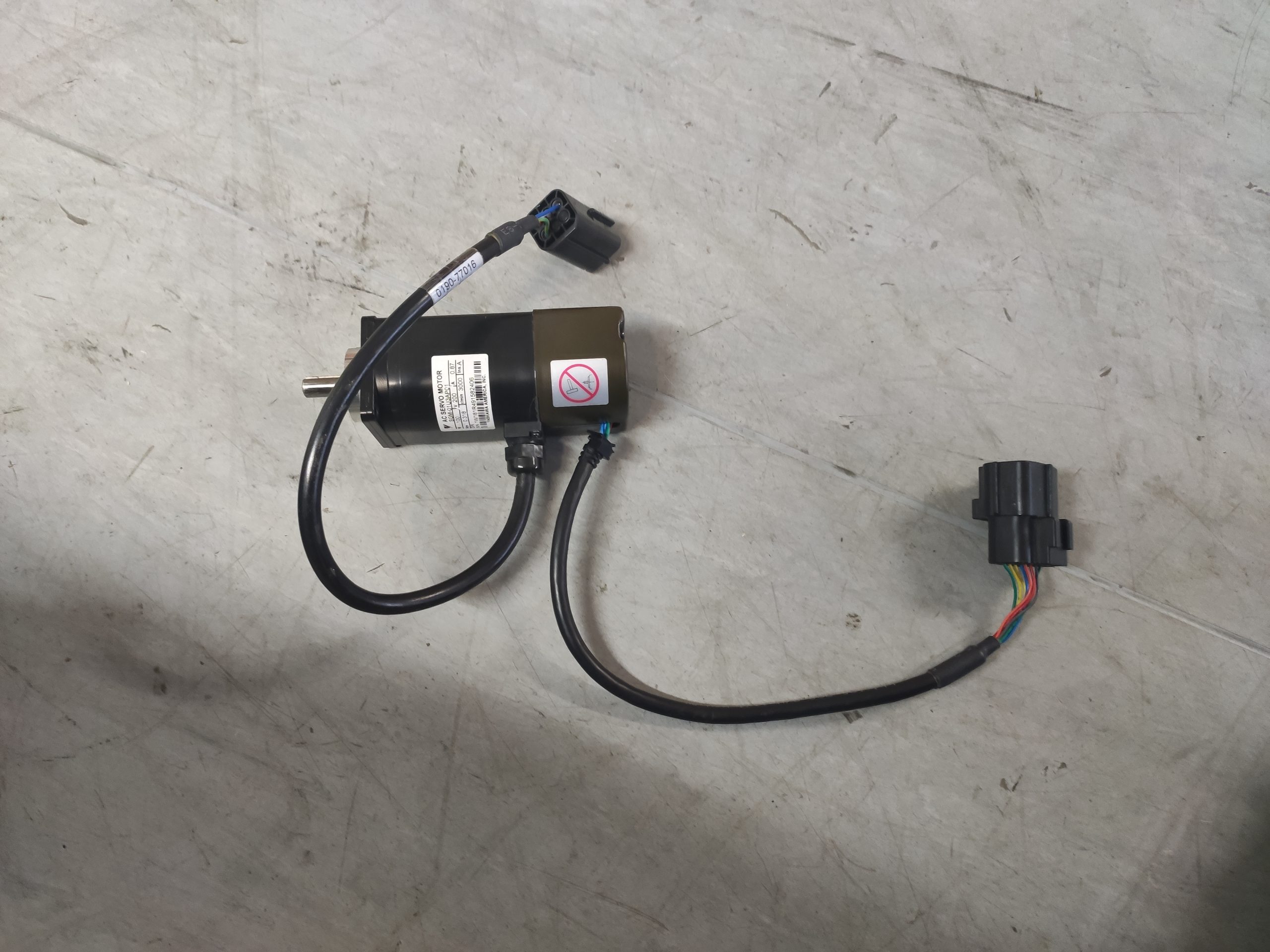 Incoming condition
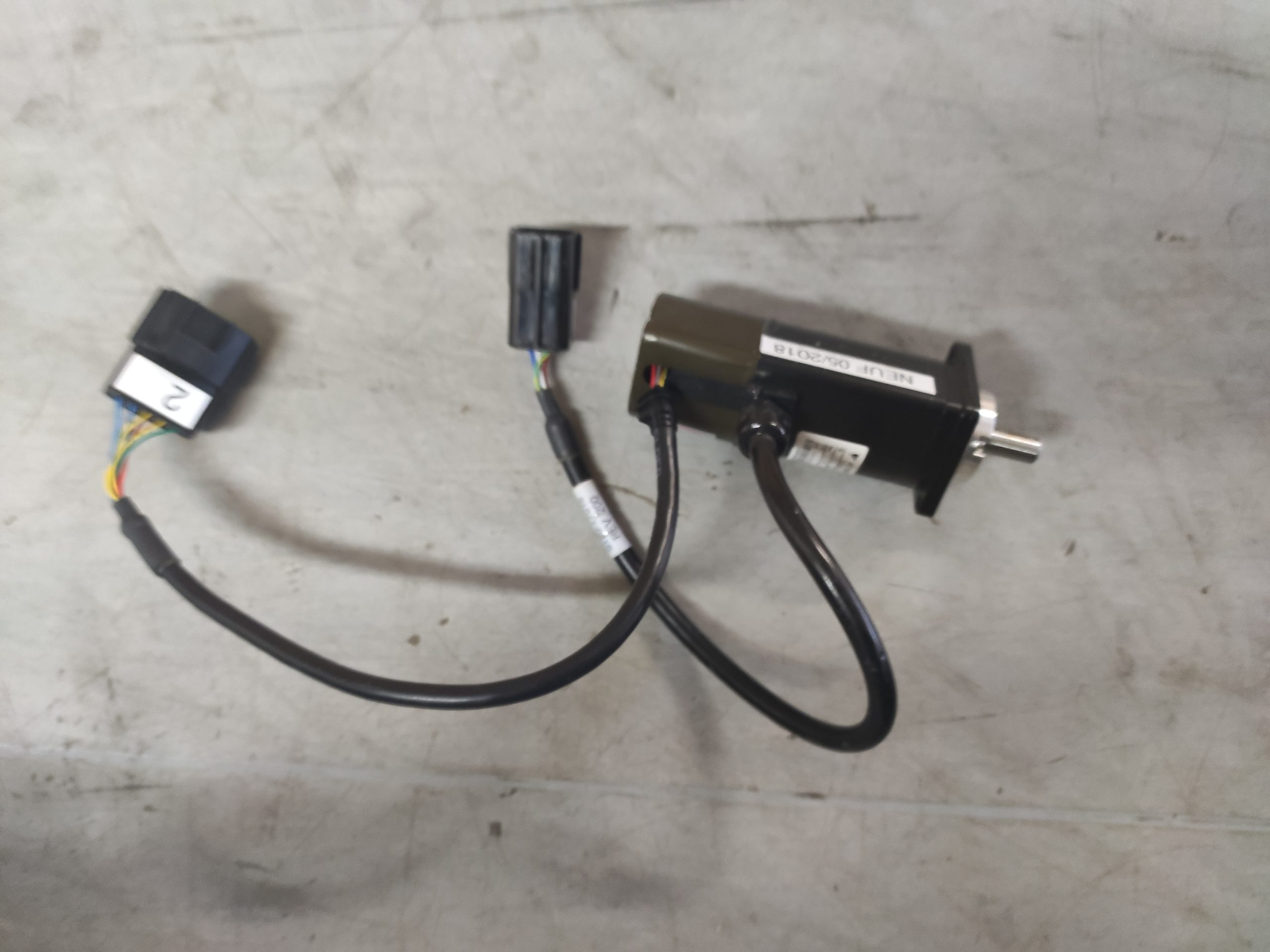 Incoming condition – additional view
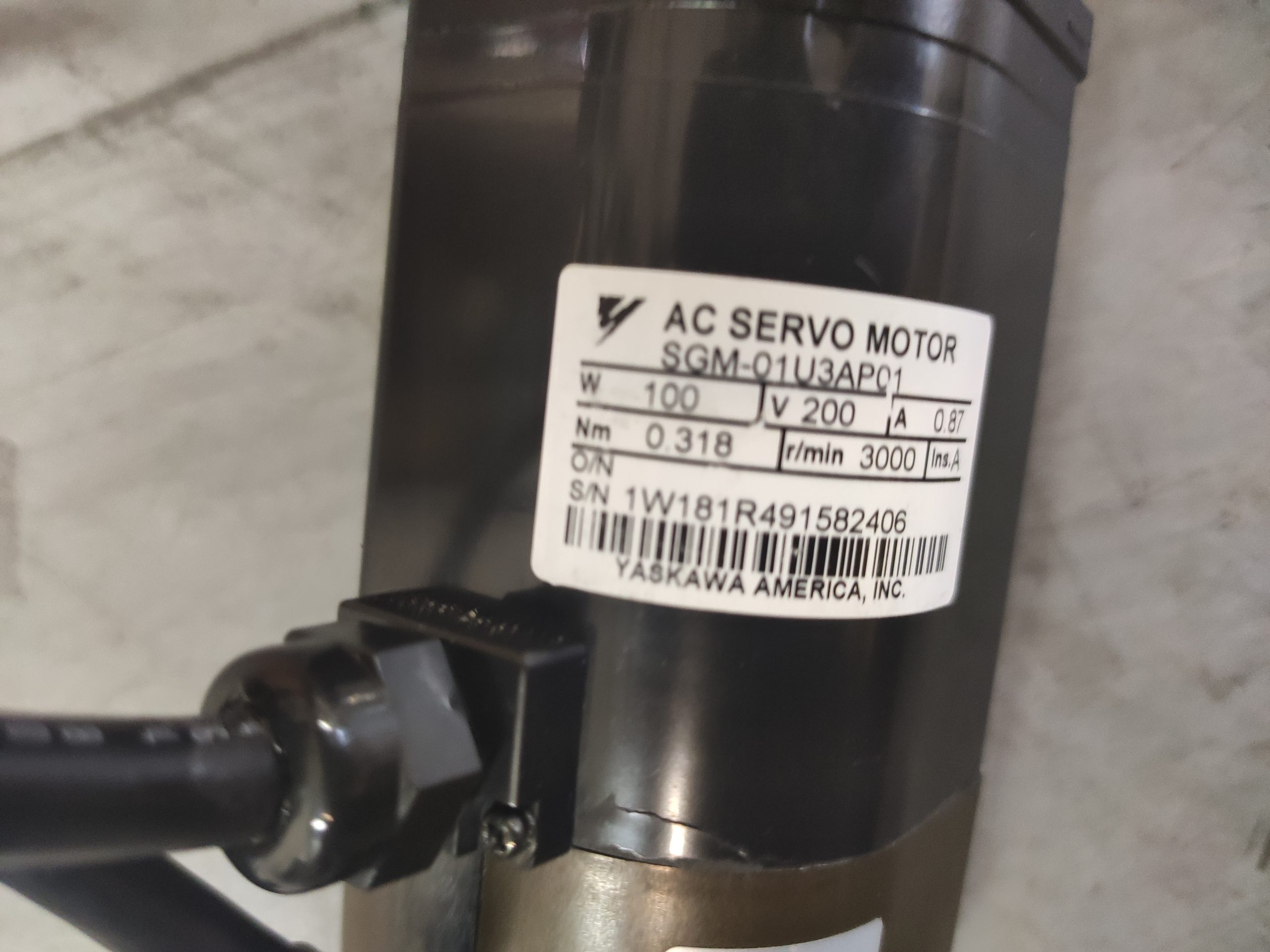 Original nameplate: this motor’s data
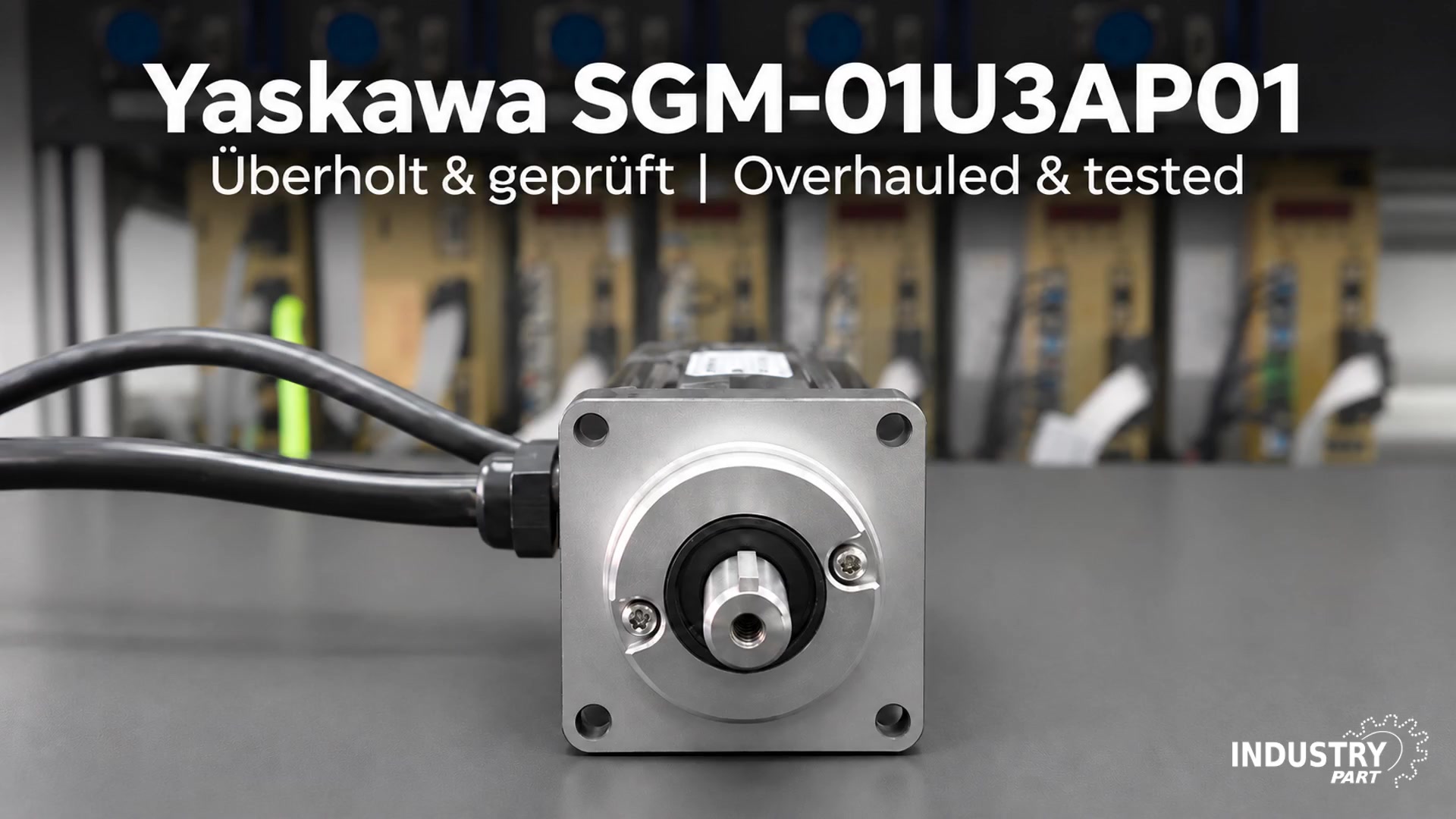 After overhaul – front view
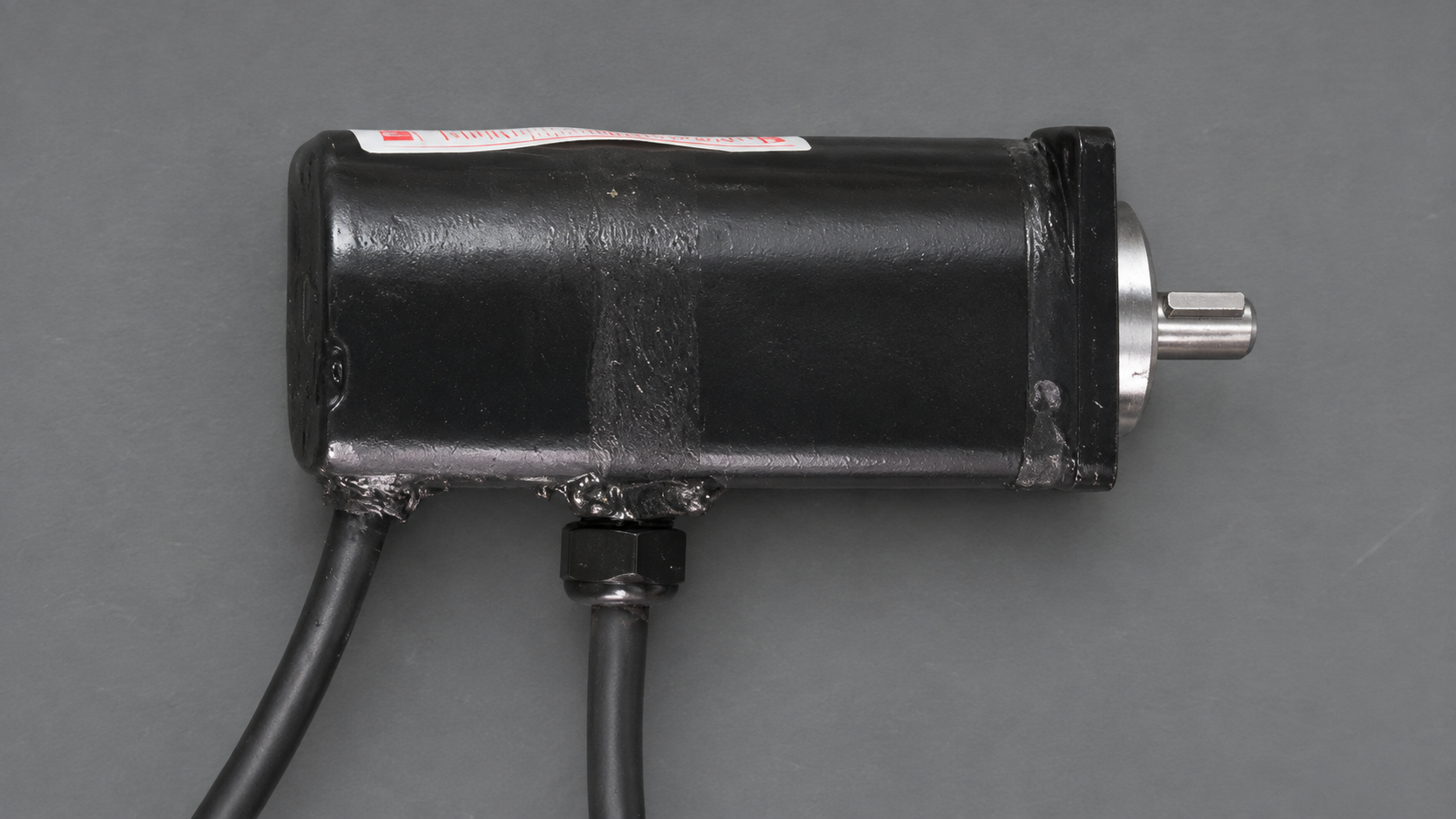 After overhaul – top view
Repair enquiry and product
Need this motor checked or repaired? Send the complete model, fault description and amplifier designation where available.
Contact industrypart · Yaskawa SGM-01U3AP01 in our shop
Technical appendix: applications and system components
The accompanying documents identify a customer in the semiconductor industry in France. The specific machine and axis function are not stated. Servo motors are generally used for controlled motion and positioning. The model number alone does not identify a particular machine application.
The system also includes a compatible amplifier, machine controller, power and feedback cables, and driven mechanism. Check complete variants and machine documentation before replacement. The SGDA reference below does not identify the customer’s installed amplifier.
Alarm list – SGDA amplifier reference
These codes belong to the amplifier, not a motor display. They are taken from the linked SGDA manual. For another amplifier, consult its own documentation.
| Code | Meaning |
|---|
| A.02 | Parameter checksum fault |
| A.04 | Parameter outside setting range |
| A.10 | Excess current |
| A.31 | Position deviation overflow; position control only |
| A.40 | Excess voltage |
| A.51 | Excess speed |
| A.70 | Excess load |
| A.C1 | Uncontrolled motor motion detected |
| A.C2 | Encoder phase-output fault |
| A.C3 / A.C4 | Encoder A/B or C wiring interrupted |
| A.F3 | Supply interruption |
Troubleshooting: useful maintenance information
| Observation | Useful next step |
|---|
| Intermittent fault | Log timing, operating conditions, temperature pattern and frequency; photograph the message before resetting it. |
| Different behaviour on the bench and in the machine | Record differences in amplifier, cables, load and motion sequence. |
| Feedback-related alarm | Record the full code and amplifier model; arrange assessment of connectors, cables and feedback using the correct documentation. |
| Noise or mechanical symptoms | Describe location and operating conditions; arrange separate assessment of motor and driven mechanism. |
| Fault after replacement or modification | Compare complete old/new models and backed-up settings; avoid unverified parameter transfers. |
Drive work requires qualified personnel. An alarm is a diagnostic clue, not a substitute for assessing the actual installation.