16.01.2026 by Viktor Siebert
Repair of a Mitsubishi Servo Drive Unit MDS-DH-V1-20 Total Failure After Repeated Power Cycling
Initial situation and fault description at arrival.
The Mitsubishi Servo Drive Unit MDS-DH-V1-20 was delivered with the fault description “device does not start”. According to the customer, the drive unit showed no function at all. Neither the status display nor any reaction to the applied supply voltage was present. The unit was installed in a CNC system that had already shown unstable behavior for some time and had been switched on repeatedly in an attempt to restore operation.
During the initial visual inspection, it quickly became clear that this was not a typical alarm condition but a complete functional failure. The device could not be initialized and showed no sign of life even after extended waiting periods.
Initial testing on the test bench
The servo drive was tested on our dedicated Mitsubishi test bench. Supply voltages were verified and peripheral connections were kept to a minimum in order to exclude external influences. The behavior clearly confirmed the customer’s report: no initialization, no LED activity and no communication.
Targeted attempts involving controlled warming and multiple power-on cycles did not lead to any change. At this stage, it was evident that the issue was neither software-related nor caused by parameter settings, but rather an internal defect of the power section.
Opening the unit and damage assessment
After opening the unit, the suspected diagnosis was confirmed. Inside the MDS-DH-V1-20, clear signs of a severe internal failure were visible. Several capacitors in the power section were visibly damaged, some swollen and others already ruptured. In addition, power semiconductors showed mechanical cracks in their housings.
A strong odor typical of thermally overstressed electronics was also noticeable. This type of damage does not occur suddenly but is the result of a progressive aging process that was significantly accelerated by repeated power-on attempts.
Technical assessment of the root cause
From a technical perspective, this device shows a very typical failure scenario. The MDS-DH-V1-20 had apparently already exhibited early signs of weakness. In such cases, the stress on capacitors and power semiconductors during power-up increases significantly. Each additional start attempt causes high inrush currents, which place a heavy load on aged components.
Instead of stabilizing operation, the repeated power cycling further degraded the internal condition of the power section until complete failure occurred. In this case, it resulted in the destruction of several critical assemblies, including internal gas formation in capacitors and structural damage to semiconductors.
Repair process
The repair of this unit was therefore correspondingly complex. First, the complete power section was removed and evaluated separately. All affected assemblies were professionally disassembled. The unit was thoroughly cleaned to completely remove residues from leaked materials and thermal deposits.
Subsequently, all safety-relevant and highly stressed components in the power path were replaced. This process addressed not only the obvious damage but also included preventive replacement of adjacent components to ensure long-term operational reliability.
After reassembly, the module underwent electrical testing, insulation measurements and a controlled power-up sequence. Only after stable initialization was confirmed were load tests performed under realistic operating conditions.
Final testing and result
After completion of all repair and testing procedures, the MDS-DH-V1-20 operated reliably and without any abnormalities. Current consumption, temperature behavior and response times were all within the specified tolerances. The unit was then approved for return to service.
Practical conclusion
This repair case clearly demonstrates that early signs of weakness should be taken seriously. A servo drive that starts sporadically or behaves inconsistently should not be forced into operation through repeated power cycling. In many cases, this approach leads to a situation where a previously repairable device becomes significantly more damaged or, in the worst case, no longer economically repairable.
Especially with older drives such as the MDS-DH-V1-20, preventive refurbishment is often more economical, safer and more sustainable than waiting for a complete failure.
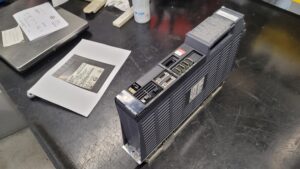
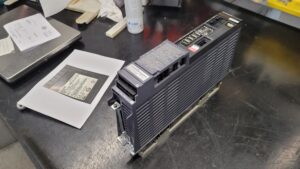
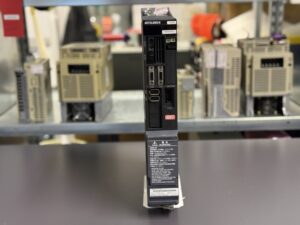
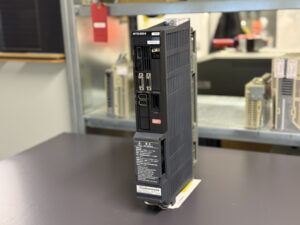
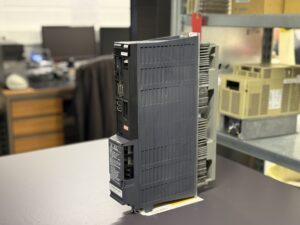
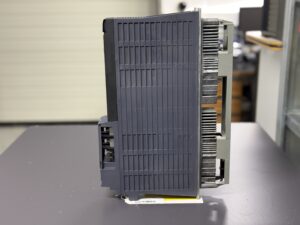
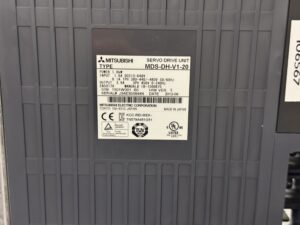
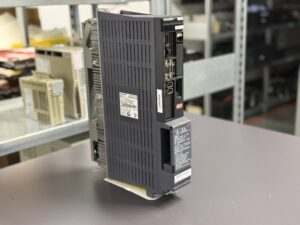
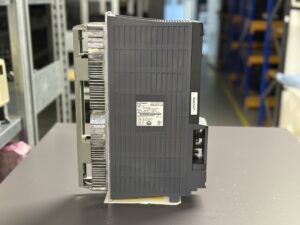
To mentioned Mitsubishi Drive: Mitsubishi Servo Drive Unit MDS-DH-V1-20
More details about our Mitsubishi repair services can be found here:
Mitsubishi drive Repair by Industrypart
📞 Feel free to contact us with any questions about your Mitsubishi drive technology.
Our expert team is happy to help!
Mitsubishi Servo Drive Unit MDS-DH-V1-20
Technical specifications
| Parameter | Value |
|---|
| Manufacturer | Mitsubishi Electric |
| Series | MDS-DH |
| Model | MDS-DH-V1-20 |
| Rated power | approx. 2.0 kW |
| Supply voltage | 3-phase 380–480 V AC |
| Output voltage | approx. 3-phase up to 400 V |
| Cooling | Forced air cooling |
| Design | Servo drive unit |
| Year of manufacture | approx. 2012 |
| Application type | CNC axis drive |
Operating environment and compatible systems
The MDS-DH-V1-20 is typically used in CNC machine tools such as machining centers, lathes and special-purpose machines. It is designed for precise feed axes and operates in combination with Mitsubishi AC servo motors from the HA and HF series. These drives are intended for continuous industrial operation but are sensitive to thermal aging and power supply instability.
Functional description
The servo drive is responsible for the complete power supply and control of the connected axis. It processes command values from the CNC control, regulates current, torque and speed and continuously monitors internal protection functions. In the event of deviations, protective shutdowns are triggered to protect both the motor and the mechanical system.
Alarm messages and troubleshooting
| Code | Description | Cause | Corrective action |
|---|
| 10 | Undervoltage | Unstable power supply | Check power supply |
| 17 | A/D converter error | Measurement deviation | Inspect electronics |
| 32 | Power module overcurrent | Damaged power section | Repair drive unit |
| 33 | Overvoltage | Regeneration malfunction | Check braking circuit |
| 45 | Fan stop | Cooling failure | Replace fan |
| 50 | Overload 1 | Mechanical overload | Reduce load |
| 51 | Overload 2 | Continuous overcurrent | Check parameters |
| 3B | Power module overtemperature | Insufficient cooling | Clean and service |
| 3C | Regeneration circuit error | Braking resistor issue | Inspect braking circuit |
| 71 | Power interruption | Mains issue | Check energy supply |
Components
| Assembly | Designation | Function | Notes |
|---|
| Control board | RM115A-22 or BC886A028G51 | Control and logic | Sensitive to voltage spikes |
| Power board | RM162C-V2 or BC886A010G52 | Power control | High thermal load |
| Power module | BKO-NC1207 H84 / A2-DH-V1-20 | Power conversion | Primary wear component |
Preventive measures for the customer
Regular preventive refurbishment can significantly extend the service life of an MDS-DH-V1-20. This includes inspection of the cooling system, timely replacement of aging components and verification of power supply quality. In particular, early start-up issues should not be ignored, and the drive should not be subjected to repeated power cycling.