27.01.2026 by Viktor Siebert
Repair of a Mitsubishi MR-J2S-350B AC Servo Drive with Alarm AL.32 (Power Module Overcurrent)
Initial condition on arrival.
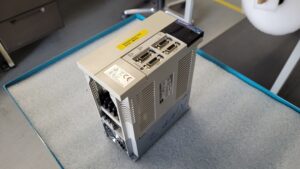
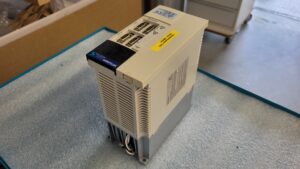
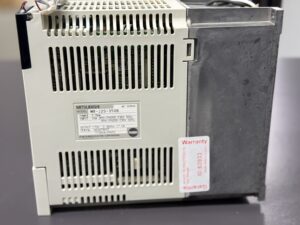
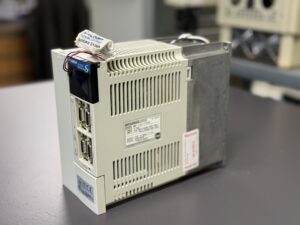
The Mitsubishi AC Servo Drive MR-J2S-350B was received from the customer with the fault message Alarm AL.32 – Power Module Overcurrent.
According to the fault description, the alarm did not occur immediately after power-up, but only after a certain operating time. In some cases, the unit could be restarted briefly after cooling down, however the fault returned reproducibly. The axis could no longer be operated reliably, resulting in machine downtime.
This description already typically indicates a thermal issue in the power section. Especially with drives of this power class, cooling of the power stage is a critical factor, particularly with older units or unfavorable cabinet conditions.
Initial inspection and visual check
After opening the unit, a thorough visual inspection was carried out. It immediately became apparent that the internal cooling fan was no longer rotating. In addition, significant contamination was visible in the cooling channels and on the heatsink. Dust and deposits had accumulated over many years, severely impairing heat dissipation.
Fan failure is one of the most common root causes of power stage damage in the MR-J2S series. When active cooling fails, the temperature of the IGBT modules and associated driver circuits rises sharply. Internal protection functions may initially intervene sporadically, but long-term operation under these conditions leads to irreversible damage to power semiconductors and measurement circuits.
Power stage diagnosis
In the next step, the power stage was electrically tested. Irregularities in current measurement and unstable behavior of the power components under load were observed. The measured values confirmed the suspicion that the power module had suffered thermal damage.
Alarm AL.32 is triggered when the internal overcurrent protection of the power module is activated. In this case, no external short circuit and no motor fault were detected. The root cause was clearly located inside the servo amplifier itself.
The combination of fan failure, increased operating temperature and long-term continuous operation caused the power stage to exceed its permissible limits. The alarm was therefore not a random event, but the result of a gradual aging process.
Repair measures
After the diagnosis was clearly confirmed, the unit was completely disassembled. The repair consisted of several steps.
First, the defective fan was replaced. A technically equivalent, high-quality fan was installed to ensure reliable cooling for many years of operation.
Subsequently, the power stage was refurbished. Thermally stressed components were inspected and selectively replaced. All relevant solder joints in the power section were checked and reworked where necessary. In addition, the heatsinks and air channels were thoroughly cleaned to restore proper airflow.
Finally, all electrical connections, plug contacts and screw joints were checked and correctly reassembled. Especially at high currents, clean and secure connections are essential for stable operation.
Functional test and load testing
After completion of the repair, the MR-J2S-350B was commissioned on our test bench. The servo amplifier was tested under realistic load conditions. Current consumption, temperature behavior and control stability were monitored over an extended period.
The fan operated reliably, temperatures remained well below critical limits, and alarm AL.32 did not reoccur. Even under prolonged load, the unit showed stable and consistent behavior.
Only after successful endurance testing and multiple start-stop cycles was the unit approved for return shipment.
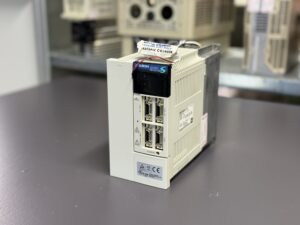
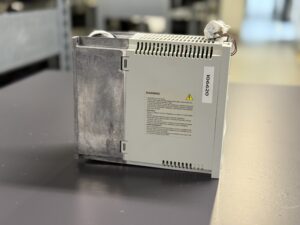
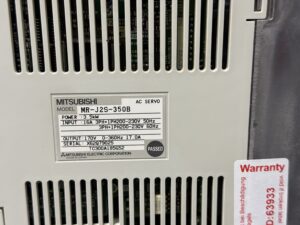
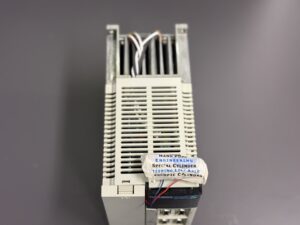
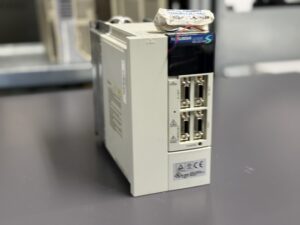
More Info & Contact
To mentioned Mitsubishi Drive: Mitsubishi MR-J2S-350B Servo Drive Unit
More details about our Mitsubishi repair services can be found here:
Mitsubishi drive Repair by Industrypart
We regularly repair similar models, including:
MR-J2S-350B4
Technical specifications
| Feature | Value |
|---|
| Manufacturer | Mitsubishi Electric |
| Model | MR-J2S-350B |
| Device type | AC Servo Drive |
| Rated power | 3.5 kW |
| Input voltage | 3AC 200–230 V |
| Input current | approx. 16 A |
| Output voltage | approx. 170 V |
| Output current | up to approx. 17 A |
| Frequency range | 0–360 Hz |
| Cooling | Forced air cooling |
| Series | MELSERVO J2-Super |
Main assemblies
| Assembly | Designation | Function | Notes |
|---|
| Control board | J2SB-C01A | Control and communication | Sensitive to heat |
| Power board | J2S-A02 / BC386A361G51A | Power stage | Critical in case of fan failure |
| DC bus capacitor board | J2S-P20A | DC link smoothing | Subject to aging |
| Power module | integrated | IGBT power module | Main cause of AL.32 |
Important alarm messages of the MR-J2S series
| Alarm code | Description | Cause | Action |
|---|
| AL.10 | Undervoltage | Unstable supply | Check power supply |
| AL.24 | Power circuit fault | Insulation issue | Inspect power section |
| AL.32 | Power module overcurrent | Power stage damage | Repair required |
| AL.33 | Overvoltage | Regeneration issue | Check braking circuit |
| AL.45 | Fan stop | Fan defective or blocked | Replace fan |
| AL.46 | Servo motor overheat | Insufficient cooling | Check load and cooling |
| AL.50 | Overload 1 | Mechanical overload | Inspect mechanics |
| AL.51 | Overload 2 | Excessive continuous current | Check parameters |
| AL.52 | Excessive deviation | Control deviation | Adjust control parameters |
| AL.88 | Watchdog error | Internal control fault | Inspect electronics |
Preventive recommendations from practice
This case clearly demonstrates that the cooling fan plays a key role in the service life of the servo amplifier. A blocked or aged fan does not immediately cause a complete failure, but initially leads to sporadic alarms. If no action is taken at this stage, damage to the power stage usually follows.
For devices of this generation, we recommend preventive refurbishment, especially timely fan replacement and cleaning of cooling surfaces. Compared to a power stage failure, these measures are significantly more cost-effective and help prevent unplanned machine downtime.
Conclusion
The Mitsubishi MR-J2S-350B is a robust and powerful servo amplifier. As with many devices of this series, however, the weak point lies in cooling. In practice, alarm AL.32 is very often the consequence of a long-unnoticed fan failure.
Through systematic diagnosis, targeted repair of the power stage and replacement of the fan, the unit was fully restored. The servo amplifier is now once again suitable for reliable continuous operation.