29.09.2025 by Viktor Siebert
Repair of a Mitsubishi MDS-DH2-V2-4020 Servo Drive Unit after Electrolytic Capacitor Failure
First Symptoms in Operation.
A customer reported the failure of a Mitsubishi MDS-DH2-V2-4020 Servo Drive Unit. The machine showed unclear error patterns: sporadic shutdowns, unexpected resets, and occasional short-circuit messages. At first, it was uncertain whether the problem originated from the motor, cabling, or the drive itself. However, the initial measurements already indicated an internal defect.
Upon disassembling the unit, the cause became evident: several electrolytic capacitors on the power board had leaked. The electrolyte had spread across the PCB, penetrated into fine conductor areas, and caused corrosion. Greenish-black discolorations, swollen pads, and interrupted conductor paths were clearly visible.
The Dangers of Electrolyte Leakage
Leaked electrolyte is highly aggressive towards copper and tin. Over time, it leads to:
- Interruptions of conductor tracks caused by corrosion,
- Short circuits between adjacent traces,
- Insulation damage due to conductive residues.
Without intervention, the damage would have spread further, resulting in irreparable failures. There was also a significant risk of collateral damage to motors and control systems due to uncontrolled switching operations.
First Steps of the Repair
After documenting the damage, the drive was completely dismantled:
- Removal of housing covers and heatsinks,
- Extraction of power and control boards,
- Detailed photo documentation of all affected areas.
The defective electrolytic capacitors were carefully desoldered and disposed of. The subsequent cleaning process was extensive:
- Removal of leaked electrolyte using specialized solvents,
- Multiple cleaning cycles with isopropanol and ultrasonic bath,
- Neutralization of corrosive residues.
PCB Repair
One of the most critical tasks was restoring the corroded conductor paths. Under a microscope and using precision tools, the following steps were carried out:
- Exposing damaged copper traces,
- Repairing interrupted lines with wire bridges,
- Re-tinning oxidized solder pads.
In severely affected areas, professional PCB repair kits were used to restore both electrical integrity and mechanical stability.
Preventive Replacement of Components
To avoid future failures, not only the visibly defective capacitors were replaced but all electrolytic capacitors in the unit. Additionally, the following components were renewed:
- Fan unit (typical wear part with limited lifetime),
- Insulation pads of the power transistors,
- Heat-stressed resistors near the capacitors.
This ensured that the drive was not only repaired but fully overhauled.
Electrical Testing after Repair
Following the mechanical and electrical restoration, an intensive testing phase began:
- Insulation test: Measurement between all high-voltage lines and ground to exclude short circuits.
- Continuity test: Verification of all repaired traces for proper conduction.
- First power-up: Connection to a laboratory power supply with current limitation to detect faults immediately.
- Signal tests: Verification of communication interfaces (CN1, CN2, CN3).
Already at this stage, the device started up stably without any uncontrolled shutdowns.
Load Testing on the Test Bench
The final and most important step was the functional and endurance test on our CNC test bench:
- Long-term test over several hours with varying speeds and load profiles,
- Thermal monitoring of power modules and capacitors using infrared camera,
- Signal monitoring: Encoder feedback and voltage profiles recorded and compared to reference values,
- Simulation of disturbances such as sudden load changes and short voltage interruptions.
All tests were successful: no interruptions, no overheating, no alarms.
Customer Benefits
After completing the repair and test procedures, the drive was reinstalled in the customer’s machine. Feedback after several weeks of operation was clear: the unit was running more stable than ever. Production downtimes caused by unexplained drive failures were completely eliminated.
For the customer, the repair did not only restore functionality but also significantly extended the lifetime of the device. Thanks to the preventive replacement of all critical components, reliable operation is now ensured for many more years.
Conclusion
This repair case clearly demonstrates the importance of responding quickly to the first signs of electronic damage. Leaking electrolytic capacitors act like slow poison – if untreated, they eventually destroy the entire circuit.
Through thorough cleaning, PCB repair, component replacement, and extensive testing, the Mitsubishi MDS-DH2-V2-4020 Servo Drive Unit was fully restored. The customer now benefits from increased machine availability, extended lifetime, and reliable protection against unexpected production downtime.
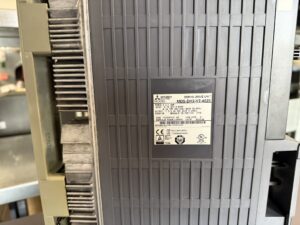
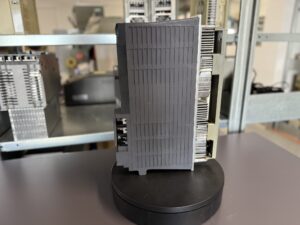
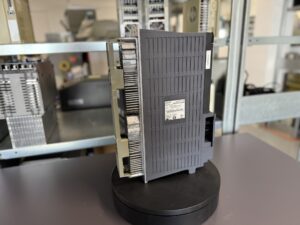
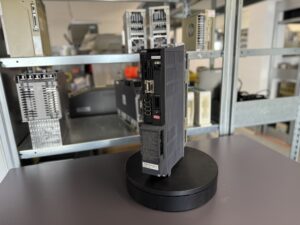
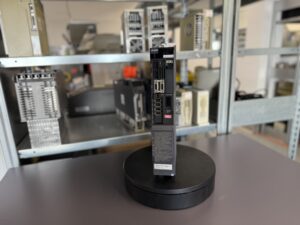
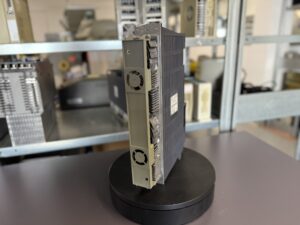
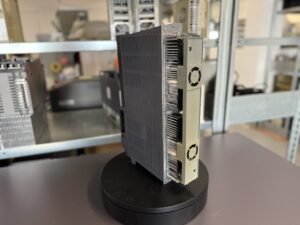
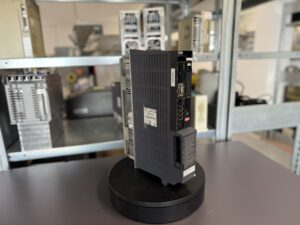
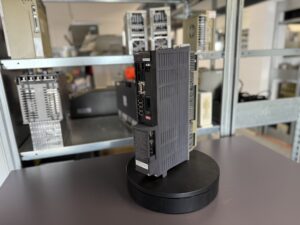
To mentioned Mitsubishi Drive: Mitsubishi MDS-DH2-V2-4020 Servo Drive Unit
More details about our Mitsubishi repair services can be found here:
Mitsubishi drive Repair by Industrypart
📞 Feel free to contact us with any questions about your Mitsubishi drive technology.
Our expert team is happy to help!
Technical Summary of the Unit
| Parameter | Value |
|---|
| Manufacturer | Mitsubishi Electric Corporation |
| Model | MDS-DH2-V2-4020 Servo Drive Unit |
| Power | 2.0 / 1.0 kW |
| Input Voltage | DC 513–648 V, 4.7 A; AC 380–440–480 V, 0.1 A, 1-phase, 50/60 Hz |
| Output Current | 7.3 / 9.3 A, 3-phase, 456 V, 0–240 Hz |
| Protection Class | IP20 |
| Weight | approx. 8–10 kg (estimated) |
| Dimensions | approx. 350 × 250 × 120 mm (estimated) |
| Cooling | Forced ventilation (integrated fan) |
| Control | Compatible with Mitsubishi CNC controllers M70/M700/M800 |
| Year of Manufacture | Example unit: 2015-01 |
| Approvals | CE, UL, TÜV, KCC |
Operating Environment & Compatible Devices
The drive is typically used in CNC machine tools (milling machines, lathes, machining centers).
Compatible controllers: Mitsubishi CNC controllers (M70, M700, M800).
Compatible motors: Mitsubishi AC servo and spindle motors of the HF and SJ series.
Typical applications:
- Machine tool manufacturing
- Precision machining
- Automated production lines
Functional Description
The MDS-DH2-V2-4020 Servo Drive Unit ensures precise control of servo motors in CNC machines.
Functions:
- Power regulation for torque and speed
- Feedback via encoders (closed-loop control)
- Protective functions: overcurrent, overvoltage, overtemperature
- Communication with CNC controller via optical interfaces
- Integrated brake and regeneration control
Alarm Messages & Troubleshooting
| Code | Error Description | Cause | Solution |
|---|
| 10 | Undervoltage | Bus voltage too low | Check power supply, increase capacity |
| 17 | A/D converter error | Error in current feedback | Replace drive or check environment |
| 23 | Overspeed | Large difference between actual and command speed | Check wiring, parameters |
| 24 | Ground fault | Motor cable in contact with frame ground | Check insulation, replace motor/cable |
| 25 | Absolute position data lost | Battery or connection interrupted | Check battery/cabling, reset zero point |
| 30 | Over-regeneration | Resistor overloaded | Check/add external resistor |
| 32 | Power module overcurrent | Short circuit or defective power module | Check motor/cable, replace module |
| 33 | Overvoltage | Main circuit voltage too high | Check supply, adjust parameters |
| 45 | Fan stop | Cooling failure | Clean/replace fan |
| 50 | Overload 1 | Continuous overload detected | Reduce load, adjust parameters |
Components
| Name | PCB Label | Qty |
|---|
| Control Board | RM120B-22XK / BC886A097G51A | 1 |
| Power Board | RM162C-V2 / BC886A010G52F | 1 |
| Power Module | BKO-NC1207H84 / A2-DH2-V2-2020 | 1 |
| Heatsink | Aluminum profile with fan unit | 1 |
| Line Filter | Integrated EMC filter | 1 |
| Connectors | Signal and power connectors CN1–CN3 | var. |