18.12.2025 by Viktor Siebert
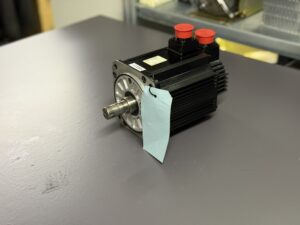
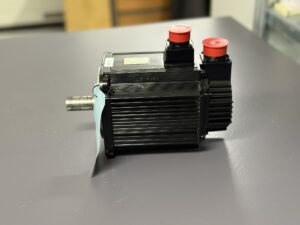
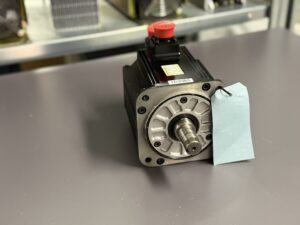
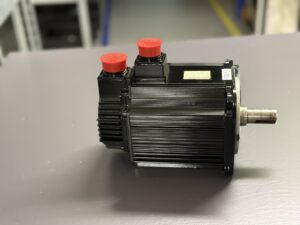
Repair of a Yaskawa AC Servo Motor SGMGH-13DCA6F-OY with Insulation Failure
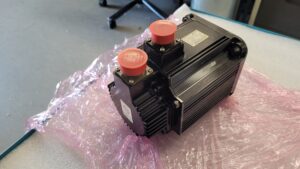
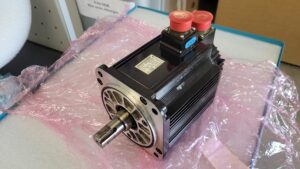
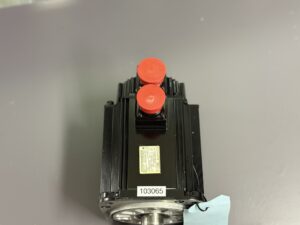
The Yaskawa AC Servo Motor SGMGH-13DCA6F-OY was sent to us together with a servo amplifier SGDH-15DE-OY after repeated fault messages occurred in the machine. According to the customer, the servo amplifier had shown sporadic alarms over a longer period before finally failing completely and burning out. Replacing the servo amplifier did not provide a lasting solution, as the new unit also began to show abnormal behavior after some operating time.
The customer’s maintenance technician reacted correctly and inspected the motor very carefully. Experience shows that insulation problems inside the motor are often the real cause of recurring damage to servo amplifiers. This case once again presented a typical failure pattern that we have encountered many times in similar repairs.
Initial incoming measurements showed no direct short circuit in the motor. However, the insulation resistance values were clearly below specification. From an assessment standpoint, they were reduced to approximately twenty percent of their original level. Such values are particularly critical because they do not necessarily cause an immediate failure. Instead, they lead to creeping effects that manifest as sporadic alarms, thermal overload and unstable control behavior. In many cases, machines continue to operate for days, weeks or even months before a severe failure of the servo amplifier occurs.
After opening the motor, the suspicion was fully confirmed. A significant amount of liquid drained from the motor interior, approximately one hundred milliliters. The liquid consisted of a mixture of emulsion, oil and fine machine contamination. Over time, the shaft seals had lost their protective function, allowing this mixture to slowly penetrate the motor interior. This process develops unnoticed and often remains undetected for a long period.
The windings themselves were visually intact but heavily contaminated. Due to moisture and deposits, the insulation strength had been severely reduced. This type of damage leads to increased leakage currents, uneven heating and additional stress on the power electronics inside the servo amplifier. In such cases, the later destruction of the servo amplifier is not an exception but a direct consequence of the gradual motor deterioration.
The encoder type UTSIH-B17CK was functionally intact but showed noticeable signs of wear. Deposits and fine contamination had accumulated over the years. We disassembled the encoder, cleaned it thoroughly and overhauled it. A replacement was not necessary, as all relevant feedback values were stable again after reconditioning.
As part of the repair process, the motor was completely disassembled, thoroughly cleaned and dried. Critical sealing elements were replaced to reliably prevent future ingress of emulsion. After restoring the insulation values, the motor underwent a full electrical inspection and a load test on our test bench in combination with an SGDH servo amplifier.
After completing all tests, the motor once again showed stable electrical and thermal behavior. Current consumption was within specification, temperature development was normal and encoder feedback signals were clean and reproducible. Only after passing these tests was the motor approved for return to service.
This case once again demonstrates the importance of considering the motor and servo amplifier as a complete system. Replacing the servo amplifier alone does not solve the root cause when a creeping insulation failure exists inside the motor. Early diagnosis and professional motor overhaul prevent consequential damage, reduce machine downtime and protect the drive electronics in the long term.
formation about the mentioned Servopack and Servomotor:
More information about our Yaskawa repairs can be found here.
📞 Feel free to contact us if you have any questions regarding your Yaskawa drive technology. Our experienced team is always ready to assist you.
Technical Specifications
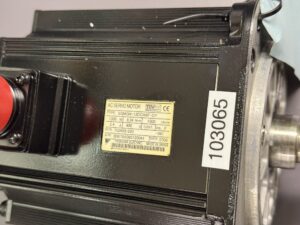
Yaskawa AC Servo Motor SGMGH-13DCA6F-OY with Encoder UTSIH-B17CK
Model Designation
SGMGH-13DCA6F-OY
Manufacturer
Yaskawa Electric Corporation
Made in Japan
Motor Specifications
Rated power: 1.3 kW
Rated torque: 8.34 Nm
Rated speed: 1500 r/min
Rated current: 5.4 A
Rated voltage: 400 V
Duty type: Continuous operation
Insulation class: F
Year of manufacture according to nameplate: 06/2008
Encoder
Type: UTSIH-B17CK
Design: Absolute encoder
Function: Position and speed feedback
Compatible Servo Drive
Yaskawa SGDH-15DE-OY
Sigma II series
400 V class
Typical Application Environment
CNC machine tools
Machining centers
Axis drives with high continuous load
Machines operating with coolant and emulsion
Typical Alarms
Yaskawa SGDH Sigma II Series
| Alarm Code | Description | Typical Cause |
|---|
| A.10 | Overcurrent | Increased motor current due to insulation deterioration |
| A.20 | Regenerative overload | Unstable regeneration caused by leakage currents |
| A.30 | Overload | Permanently increased current demand |
| A.40 | Overvoltage | Unstable feedback caused by motor related issues |
| A.51 | Motor overheat | Increased losses due to leakage currents |
| A.71 | Encoder error | Signal degradation caused by contamination |
| A.72 | Encoder communication error | Unstable encoder feedback |
| A.80 | Servo overheat | Thermal overload of the servo amplifier |
| A.82 | Abnormal load | Mechanical and electrical deviations |
| A.90 | Insulation warning | Insulation measurement close to limit values |