10.03.2026 by Viktor Siebert
Repair of a Mitsubishi Spindle Drive Unit MDS-B-SPJ2-55 with thermal overload caused by failed cooling
Initial Situation and Fault Description.
In a machine tool the spindle suddenly stopped during machining. The spindle drive shut down without prior warning. After a short waiting period the machine could be restarted, but after a few minutes of machining the same fault occurred again.
The behavior mainly appeared under load during cutting operations. At idle speed the spindle sometimes ran longer without problems. This behavior typically indicates thermal stress or current related overload situations.
During diagnosis it became clear that the spindle drive Mitsubishi MDS-B-SPJ2-55 completely shuts down during machining. The internal protection logic prevents further power output to the motor.
Such protective shutdowns often occur due to overcurrent, overheating or issues within the power section of the drive. According to the protection concept of CNC spindle drives, the motor is automatically decelerated or disconnected in such cases to prevent damage to electronics or motor.
The fault could be reproduced reliably. Especially at higher spindle loads the drive became unstable and finally switched off.
Incoming Inspection and First Diagnosis
After arrival of the unit a complete incoming inspection was carried out.
The visual inspection revealed several noticeable conditions:
heavily contaminated heat sinks
worn or blocked cooling fan
discoloration in the power section area
clear signs of thermal stress
The fan assembly already showed mechanical wear. Cooling of the power stage was therefore significantly reduced.
An initial functional test confirmed the symptoms:
the drive started normally
with increasing load the current rose significantly
after a short time a protection shutdown occurred
This confirmed that the problem occurred under load and was most likely caused by thermal stress or power electronics degradation.
Technical Analysis
The detailed analysis revealed a typical failure scenario for older CNC spindle drives of this generation.
The defective cooling fan caused a continuously increasing temperature in the power section of the drive.
This resulted in the following cause and effect chain:
defective cooling
→ rising temperature in the power stage
→ increased stress on power semiconductors
→ increasing internal resistance and current peaks
→ automatic protection shutdown of the drive
These protection mechanisms are essential in CNC drives. When overcurrent or excessive temperature occurs the system automatically stops the motor in order to prevent serious damage to the power electronics or the machine.
During inspection it also became clear that several components in the power stage had already aged thermally. Long term overheating had changed their electrical characteristics.
This explains why the fault was reproducible especially under load.
Repair Measures and Refurbishment
The repair was carried out in several steps.
First the entire drive was disassembled and thoroughly cleaned. Dust and oil contamination were removed since they significantly reduce heat dissipation.
Afterwards the central functional assemblies were overhauled.
inspection and refurbishment of the power section
replacement of thermally stressed functional assemblies
replacement of the cooling fan unit
renewal of ageing sensitive components in the power stage
inspection of connectors and signal paths
Additional preventive measures were implemented.
improvement of thermal coupling to the heat sink
verification of the internal power supply
stabilization of current distribution within the power stage
The objective was not only to eliminate the present fault but also to stabilize the long term reliability of the drive.
Final Functional Test
After repair the spindle drive was tested on a dedicated drive test bench.
The test bench simulates the electrical and mechanical environment of a CNC machine.
power supply simulation
motor load simulation
speed control testing
signal monitoring
The test procedure included several stages.
power on behavior
spindle start without load
low speed operation
medium speed operation
full load operation
multiple start stop cycles
In addition the protection systems were tested.
overcurrent monitoring
temperature monitoring
signal monitoring
The drive operated stable in all load conditions. Thermal behavior remained within the intended limits.
The spindle drive was therefore released for industrial operation again.
Conclusion
The failure was caused by a combination of defective cooling and thermal ageing of the power stage.
The fan failure led to long term overheating of the power electronics.
By refurbishing the power stage and replacing the cooling system the spindle drive could be fully stabilized.
Cases like this clearly demonstrate the importance of preventive maintenance for CNC drives. Especially cooling systems and airflow paths should be inspected regularly since they are critical for the lifetime of power electronics.
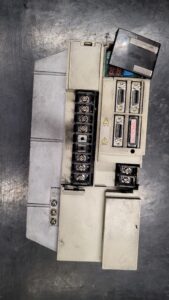
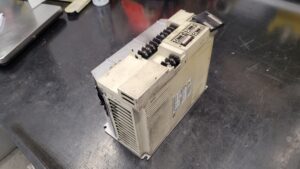
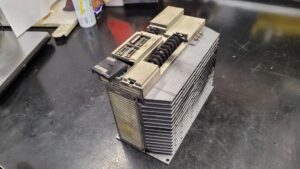
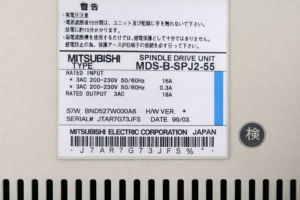
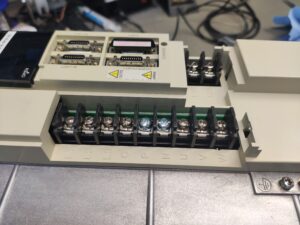
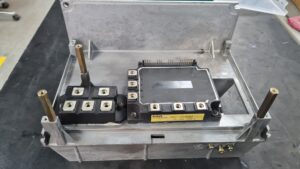
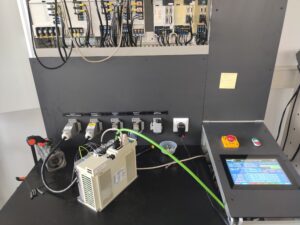
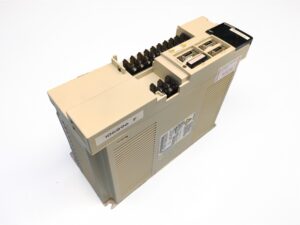
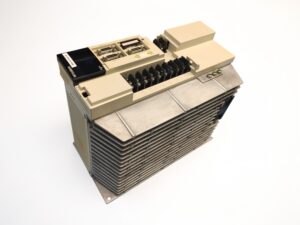
To mentioned Mitsubishi Drive: Mitsubishi MDS-B-SPJ2-55 Spindle Drive Unit
More details about our Mitsubishi repair services can be found here:
Mitsubishi drive Repair by Industrypart
📞 Feel free to contact us with any questions about your Mitsubishi drive technology.
Our expert team is happy to help!
Technical Specifications
| Parameter | Value |
|---|
| Manufacturer | Mitsubishi Electric |
| Device Type | CNC spindle drive |
| Model | MDS-B-SPJ2-55 |
| Series | MDS-B |
| Power | approx. 5.5 kW |
| Input Voltage | 3AC 200 to 230 V |
| Output Voltage | 3AC |
| Rated Input Current | approx. 16 A |
| Rated Output Current | approx. 18 A |
| Control Type | CNC spindle control |
| Cooling | Fan cooled |
| Protection Class | Cabinet mounted device |
| Mounting | Control cabinet |
| Production Year | approx. 1999 |
| Origin | Japan |
| Product Status | Discontinued |
Operating Environment and Application
The spindle drive MDS-B-SPJ2-55 is mainly used in CNC machine tools.
Typical applications include:
CNC lathes
machining centers
milling machines
automated production systems
These units are installed in electrical cabinets and designed for industrial continuous operation.
The operating environment should provide:
temperature controlled electrical cabinet
clean airflow inside the cabinet
properly functioning fans and filters
If dust accumulation or clogged filters occur, the thermal load on the power electronics increases significantly.
Functional Description
A CNC spindle drive performs several essential functions inside a machine.
It converts incoming line voltage into a controlled motor voltage and regulates spindle speed and torque.
The structure typically consists of:
power stage for energy conversion
control logic for speed regulation
signal processing for feedback systems
protective systems for machine safety
Important protection mechanisms include:
overcurrent protection
overtemperature protection
overvoltage protection
communication monitoring
If a critical condition occurs the drive automatically stops or decelerates the motor to prevent damage.
Alarm Messages and Troubleshooting
| Alarm Code | Description | Cause | Recommended Action |
|---|
| 10 | Undervoltage | Low supply voltage | Check power supply |
| 17 | Current feedback error | Current sensing fault | Inspect electronics |
| 23 | Overspeed deviation | Speed mismatch | Check encoder |
| 30 | Regeneration overload | Braking energy too high | Check braking resistor |
| 31 | Overspeed | Spindle speed too high | Check parameters |
| 32 | Power module overcurrent | Power stage overloaded | Inspect power section |
| 33 | Overvoltage | DC bus voltage too high | Check supply voltage |
| 3B | Power module overheat | Insufficient cooling | Check cooling fan |
| 46 | Motor overheat | Motor thermal overload | Check mechanical load |
| 50 | Overload | Continuous current too high | Check machine load |
These protective functions automatically stop the motor in critical conditions.
Assembly Overview
| Assembly | Functional Name | Function | Inspection Notes |
|---|
| Power Stage | Power module | Energy conversion | thermally stressed |
| Control Board | Control logic board | Speed regulation | sensitive to voltage fluctuations |
| Power Supply | Internal supply | Supplies control electronics | capacitors age over time |
| Cooling System | Fan assembly | Temperature regulation | requires regular maintenance |
| Signal Interface | Encoder interface | Speed feedback | check connectors regularly |