22.05.2026 by Viktor Siebert
Production Downtime Caused by Mitsubishi MDS-B-CV-220 Alarm 61 on the Power Supply Unit Led to Power Stage Failure
Introduction as a Real Service Case.
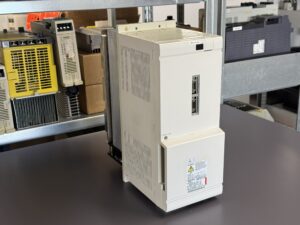
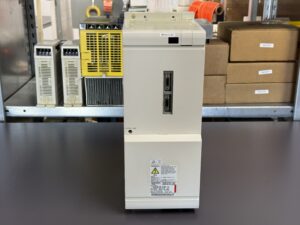
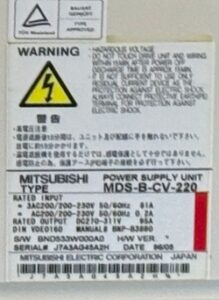
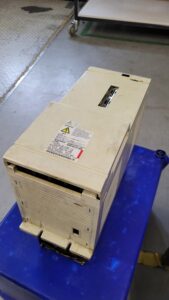
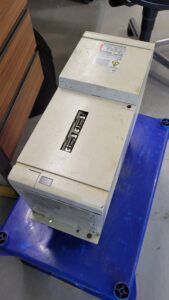
A machine manufacturer from the precision machining industry reported a sudden production stoppage on a CNC machining system equipped with a Mitsubishi MDS drive system. The machine stopped abruptly during active production. The Mitsubishi MDS-B-CV-220 Power Supply Unit displayed “1” on the LED display, which corresponds to Alarm 61 according to the alarm table.
The machine could no longer be released for operation. All axes remained locked and the spindle drive was no longer functional, resulting in a complete production shutdown. The customer stated that no prior warnings or thermal abnormalities had been visible. The fault occurred suddenly during operation.
The affected power supply module was therefore sent in for technical analysis and repair.
Initial Diagnosis
During incoming inspection, a typical failure pattern of a damaged power module inside the Mitsubishi MDS power section was identified.
The following abnormalities were detected:
• Alarm 61 “Power module overcurrent” according to Mitsubishi alarm table
• No stable DC bus voltage inside the power stage
• Defective power stage in the IPM section
• Clear thermal stress in the power module area
• Abnormalities in the DC bus drive circuitry
• Stressed main capacitors due to long term thermal operation
• Aged thermal interfaces between heatsink and power modules
• Heavy stress on current paths caused by cyclic CNC load changes
The visual inspection showed no external mechanical damage. Externally, the unit was in good condition. The fault was clearly located inside the power section.
According to Mitsubishi documentation, Alarm 61 means:
| Alarm | LED | Meaning |
|---|
| 61 | 1 | Power module overcurrent |
Additionally, the Mitsubishi MDS-D/DH service manual describes Alarm 61 as:
“Overcurrent protection function in the power module has started its operation.”
Actual Root Cause
The detailed technical analysis revealed an internal defect inside the power stage of the Mitsubishi MDS-B-CV-220.
Identified causes:
• Defective IPM power module inside the power supply section
• Internal short circuit in the power path
• Secondary damage caused by high current spikes in the DC bus
• Thermally stressed gate driver stages
• DC bus capacitor stress caused by long term continuous operation
• Aging related deterioration of heat transfer
• Increased power dissipation due to cyclic axis load changes
• High inrush current stress in the power section
• Partial thermal overload of the power semiconductors
The analysis clearly confirmed that Alarm 61 was not the actual cause but only the protection response to the internal power stage defect.
Repair Measures
Extensive technical work was carried out during the repair process.
Performed measures:
• Replacement of the defective power stage
• Replacement of thermally stressed power components
• Inspection of the DC bus structure
• Verification of current sensing circuits
• Inspection of gate driver signals
• Inspection of charging and precharge circuits
• Cleaning of the complete power section
• Renewal of thermal interface materials
• Rework of thermally stressed solder joints
• Inspection of internal power supply voltages
• Load testing under realistic operating conditions
• Thermal measurements under load
• Long term DC bus stability testing
Particular attention was given to the thermal stability of the repaired power stage because older MDS systems are especially susceptible to thermal aging and progressive failures.
Final Testing and Return Shipment
After completion of the repair, the Mitsubishi MDS-B-CV-220 was tested on the test bench.
The following points were tested:
• DC bus voltage
• Load behavior
• Startup behavior
• Regeneration operation
• Protective functions
• Alarm behavior
• Communication with the CNC system
• Long term thermal stability
The unit subsequently operated stably without recurring faults. Alarm 61 no longer occurred.
After successful final testing, the power supply module was returned to the customer within a short time so production could resume quickly.
Customer Feedback
“The machine was immediately back in production after reinstalling the unit. The detailed failure analysis of the power stage was especially helpful.”
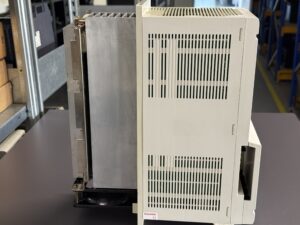
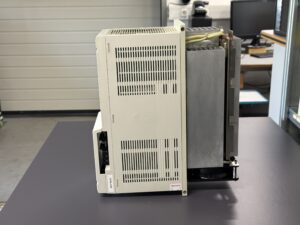
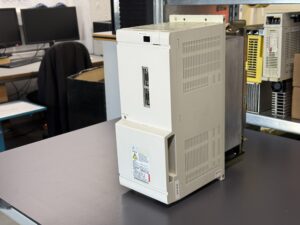
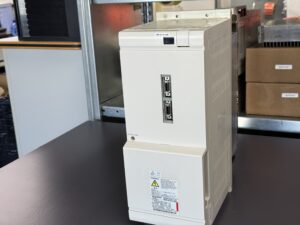
More details about our Mitsubishi repair services can be found here:
Mitsubishi drive Repair by Industrypart
📞 Feel free to contact us with any questions about your Mitsubishi drive technology.
Our expert team is happy to help!
Technical Data
| Feature | Value |
|---|
| Manufacturer | Mitsubishi Electric |
| Model | MDS-B-CV-220 |
| Device Type | CNC Power Supply Unit |
| Input Voltage | AC200V to AC230V |
| Frequency | 50/60 Hz |
| Input Power | 22 kW |
| Rated Input Current | 60 A |
| Output Power | 30 kW |
| Output Current | 80 A |
| Protection Function | Overcurrent protection |
| Cooling | Fan cooled |
| Serial Number | According to nameplate |
| Country of Manufacture | Japan |
Nameplate data based on the uploaded device nameplate.
Additional technical information from Mitsubishi MDS-D/DH documentation:
Operating Conditions
| Parameter | Specification |
|---|
| Ambient Temperature | 0 °C to 55 °C |
| Humidity | Non condensing |
| Installation Location | Electrical cabinet |
| Cooling | Forced ventilation |
| Low vibration environment | Required |
| Protection against oil and dust | Recommended |
| Power quality | Stable industrial power supply |
Cooperation with Other Devices
The Mitsubishi MDS-B-CV-220 typically operates with:
• Mitsubishi MDS servo drives
• Mitsubishi spindle drives
• Mitsubishi CNC controllers
• MDS series axis amplifiers
• Servo motors with encoder systems
• DC bus coupled CNC systems
• Regenerative power systems
• Industrial CNC machine tools
Functional Description
The Mitsubishi MDS-B-CV-220 serves as the central power supply unit inside the Mitsubishi MDS CNC drive system.
The power supply module is responsible for:
• Rectification of line voltage
• Supplying servo and spindle amplifiers
• DC bus regulation
• Monitoring of power stages
• Regeneration management
• Overcurrent and overvoltage protection
• Communication with connected axis modules
Power regulation is carried out via integrated power semiconductors and monitored DC bus structures. In case of overcurrent or internal faults, the system immediately shuts down through integrated protection functions.
According to Mitsubishi alarm documentation, alarms trigger controlled axis stop and spindle shutdown.
Alarm and Error Codes
| Alarm | Fault Name | Meaning | Reset | Action |
|---|
| 61 | Power module overcurrent | Overcurrent in power module | PR | Check power stage |
| 67 | Phase interruption | Input phase loss | PR | Check power supply |
| 68 | Watchdog | Internal system error | AR | Check power unit |
| 69 | Grounding | Ground fault detected | PR | Check motor and power cables |
| 6A | External contactor welding | Contactor fault | PR | Check contactor |
| 6B | Rush circuit error | Inrush circuit fault | PR | Check startup current circuit |
| 6C | Main circuit error | DC bus charging fault | PR | Check main circuit |
| 6E | Memory / AD error | Memory or AD fault | AR | Check electronics |
| 71 | Instantaneous power interruption | Power failure | NR | Check power supply |
| 73 | Over regeneration | Regeneration overload | NR | Check braking resistor |
| 75 | Overvoltage | DC bus overvoltage | NR | Check DC bus |
| 77 | Power module overheat | Power module overheating | PR | Check cooling |
Source: Mitsubishi MDS-D/DH alarm tables
Components of the MDS-B-CV-220
| Assembly | Function | Typical Inspection |
|---|
| IPM Power Module | Power conversion | Short circuit testing |
| DC Bus Capacitors | Energy storage | ESR and capacitance testing |
| Gate Drivers | Power stage control | Signal testing |
| Fan Unit | Cooling | RPM testing |
| Precharge Circuit | Inrush current limiting | Relay and resistor testing |
| Current Sensors | Monitoring | Signal testing |
| Rectifier | Line rectification | Diode testing |
| Control Board | Monitoring and communication | Voltage testing |
Preventive Measures
To avoid similar failures, the following is recommended:
• Regular cleaning of ventilation areas
• Inspection of cooling performance
• Verification of fan bearings
• Thermal imaging of power connections
• Inspection of DC bus capacitors
• Monitoring of electrical cabinet temperature
• Monitoring of power quality
• Inspection of contactors and precharge circuits
• Early replacement of thermally stressed components
Conclusion
This failure of the Mitsubishi MDS-B-CV-220 shows a typical failure pattern of older CNC power supply systems operating under continuous industrial conditions. Alarm 61 frequently indicates deeper defects inside the power stage and should never be considered in isolation.
A professional analysis of the power stage, DC bus structure and thermal stress is essential to avoid secondary damage and repeated production downtime.