19.10.2026 by Viktor Siebert
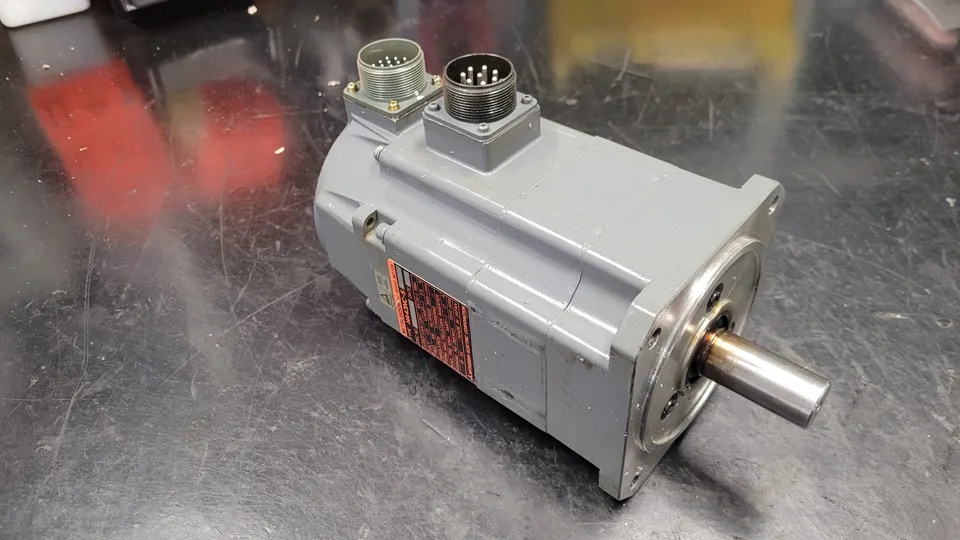
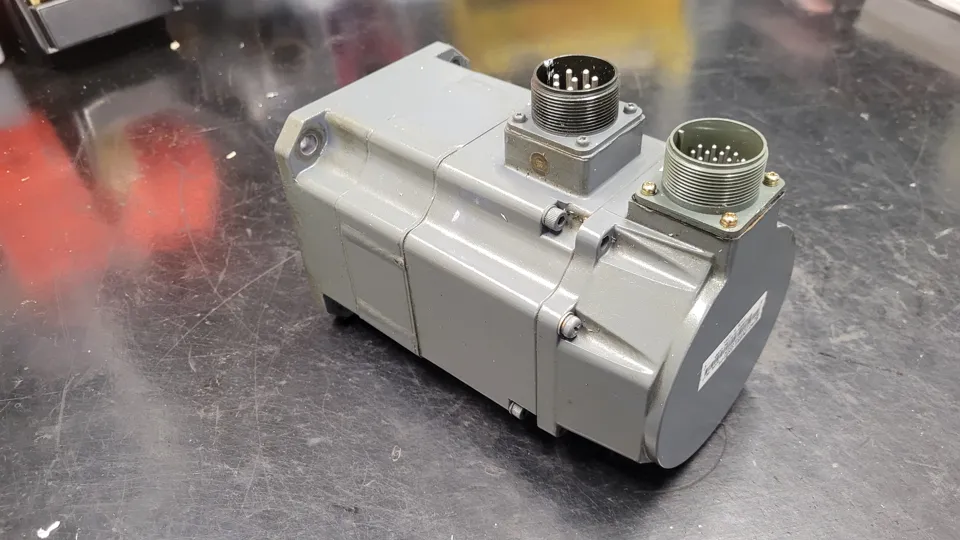
Mitsubishi HA43NC-SS servo motor: encoder dropouts and damaged code disc
From an occasional dropout to a fault every five minutes
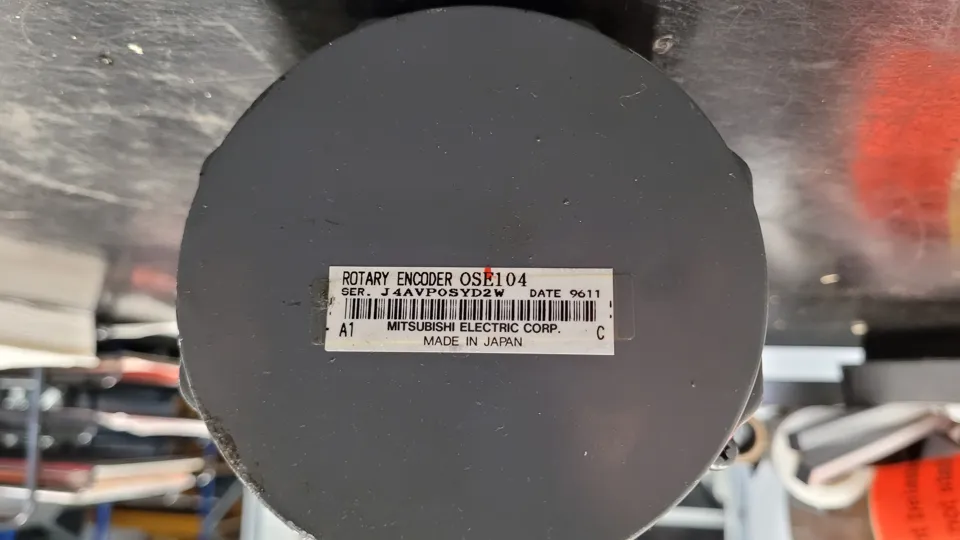
The Mitsubishi HA43NC-SS AC Servo Motor arrived at industrypart with an increasingly frequent fault. According to the customer, the encoder repeatedly lost its connection to the drive. Initially this occurred occasionally. The intervals then became shorter until the fault occurred roughly every five minutes. Our inspection found a contaminated and partly damaged optical code disc inside the Mitsubishi OSE104 encoder. This case explains why a feedback problem can persist after cables have already been replaced and another drive has been tried.
Why cables and the drive were tried first
Before the motor was removed, cables had been replaced and the drive substituted for a test. This approach is understandable from a maintenance perspective. Some servo motors sit deep inside the machine mechanism. Removal may take considerable time and require mechanical adjustment and alignment afterwards. Checking accessible components first can therefore be sensible. Each substitution must use a verified configuration and be documented. If the fault remains unchanged, diagnosis needs to extend to the motor and its feedback system.
What we found inside the encoder
Contamination had entered the encoder and soiled the optical code glass. Dust and abrasive debris had also attacked the disc, partly wearing away its fine pattern. The encoder could no longer count reliably. It was striking that the machine still operated between faults despite this damage. Intermittent operation does not establish that the detector is in a dependable condition. The precise entry path for the contamination was not established in this repair.
Contamination and pattern damage are different problems
Deposits on an optical code disc can interfere with signal evaluation. If the pattern itself is damaged, cleaning alone is insufficient. Neither a new cable nor a different drive can restore the missing structure. The increasing fault frequency reported by the customer is consistent with progressive impairment. On its own, however, it reveals neither an exact alarm code nor whether an electrical communication problem also existed. The customer description and workshop findings therefore remain distinct in this report.
Encoder replacement and complete motor overhaul
We replaced the defective encoder and completely overhauled the motor. This included new ball bearings and seals, cleaning and repainting. Bearings support the shaft, while seals limit contaminant entry. No individual seal was documented as the original entry point. We therefore do not claim a proven entry route. Nor do we infer winding or brake damage from the encoder findings.
Testing with the Mitsubishi MDS-C1-V1-20
After the work, the motor was tested on our bench with a Mitsubishi MDS-C1-V1-20 servo drive. The original recording shows the motor, test setup and shaft rotation. The test illustrates the interaction between the overhauled motor, replacement encoder and connected servo drive.
What this case means for your own machine
An occasional detector fault deserves attention before the machine starts stopping every few minutes. Useful information includes the exact alarm display, operating conditions and changes that affect the symptoms. A fault linked to cable movement calls for different checks from implausible feedback with stable communication. The technical section below explains these distinctions and puts relevant MDS-C1 alarms in context.
Price, Lead Time and Further Information
Please request an individual repair assessment using the complete HA43NC-SS motor identification and a nameplate photograph. Information about Mitsubishi repair services is available in our Mitsubishi service section.
Technical specifications and variant identification
These nameplate values describe the photographed version. The 10 Nm and 17 A entries are maximum values, not continuous ratings. The motor label alone does not establish which replacement drive or feedback version a machine accepts. Dimensions, weight and encoder resolution are not specified here.
| Manufacturer | Mitsubishi Electric |
| Device | HA43NC-SS AC Servo Motor |
| Nameplate | TYPE HA43NC-S, Zusatzfeld S / additional field S; SPEC NO. 65001 |
| Continuous output | 0.5 kW |
| Nameplate speed | 3000 r/min |
| Nameplate voltage / current | 170 V / 2.8 A |
| Nameplate frequency | 100 Hz |
| Maximum torque / current | 10 Nm / 17 A |
| Insulation class / protection | F / IP54 |
| Additional label marking | PERM MAG FLD 200V INVERTER |
| Encoder in this case | Mitsubishi OSE104 |
| Test drive in this case | Mitsubishi MDS-C1-V1-20 |
Application and compatibility
A servo motor converts controlled current into torque for a machine axis. Typical applications include positioning and feed movements. The customer machine model is not documented in this case. The confirmed workshop combination is HA43NC-SS, OSE104 and MDS-C1-V1-20. This test combination is not a blanket replacement approval for other machines. Full suffixes, connector assignments, feedback type, motor parameters and machine configuration must agree.
How the feedback loop works
The CNC supplies the movement command. The servo drive controls the motor current, while the encoder reports shaft movement. Reliable feedback lets the system compare the intended movement with the measured movement. Loss of the communication link and incorrect position information are different faults, although a customer may describe both as a lost connection. An alarm history and the exact operating conditions help distinguish them.
In an optical encoder, a fine pattern on a code disc modulates the light reaching the sensing system. Deposits can impair the contrast. A damaged pattern also removes measurement information. Cleaning can remove contamination but cannot restore a partly abraded pattern. That distinction explains why replacing the encoder was necessary in this repair.
Assemblies and diagnostic relevance
| Assembly | Function and relevance |
| Stator / rotor | Torque generation. Feedback faults do not by themselves prove winding damage. |
| OSE104 | Position feedback. Replaced after the documented code disc damage. |
| Bearings | Shaft support. Renewed during the overhaul; bearing part numbers are not documented. |
| Seals | Limit contaminant entry. Renewed; the original entry path was not established. |
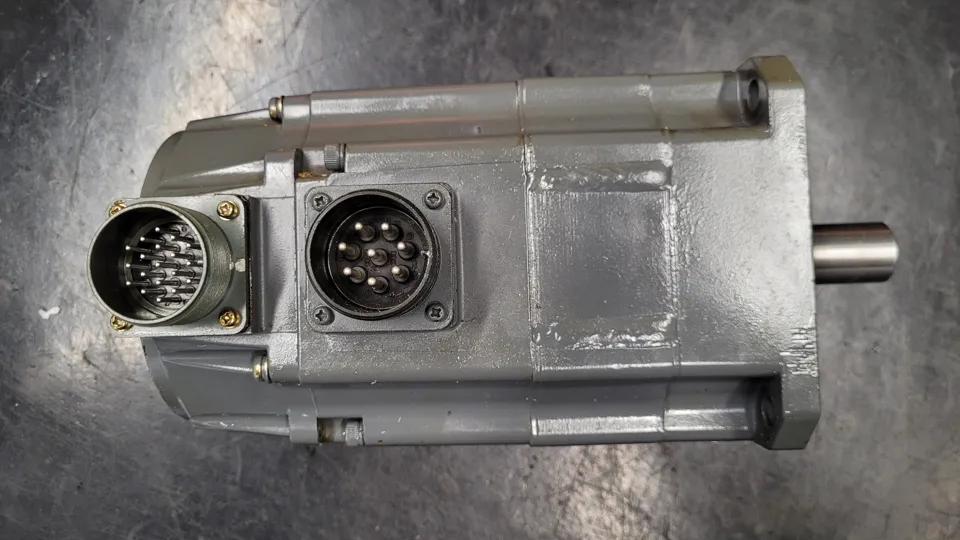
| Connectors / cables | Separate signal path from power path during diagnosis. |
| MDS-C1-V1-20 | External test drive, not an assembly inside the motor. |
Selected MDS-C1 servo drive alarm references
The following is a manufacturer reference for the drive family, not a record of alarms observed on this motor. No exact customer alarm number was supplied. In particular, 2F is a communication fault; it does not alone prove optical disc damage. Codes 20 and 21 must not be used as generic OSE104 communication alarms.
| Code | Technical meaning, paraphrased |
| 18 | Motor detector start communication missing |
| 2B | Motor detector CPU initial fault |
| 2C | Motor detector LED/memory fault |
| 2D | Motor detector data fault |
| 2F | Motor detector communication fault |
| 25 | Absolute position lost |
| 31 | Overspeed |
| 32 | Power module overcurrent protection |
| 34 | NC reception CRC/communication fault |
| 36 | NC communication interrupted |
| 37 | Invalid initial parameters |
| 3A | Motor drive current excessive |
| 43 | Motor/machine position discrepancy |
| 46 | Motor/detector temperature protection |
| 50 | Overload 1 |
| 51 | Overload 2 |
| 52 | Position deviation at servo ON |
| 53 | Position deviation at servo OFF |
Scope limits: alarm 25 concerns an absolute position system. The OSE104 feedback in this test setup is displayed as incremental. In a servo application, alarm 43 concerns a comparison of motor-side and machine-side position feedback. Neither code automatically explains this repair case. Fault group interpretation: 18 and 2F direct attention to the motor feedback connection, whereas 34 and 36 concern the NC-to-drive path. Position errors require feedback and mechanics to be considered together. Overcurrent and overload require a separate assessment of power wiring, motor condition and mechanical demand. A stored code guides diagnosis; it is not a component replacement instruction.
Practical fault isolation
| Observation | Professional next check |
| Fault changes with cable movement | Inspect strain points and connectors under the machine safety procedure. |
| Fault follows the motor after a verified substitution | Evaluate the motor feedback system; verify the test setup first. |
| Dropouts during specific motions | Compare position, speed, cable motion and mechanical load. |
| Only occurs after warm-up | Record temperatures and duration; consider thermal connections and electronics. |
| Communication stable, position implausible | Distinguish measurement integrity from the serial transport path. |
These are diagnostic approaches, not additional tests claimed for this repair. Work on an opened encoder requires suitable equipment and alignment knowledge. Rubbing or polishing an optical disc can damage its pattern further. An insulation test must follow the manufacturer procedure with sensitive electronics isolated as required.
Prevention with a practical purpose
Inspect seals, connector housings and cable entries for damage and contamination during planned access. Keep cleaning fluids and compressed air away from seal gaps and encoder interiors. IP54 does not mean immunity to every coolant jet, ageing seal or damaged cable entry. Changes in bearing noise, vibration and fault frequency are reasons to investigate. Recording the first occasional faults can support a planned intervention before repeated production stoppages occur.
Sources and scope
Case facts: customer/workshop report, motor nameplate, encoder identification and the supplied 22.6-second test clip. Alarm reference: Mitsubishi Electric, MDS-C1 Series Instruction Manual, BNP-B2365(ENG)B, section 6, printed pages 6-4 to 6-6 and 6-17. Machine manufacturer instructions and the actual drive version take precedence. Mitsubishi MDS-C1 Instruction Manual
Test video
Photographs of the repair
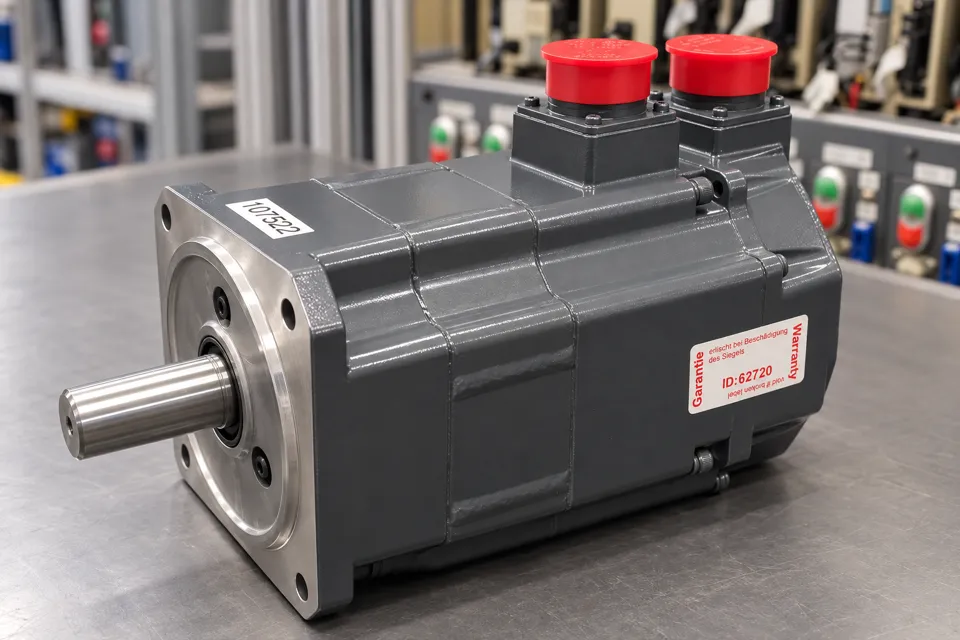 After repair
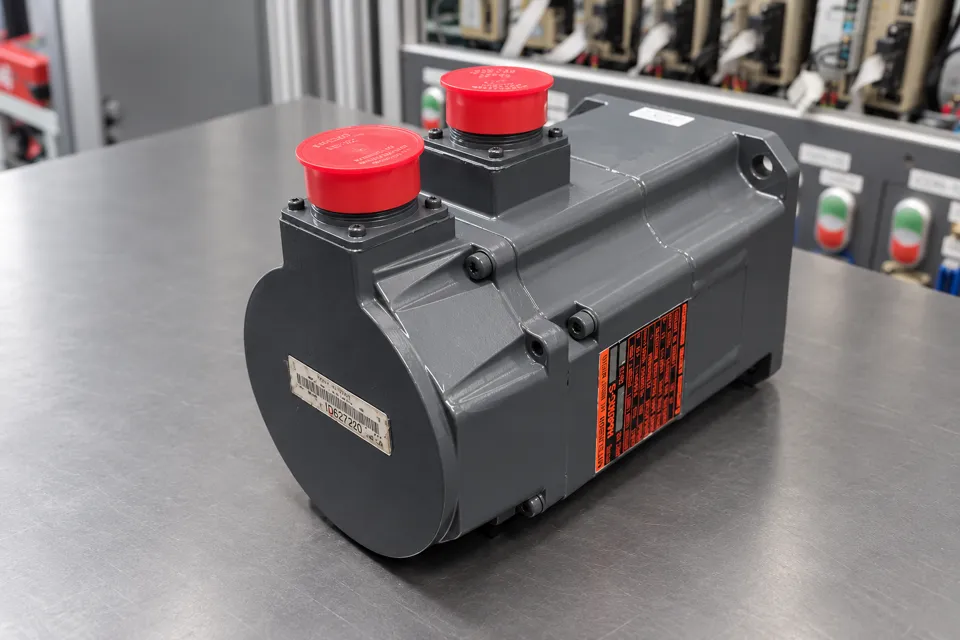 After repair, rear view
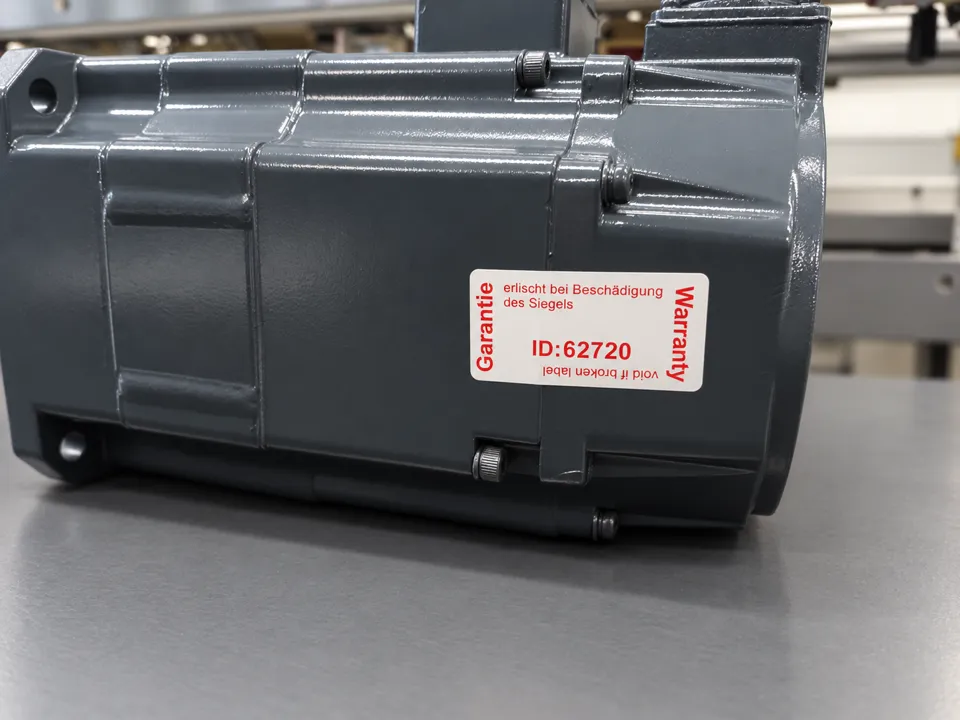 After repair, side view
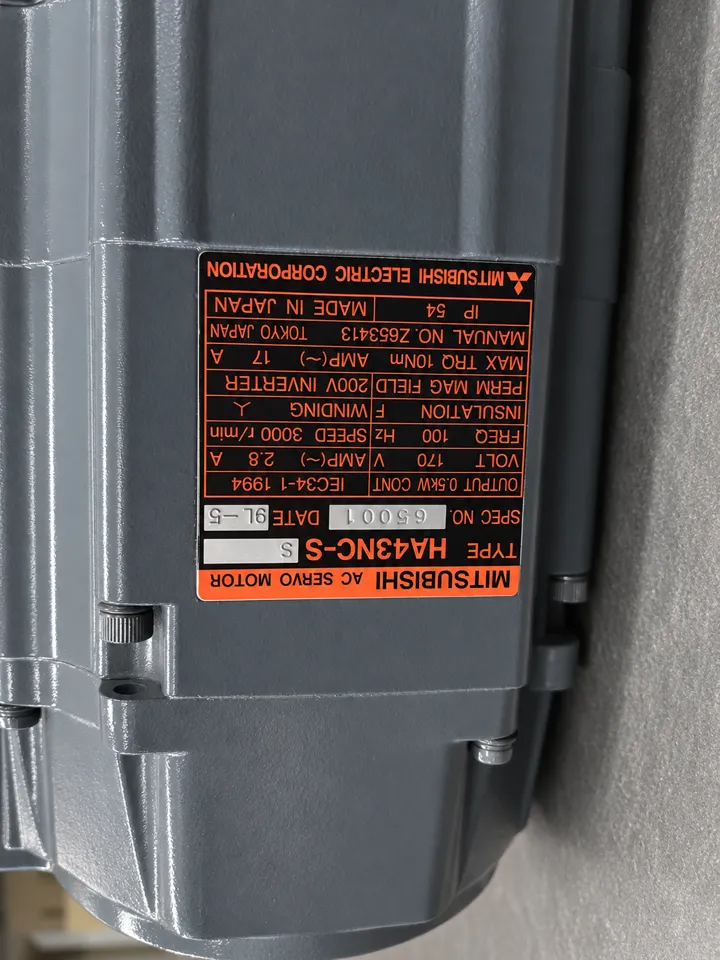 Motor nameplate
 Before repair
 Before repair, rear view
 Mitsubishi OSE104 encoder identification
 Before repair, connectors
Repair enquiry
Please send the full motor and encoder identification, nameplate photos, the exact alarm and a description of when the fault occurs. industrypart supports you with diagnosis, repair and preventive overhaul of industrial servo motors.
Mitsubishi repair service