08.11.2026 by Viktor Siebert
Mitsubishi HA-FF33B-EC: Coolant ingress and encoder faults
A clean motor housing tells you little about the condition inside. If coolant enters a servo motor, feedback, the brake and electrical insulation may be affected. This guide to the Mitsubishi HA-FF33B-EC explains how to narrow down these faults and when an overhaul may be an option.
Device, function and application
The Mitsubishi HA-FF33B-EC is an AC servo motor. Within a compatible drive system it converts controller commands into regulated movement. The encoder provides motion feedback to the drive control. A feedback fault can therefore prevent operation even when the motor looks sound. The brake and its control circuit require separate checks.
Servo motors of this type are used for controlled motion in machinery and automation equipment. Compatibility between the machine, amplifier and feedback device must be verified using complete model designations and machine documentation. Similar connectors or housings are not sufficient evidence.
Technical overview
| Manufacturer | Mitsubishi Electric |
| Full model designation | HA-FF33B-EC |
| Device type | AC servo motor |
| Series | HA-FF |
| Rated output on nameplate | 300 W |
| Nameplate input | 3 AC, 120 V, 1.9 A |
| Rated speed | 3,000 rpm |
| Insulation class / mass | B / 3.8 kg |
| Guide focus | Fluid ingress, encoder faults and brake problems |
| Alarm attribution | Connected servo amplifier or CNC system |
Coolant inside the motor: Possible consequences
Fluid inside a motor requires an assessment of the extent of damage. Encoder contamination is one possible consequence. Connectors, cables, the brake and the electrical condition of the motor also require consideration. An encoder fault alone proves neither fluid ingress nor winding damage.
The entry path is part of the investigation. Installation, the shaft area, connections, cable routing and protective measures should be checked. Repairing the motor will not prevent further ingress if the external exposure remains.
A practical diagnostic sequence
- Record the fault: when it occurs, the complete display message and which drive device reports it.
- Secure the machine. Electrical work and internal motor inspections require qualified personnel.
- With the equipment safely isolated, inspect installation conditions, visible fluid traces, connectors and cables.
- Assess feedback and brake operation separately. A blocked axis and a missing encoder signal can have different causes.
- If internal fluid ingress is suspected, have the motor professionally inspected. Drying alone or repeatedly resetting an alarm does not replace a condition assessment.
- After repair, check the affected functions using a suitable test setup. Visible rotation alone does not prove a complete brake, insulation or positioning test.
Workshop example: Assessing encoder overhaul
One example from our workshop shows why careful inspection matters. Despite looking good externally, a servo motor contained coolant that had contaminated its encoder. In this instance we were able to overhaul the encoder and restore its function. The motor received a complete overhaul, and its brake was repaired and adjusted.
Whether an encoder can be overhauled depends on its actual condition. This result is not a promise for every contaminated encoder. The findings and subsequent functional checks determine the appropriate approach.
Preventing further fluid ingress
Mitsubishi’s servo motor manual addresses protection against oil and water. For the HA-FF series, particular attention is required around the shaft-through area. Protective covers, coolant direction and cable routing should suit the installation. Fluid traces and damaged connections should be investigated promptly. A clean exterior does not establish that the interior is dry.
Sources
Mitsubishi Electric: Servo Motor Instruction Manual, SH(NA)3181-L, section 2.5 “Protection from oil and water”, page 2-11. The workshop example is based on our own repair experience.
Video: Encoder faults and troubleshooting
Motor views
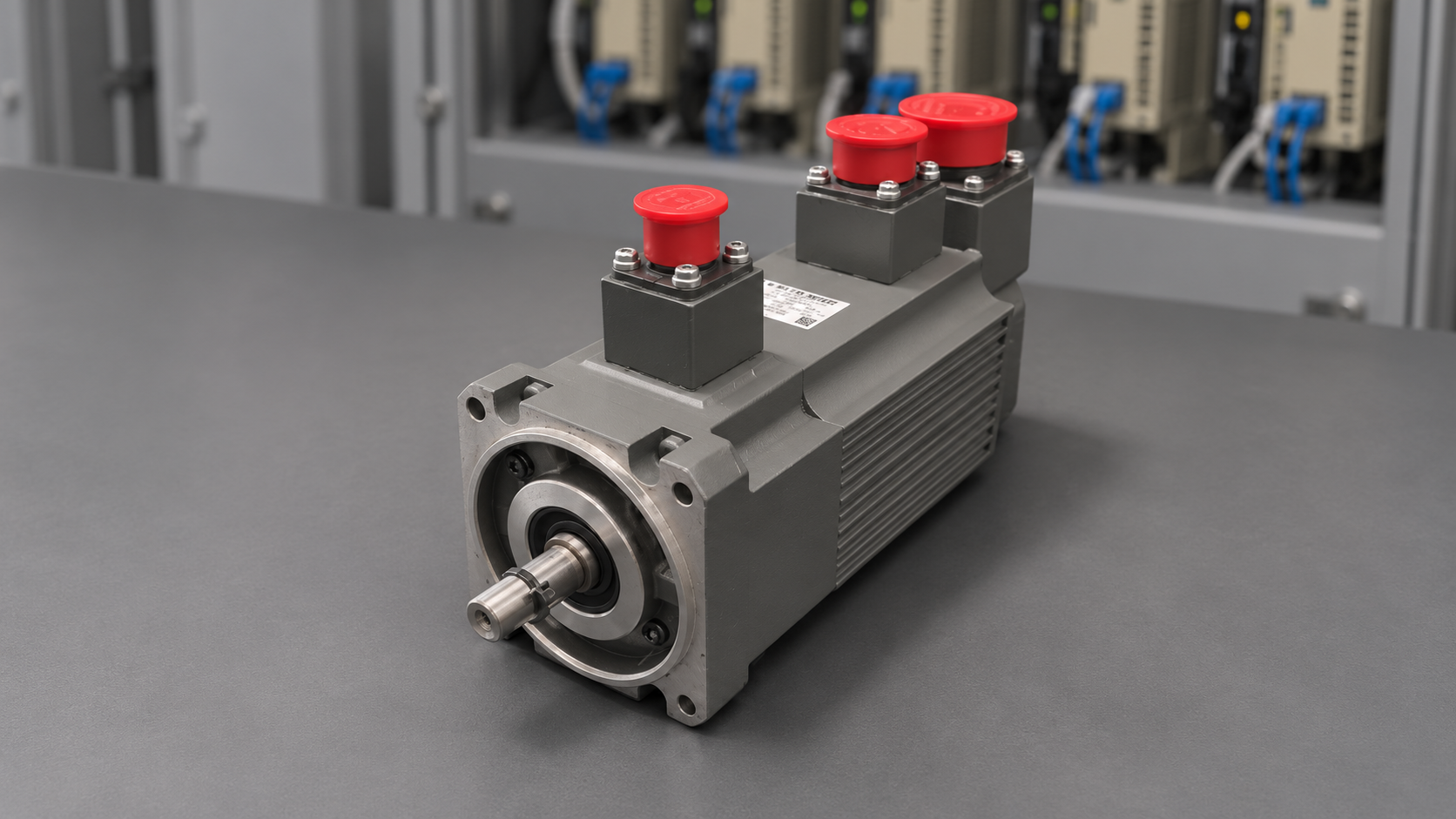 Mitsubishi HA-FF33B-EC – Front view
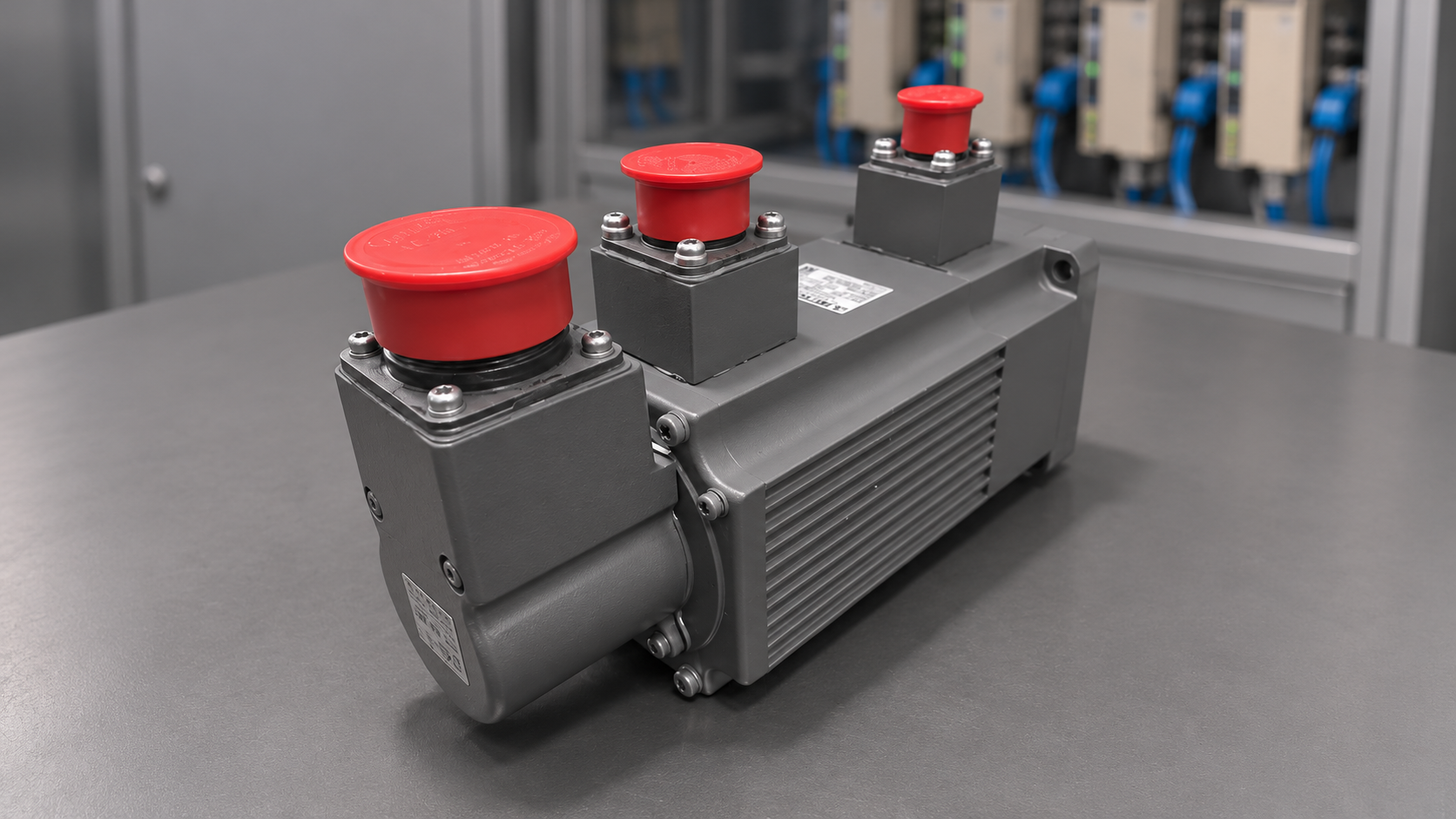 Mitsubishi HA-FF33B-EC – Rear view
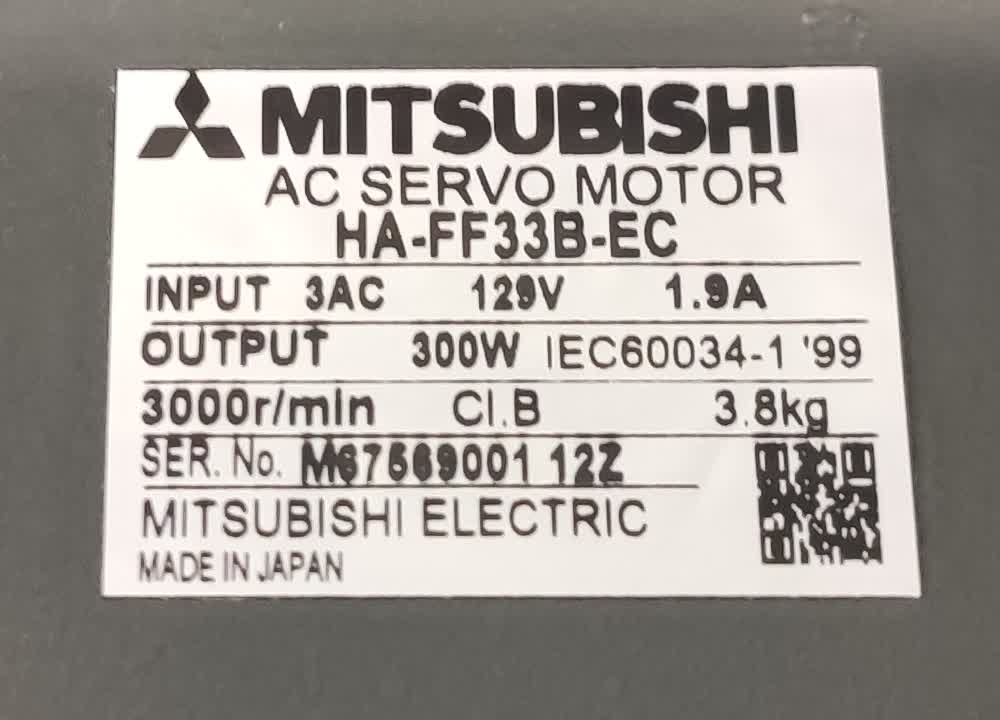 Mitsubishi HA-FF33B-EC – Nameplate
Repair enquiry
Need support with a Mitsubishi HA-FF33B-EC? Send us the complete model designation, fault description and connected servo amplifier model. Mitsubishi servo motors: repair, exchange and sales at Industrypart.
Alarm guidance and troubleshooting
A motor does not have a universal alarm-code list. Code meanings depend on the connected amplifier or CNC system. Diagnosis therefore requires the full motor designation, drive model, alarm and subcode. Without that context, a generic explanation of “alarm 32”, for example, would not be reliable.
| Observation | Possible areas to investigate | Useful next step |
|---|
| Encoder or feedback fault | Encoder, connectors, feedback cable and amplifier | Record the complete message and check the correct amplifier manual. |
| Motor does not start | Enabling signals, control, brake and mechanical blockage | Review machine status and fault history rather than attributing the problem to the motor alone. |
| Uneven motion or position deviation | Feedback, mechanics and drive settings | Record operating conditions and have the affected functions checked separately. |
| Fluid traces at the shaft or connector | External entry path and possible internal damage | Remove coolant exposure and have the motor professionally assessed. |
| Brake does not hold or release correctly | Brake control and mechanical condition | Secure the axis against movement and arrange a targeted brake check. |